When people start thinking about moving to Austin Texas, one of the first questions that comes up is simple: where should you actually live? And if you are seriously considering living in Georgetown Texas, there is a good reason it keeps landing near the top of the list.
Georgetown has charm, identity, outdoor access, beautiful neighborhoods, and a downtown that feels like a classic Texas postcard. At the same time, it is not for everybody. The commute into Austin can be rough, the school story is mixed, and some parts of town feel very different from others. That is exactly why it helps to get the full picture.
This guide breaks down what living in Georgetown Texas is really like, from location and commute to neighborhoods, home prices, schools, and daily lifestyle.
Table of Contents
- Where Georgetown Is And Why It Matters
- What Living In Georgetown Texas Feels Like
- Downtown Georgetown Is The Biggest Draw
- Outdoor Life Is A Major Part Of Georgetown
- Understanding The Layout Of Georgetown
- Historic Homes Versus Newer Communities
- Best Neighborhoods For Living In Georgetown Texas
- Schools In Georgetown Texas
- Is Georgetown A Good Fit If You Are Moving To Austin Texas
- FAQs: Living in Georgetown
Where Georgetown Is And Why It Matters
If you are thinking about living in Georgetown Texas, the first thing to understand is where it sits in relation to Austin. Georgetown is north of Austin, past Pflugerville and Round Rock, and it is often thought of as the northern edge of the Austin suburban stretch.
That location can be a huge plus or a huge negative depending on your routine.
If you need to drive into downtown Austin every weekday during normal rush hour, expect the trip to be long. A morning commute can easily stretch from around 45 minutes to more than an hour. Realistically, planning for an hour to an hour and 15 minutes is the safer bet.
That means living in Georgetown Texas makes the most sense for people who:
- Work remotely
- Have flexible hours
- Need Austin access only occasionally
- Prefer more space and a calmer setting over a shorter commute
If your life is built around daily downtown Austin travel, Georgetown may wear you out fast. But if you can avoid peak traffic, the equation changes in a big way.
What Living In Georgetown Texas Feels Like
One of the biggest things people notice about living in Georgetown Texas is that Georgetown does not feel like it is borrowing its personality from Austin. It has its own identity.
This is not one of those places where people casually say they live in Austin and then clarify later. People who live here say they live in Georgetown, period. That tells you a lot.
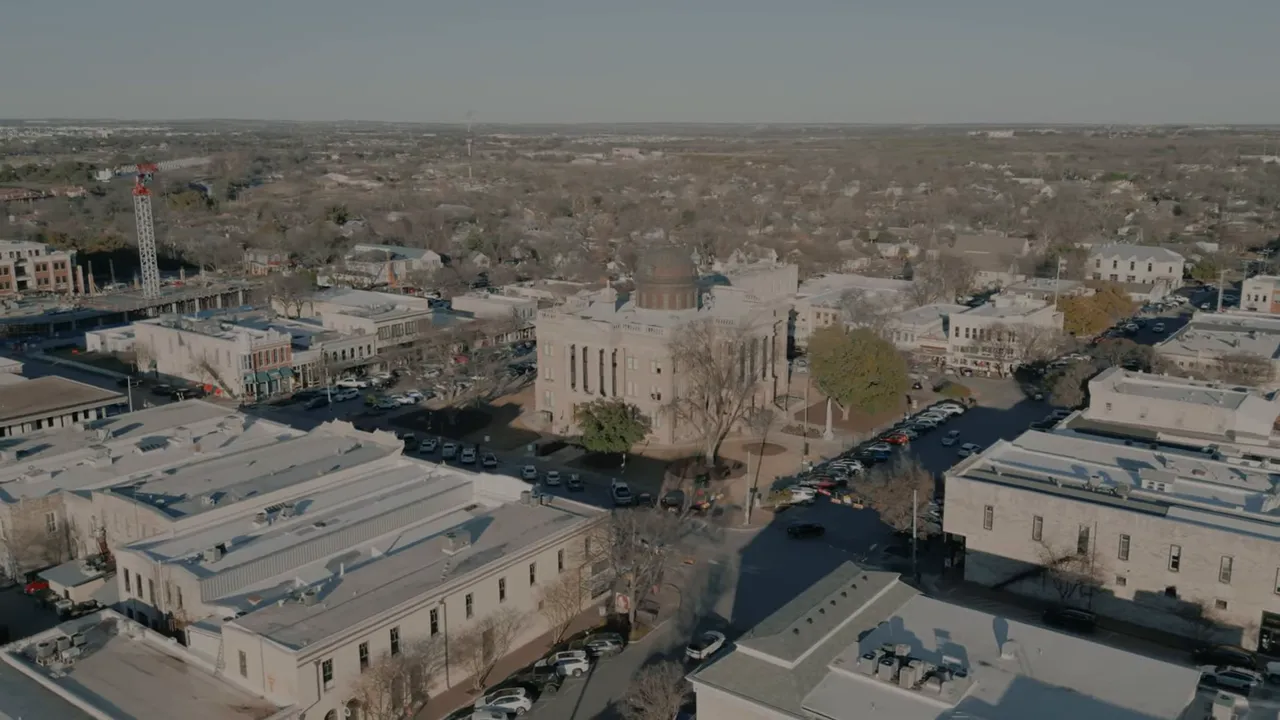
With a population around 96,000, Georgetown is large enough to function like its own city, not just a bedroom community. It has established neighborhoods, a distinct downtown, shopping, restaurants, outdoor recreation, and a strong local culture.
It also tends to lean more conservative than Austin, though like much of Central Texas, it has become more politically mixed over time as the region has grown. Culturally, there is still a noticeable down-home Texas vibe here. Expect a lot of people who appreciate tradition, community, and a slightly slower pace.
Downtown Georgetown Is The Biggest Draw
If there is one place that really sells the case for living in Georgetown Texas, it is downtown.
The heart of town has that classic historic Texas look people want but rarely find in such a polished package. Around the courthouse square, you get boutique shops, coffee spots, restaurants, bars, clothing stores, and beautifully preserved older buildings. The whole area feels cared for.
It is the kind of downtown where grabbing coffee can turn into a long walk because every block has something interesting. The architecture is older, the storefronts feel local instead of generic, and the atmosphere has real character.
There is also a strong event culture here. Seasonal celebrations and holiday gatherings give the square even more life. Georgetown has the kind of downtown that actually gets used, not just admired from a distance.
Two local food spots stand out in particular:
- El Monumento, known for Mexican food and standout margaritas
- Monument Cafe, a favorite for breakfast and brunch with a local market vibe
For many people, downtown alone makes living in Georgetown Texas feel more special than living in a newer suburb with no historic core.
Outdoor Life Is A Major Part Of Georgetown
Georgetown is not just about cute storefronts and courthouse square charm. Outdoor access is a major part of daily life here.
Lake Georgetown is one of the biggest lifestyle features in town. It is a large lake with scenic terrain around it, and it has more of a Hill Country feel than a heavily developed urban reservoir. People head out here for boating, hiking, biking, camping, and just being outside.

One of the standout features is the long trail system that circles the lake. It stretches roughly 25 to 26 miles, which makes it a legitimate destination for hikers and campers, not just a quick neighborhood walking path.
Then there is the San Gabriel River, which runs through the area and adds even more trails, green space, and beauty closer to town. Those natural features help explain why living in Georgetown Texas appeals so much to people who want access to nature without giving up suburban convenience.
If your ideal weekend includes trails, water, and open sky instead of just errands and parking lots, Georgetown has a lot going for it.
Understanding The Layout Of Georgetown
To understand living in Georgetown Texas, it helps to know the roads that shape the city.
Here are the main ones to keep in mind:
- Interstate 35: The main north south route through Georgetown and the obvious connection toward Austin
- 130 Toll Road: A bypass route many people use to avoid Interstate 35 traffic
- Highway 29: A major east west road that runs through downtown and often serves as a dividing line in local conversation
- 195: Often thought of as a northern edge of the city
- Ronald Reagan Boulevard: A major corridor for large newer communities, especially on the outer edges
A lot of new development in Georgetown is clustered around Ronald Reagan Boulevard and farther from the historic center. That means the experience of living in Georgetown Texas can vary widely depending on which side of town you choose.
Historic Homes Versus Newer Communities
Housing style in Georgetown breaks down pretty clearly into two worlds.
Near downtown, especially south of the square, you will find older historic homes. Think bungalows and houses dating back to the late 1800s and early 1900s. These areas have mature trees, more character, and a very different feel from the large master planned communities farther out.
Outside the historic core, Georgetown becomes much more modern. There are some neighborhoods from the 1970s, 1980s, and 1990s, especially south of the San Gabriel River, but a huge portion of the city is newer construction.
So when people talk about living in Georgetown Texas, make sure you know which version they mean:
- Historic Georgetown with character homes and old town charm
- Established suburban Georgetown with larger lots and older family neighborhoods
- New construction Georgetown with master planned communities, amenities, and modern floor plans
Best Neighborhoods For Living In Georgetown Texas
Cimarron Hills
Cimarron Hills is one of the premier neighborhoods for living in Georgetown Texas. It is upscale, established, and absolutely loaded with country club energy.
This community includes a golf course designed by Jack Nicklaus, along with resort style amenities like a restaurant, spa, and pool. It started in the early 2000s, but it still has some new construction mixed in from custom and boutique builders.
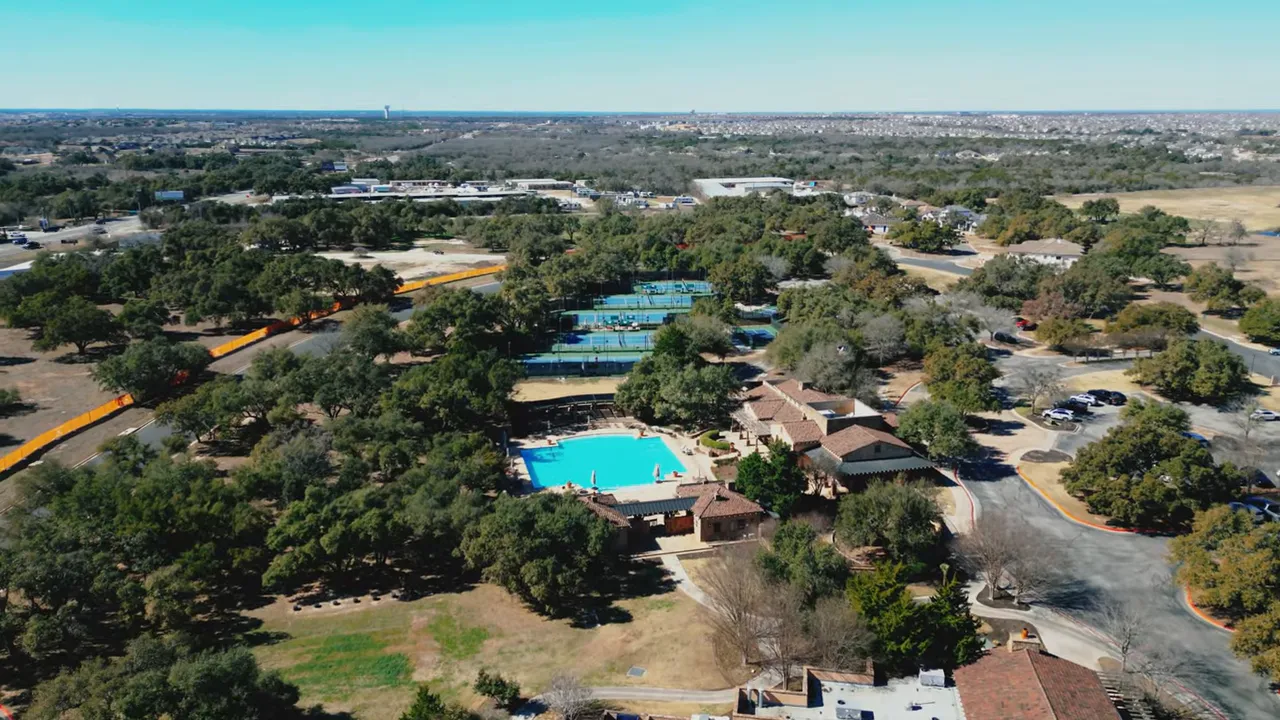
What stands out most here is the scale. Homes are large, lots are generous, and the neighborhood feels established rather than freshly built all at once.
Typical Cimarron Hills numbers:
- Average home size: roughly 3,500 to 4,000 square feet
- Typical price range: around $1 million to $1.4 million
- Upper range: can climb into the multimillion dollar range
If you want luxury, golf, and a high-end Georgetown address, this is one of the strongest options.
Berry Creek
Berry Creek has some similarities to Cimarron Hills, but it comes at a more approachable price point.
It is also a country club community with golf, tennis, pools, and an established feel. Development here began in the late 1990s, and it tends to attract a family friendly mix of residents.
You still get bigger lots and solid neighborhood amenities, but without the same luxury price tag.
Typical Berry Creek numbers:
- Average home size: around 2,500 to 3,000 square feet
- Typical price range: roughly $550,000 to $650,000
For buyers who want an established golf community without pushing into million dollar territory, Berry Creek makes a lot of sense.
Newer Riverside Style Community
One of the newer Georgetown communities highlighted sits near the San Gabriel River and features builders known for higher end finishes and strong design.
The featured model home had:
- 4 bedrooms
- 3.5 bathrooms
- A study
- A game room
- A media room
- A 3 car garage configuration in the standard plan
The base price for that model was around $650,000, with substantial upgrades stacked on top. In the neighborhood overall, base pricing ran from the 400s into the mid 600s.
That gives this area a sweet spot for people who want a new home with more design personality and better finishes than entry level production inventory.
Brand New East Georgetown Community
On the eastern side of Georgetown, there is also a more budget friendly new construction option just getting started.
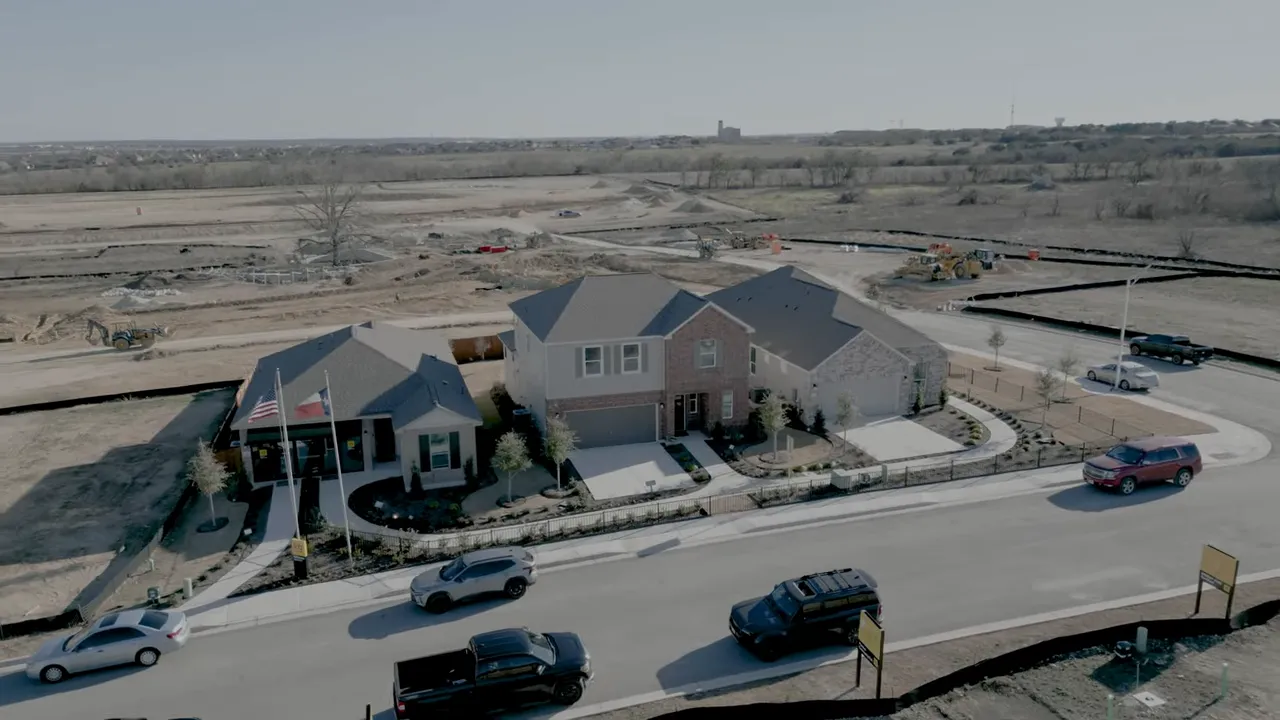
This neighborhood is in an early development phase, with pricing starting around $318,000 and topping out near the mid $400,000s based on the homes discussed.
The featured two story model was about 2,410 square feet with 4 bedrooms and 3.5 bathrooms. The neighborhood is planned to include amenities like:
- Pickleball court
- Basketball court
- Playfield
- Trails
- Park space
Another plus is that the surrounding area is already more defined, which reduces uncertainty about unexpected apartment or commercial construction popping up immediately around you.
If you are prioritizing affordability while still wanting to be in Georgetown, this type of community can be a compelling entry point for living in Georgetown Texas.
Schools In Georgetown Texas
Schools are one of the trickiest parts of the Georgetown conversation.
Georgetown ISD received an overall B+ rating in the school review source discussed, but the deeper story is more mixed than that headline grade suggests.
Some parents are happy. Some are not. That alone is not unusual, but Georgetown seems to produce especially mixed feedback. Part of the reason is growth. Like many areas tied to the Austin metro, the school landscape is shifting as new neighborhoods bring in more families and campuses change over time.
The district map also showed variation across the city, with schools on both sides of Interstate 35 landing at different grade levels. Unlike some Austin area suburbs where the west side clearly outperforms the east side, Georgetown appears less predictable.
The practical takeaway for families considering living in Georgetown Texas is this:
- Do not assume every school in Georgetown is equally strong
- Research by exact neighborhood, not just by city
- Keep an eye on changing boundaries and new campus openings
- Consider charter or private options if schools are your top priority
In other words, schools here are not a simple yes or no. They are a case by case decision.
Is Georgetown A Good Fit If You Are Moving To Austin Texas
If you are moving to Austin Texas and comparing suburbs, Georgetown stands out for reasons that are easy to see once you understand the whole picture.
Living in Georgetown Texas can be a fantastic fit if you want:
- A real downtown with historic charm
- Easy access to outdoor recreation
- A city with its own identity
- A wide range of neighborhoods from historic to luxury to affordable new build
- More breathing room than central Austin offers
It may not be the right fit if you need:
- A quick daily commute to downtown Austin
- A universally strong public school profile across every neighborhood
- A more urban or highly connected Austin lifestyle
That is really the Georgetown story. It is charming, scenic, and often beautiful. It can feel refined in one area, country club polished in another, and brand new suburban in another. It offers a lot, but you need to match the right part of town to the life you actually live.
For plenty of people, living in Georgetown Texas ends up being the perfect balance. You get some distance from Austin without feeling cut off from the region. You get character without sacrificing convenience. And you get a place that still feels like itself.
Ready to explore what living in Georgetown Texas could look like for you? Call/text our team today for neighborhood guidance, current listings, and a quick plan to match you with the right part of town. Phone: (512) 855-2713
FAQs: Living in Georgetown
Is Georgetown considered a suburb of Austin?
It is commonly grouped with the Austin suburbs because of its location north of the city, but Georgetown has a strong identity of its own. Most locals think of it as Georgetown first, not as just another part of Austin.
How far is Georgetown from downtown Austin?
In typical weekday traffic, the drive can run about 45 minutes to more than an hour. For a normal morning commute, it is smart to expect roughly an hour to an hour and 15 minutes.
What is the best part of living in Georgetown Texas?
The combination of a charming historic downtown, strong outdoor access, and neighborhoods with more space is a huge draw. Lake Georgetown and the square are especially big selling points.
Are there affordable homes in Georgetown?
Yes. Georgetown has higher end communities like Cimarron Hills, but it also has newer neighborhoods with entry pricing starting in the low $300,000s and other options in the mid $400,000s to mid $600,000s.
Are Georgetown schools good?
The answer depends on the specific neighborhood and campus. Overall ratings are decent but not uniformly strong, and parent opinions are mixed. Families should research each school zone carefully.
Is Georgetown a good choice for people moving to Austin Texas?
Yes, especially for people who want more space, a stronger small town feel, and access to Austin without living in the center of it. It works best for those with flexible schedules or less frequent downtown commute needs.
Read More: Living in Austin City vs Suburbs: The Honest Breakdown You Need Before Moving