If you are weighing living in Austin city vs suburbs, I can tell you right now this is one of the biggest decisions you will make when relocating here. And I have seen people absolutely love the choice they made, and I have seen people realize a few months later that they picked the wrong lifestyle entirely.
The tricky part is that on paper, a lot of Austin neighborhoods and suburbs can look pretty similar. But once you are actually here, boots on the ground, the differences become obvious fast. Your commute feels different. The vibe feels different. The schools, safety, food scene, politics, and even the way people use their neighborhoods all start to matter in a very real way.
So if you are trying to decide between living in Austin city vs suburbs, here is the real breakdown of what changes, what stays surprisingly similar, and how to figure out which side of town fits your life best.
Table of Contents
- What’s Similar in Living in Austin City vs Suburbs
- Schools in Austin City vs Suburbs
- Politics in Austin City vs Suburbs Explained
- Safety in Austin City vs Suburbs
- Commute in Austin City vs Suburbs
- Lifestyle & Vibe Differences in Austin City vs Suburbs
- Home Prices in Austin City vs Suburbs, Texas
- How to Decide Between Living in Austin City vs Suburbs
- FAQs on Austin City vs Suburbs Living
- Final Thoughts
What’s Similar in Living in Austin City vs Suburbs
Before I get into the differences, I think it helps to clear up a few misconceptions. A lot of people assume the city gets all the good stuff and the suburbs are where you go if you are willing to give things up. That is just not true.
Outdoor living is strong in both
People know central Austin has iconic places like Zilker Park, Barton Springs, and Deep Eddy. That part is obvious. What is less obvious is how good the outdoor amenities are once you get outside the core.
Suburbs like Cedar Park, Round Rock, Leander, and Georgetown have fantastic parks, trails, pools, creeks, and green spaces. In some cases, they are among my favorite outdoor spots anywhere in the greater Austin area.
So if your fear is that moving to the suburbs means giving up your outdoorsy life, that fear is probably misplaced. You can absolutely build an active outdoor lifestyle in both settings.
Faith communities exist all over the Austin area
This one almost never gets talked about clearly. Some people assume the suburbs are the only place where church or faith communities are strong, and that the city of Austin is somehow the opposite of that. That is not reality.
In the city, there are plenty of churches, temples, parishes, denominational and non-denominational communities, big congregations and very small ones. In the suburbs, you will find the same kind of access. If being connected to a faith community matters to you, it does not need to be the deciding factor in living in Austin city vs suburbs.
Fitness culture is social everywhere
One thing I love about Austin in general is how social the fitness culture is. In the city, it is easy to notice the running groups, cycling groups, swimming groups, and workout communities. But the suburbs have this too.
I have seen people move to Round Rock, Cedar Park, Buda, Lakeway, and Dripping Springs and almost immediately find their people through sports and fitness. Running, tennis, basketball, horseback riding, even niche activities, there is usually a community for it.
That means the social side of your lifestyle may not change as much as you expect when comparing living in Austin city vs suburbs.
EXPLORE HOMES FOR SALE IN GREATER AUSTIN, TX
Schools in Austin City vs Suburbs
If I am being honest, schools are one of the clearest differences between city and suburb life around Austin.
On average, suburban school districts tend to rate significantly higher than schools in the city of Austin. That does not mean every Austin school is bad or every suburban school is amazing. There are exceptions in both directions. But the broad trend is pretty hard to ignore.
There are pockets inside Austin with excellent schools. Circle C in Southwest Austin is a great example of an area with some highly regarded schools. But there are also city neighborhoods that feel family-friendly on the surface where many parents still choose private school, charter school, or homeschooling instead of the assigned public option.
Meanwhile, several suburban districts are consistently among the top-rated in Central Texas. The heavy hitters usually include:
- Eanes ISD, covering areas like Westlake and Rollingwood
- Lake Travis ISD, including Lakeway, Bee Cave, and Spicewood
- Dripping Springs ISD
- Round Rock ISD
- Leander ISD
Georgetown ISD is often right behind those and has been gaining momentum as more families move into large master-planned communities there.
And that is a major part of the story. The suburbs are attracting a lot of young families into newer communities, and those families tend to invest heavily in schools, activities, and local involvement. Over time, that raises the level of the school districts even more.
So if schools are a top-three factor for your move, the conversation around living in Austin city vs suburbs often starts leaning suburban pretty quickly.

Politics in Austin City vs Suburbs Explained
Austin is famous for being a blue dot in a red state, and that reputation is well earned, especially in the central city. Inside Austin proper, the political culture tends to be consistently liberal and progressive. You will feel that in events, causes, neighborhood culture, and everyday public expression.
But once you move outward, the political environment changes. The suburbs generally lean more conservative and more Republican.
That said, the suburban political culture around Austin does not always fit the stereotype people bring with them. In my experience, the conservative communities around Austin are often warmer and more accepting than outsiders expect. There is still that Austin-area influence where people tend to coexist with a little more ease than you might assume.
So yes, politics matter when comparing living in Austin city vs suburbs. If you want to be in a place that feels unmistakably progressive, the city is likely the better fit. If you prefer a more conservative environment, the suburbs may feel more natural.
And if you are somewhere in the middle, Austin’s strange red-blue push and pull may actually be part of the charm.
Safety in Austin City vs Suburbs
Safety is another area where I think people deserve a more honest answer.
On average, Austin-area suburbs are very safe. I am talking about places like Cedar Park, Leander, Liberty Hill, Georgetown, Round Rock, Pflugerville, Buda, Kyle, Hutto, Dripping Springs, Lakeway, and more. In many of these areas, it feels normal for kids to ride bikes around the neighborhood and for families to walk outside without much concern beyond normal things like traffic.

That does not mean crime never happens. No place is perfect. But in general, suburban living around Austin comes with a stronger feeling of predictability and comfort.
The city of Austin is more mixed. There are plenty of neighborhoods where I personally feel safe and where many families live comfortably. But the city also deals with more crime, more vandalism, more car break-ins, more visible disorder, and more of the random sketchiness that comes with urban living.
That can include graffiti, bus stop activity, unfamiliar people drifting through residential areas, and occasional property crime. None of that means the city is unlivable. It just means that when you are choosing between living in Austin city vs suburbs, safety is not an identical category.
If a strong sense of ease and security is high on your list, the suburbs usually have the advantage.
Commute in Austin City vs Suburbs
This one sounds obvious, but I still see people underestimate it all the time.
A lot of Austin’s growth has been fueled by jobs, especially in tech. Many of those jobs are concentrated downtown, in central South Austin, or around the Domain in North Austin. If that is where you work, your location matters a lot.
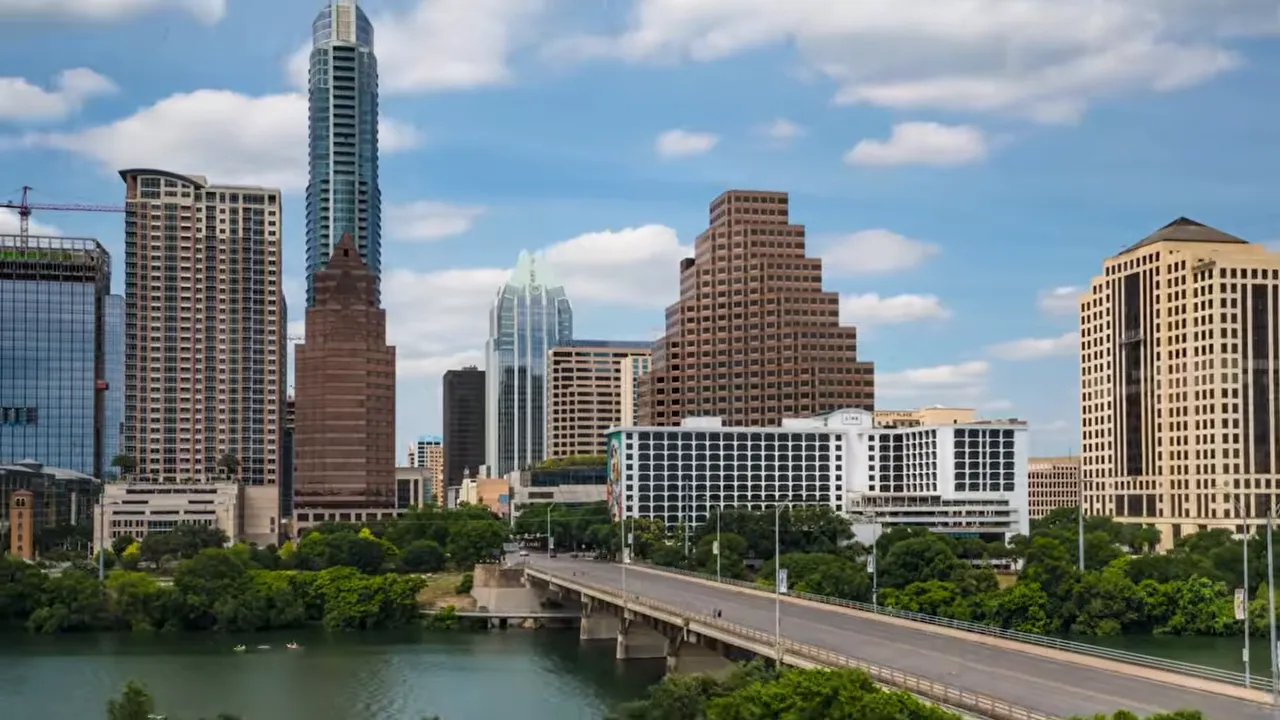
If you live in the city and work downtown, it is hard to imagine a daily one-way commute stretching much beyond 20 minutes in most normal scenarios.
If you live in the suburbs, though, you should mentally plan on at least 30 minutes, and often more depending on which suburb and what time of day. Austin traffic can get very stop-and-go, especially on major corridors like 183.

Now, here is where perspective matters. If you are coming from Chicago, Los Angeles, Miami, or the Washington, D.C. area, a 30- or 35-minute commute might sound almost laughably easy. I have talked to people whose former commute was two hours each way. For them, the suburban Austin commute feels like heaven.
But if you are not used to big-city traffic, that same commute may wear on you faster than expected. This is one of the biggest practical factors in living in Austin city vs suburbs. The house might be gorgeous, the schools might be better, the neighborhood might be safer, but if the drive steals your life every day, that trade-off may not be worth it.
Lifestyle & Vibe Differences in Austin City vs Suburbs
This is where the decision often becomes emotional, not just practical.
The city of Austin still carries that classic “Keep Austin Weird” DNA. Even though it has become more corporate and more tech-driven over the last couple of decades, there is still a local-first, weird-on-purpose, slightly rough-around-the-edges energy in the central city.
You will notice older buildings, quirky storefronts, graffiti, overgrown corners, funky coffee shops, hip restaurants tucked into buildings that look half-abandoned, and a general sense that the city is not trying to iron out every wrinkle.
And for some people, that is exactly the point. They want grit. They want character. They want the sense that something unexpected is always around the corner.
Other people see the same thing and think, absolutely not. They want cleaner streets, organized retail, manicured neighborhoods, predictable amenities, and a place where everything feels like it is exactly where it should be.
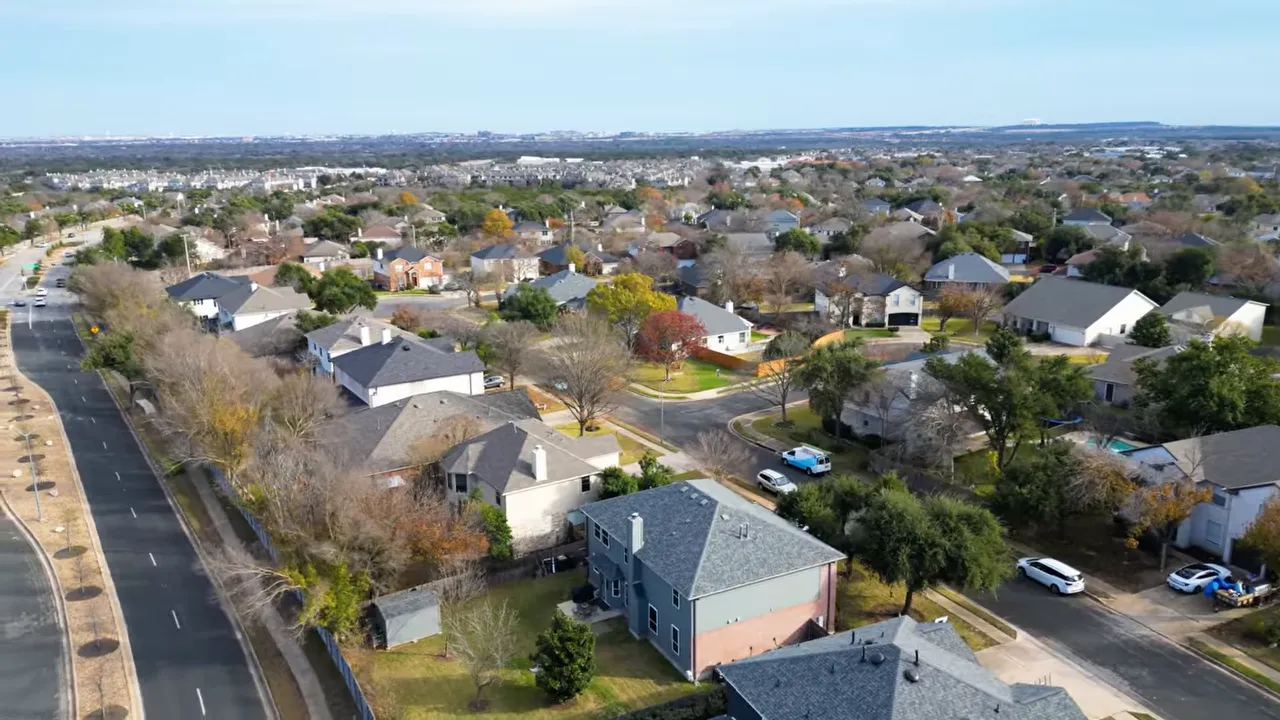
That is what the suburbs do really well. In many of Austin’s suburbs, life feels polished and convenient. Grocery stores, restaurants, neighborhood pools, youth sports, parks, and everyday errands are all laid out in a way that feels seamless.
And just like city grit can feel charming or exhausting depending on your personality, suburban order can feel either heavenly or soul-crushing depending on your personality.
That is why I never say one is better. In the living in Austin city vs suburbs debate, “better” depends almost entirely on the type of environment that energizes you.
Food is easier in the city
There is one part of the vibe conversation where I do think the city has a pretty clear edge: food.
You can absolutely find good food in the suburbs, and over time more standout Austin food concepts have opened suburban locations. But in general, central Austin is where world-class food is easiest to access. It is the kind of place where you can point in almost any direction and land on something excellent.
If your ideal lifestyle includes trying restaurants constantly and having amazing options close by, that weighs heavily in favor of the city.
Home Prices in Austin City vs Suburbs, Texas
Now for the part that changes a lot of minds: home prices.
This is where living in Austin city vs suburbs becomes very real very fast, because your money simply goes further in the suburbs.
Take a budget of $750,000. In suburban areas like Leander or Round Rock, that kind of money can often buy you:
- A four- or five-bedroom home
- Three or four bathrooms
- Roughly 3,500 square feet
- A newer build by a strong builder
- Access to major neighborhood amenities
And when I say amenities, I mean the real deal: pools, water slides, pickleball courts, tennis courts, basketball courts, fitness centers, workspaces, and community features that feel almost resort-like.
Now compare that with what $750,000 often buys in the city of Austin. You may be looking at:
- A two- or three-bedroom home
- One or two bathrooms
- An older house built in the 1940s through 1970s
- A smaller lot
- More repairs, upgrades, or renovation needs
The trade-off, of course, is location. In the city, you are closer to the restaurants, cultural spots, entertainment, and job centers that make Austin feel like Austin. But from a pure home-value perspective, the suburbs usually win by a mile.

This is why I have seen so many people start the process convinced they must live in the city, only to tour places in Pflugerville, Cedar Park, Kyle, Buda, or Dripping Springs and suddenly change their minds. Once they see what their budget actually buys, the suburban option starts looking very attractive.
How to Decide Between Living in Austin City vs Suburbs
If you are stuck between the two, I would narrow it down to these questions:
- How important are schools? If they are a major factor, the suburbs deserve serious attention.
- How much commute pain can you tolerate? Be honest, not optimistic.
- Do you want grit and character or convenience and polish?
- How much house do you need for your budget?
- How much do safety and neighborhood predictability matter to you?
- Do you care about quick access to top-tier restaurants and central-city culture?
That is really what living in Austin city vs suburbs comes down to. Not which option sounds cooler. Not which one is more popular. Just which one actually fits the life you want to live every day.
For some people, the city is the dream. For others, the suburbs are the obvious answer the second they experience them in person. And for a lot of people, the final decision comes from seeing both up close and realizing one of them simply feels right.
EXPLORE HOMES FOR SALE IN GREATER AUSTIN, TX
FAQs on Austin City vs Suburbs Living
Is living in Austin city vs suburbs better for families?
For many families, the suburbs often make more sense because of school ratings, safety, larger homes, and family-oriented master-planned communities. That said, there are still pockets of Austin proper that work very well for families, especially if commute and access to city amenities matter more to you.
Are the suburbs around Austin boring compared to the city?
They can feel more polished and predictable, but boring is not the right word for everyone. Many suburbs have strong parks, trails, pools, fitness communities, and growing restaurant scenes. The bigger difference is that they feel more structured and less gritty than central Austin.
Do you need to move to the city to enjoy Austin’s outdoor lifestyle?
No. Central Austin has famous outdoor spots, but suburbs like Cedar Park, Round Rock, Leander, and Georgetown also have excellent parks, trails, pools, and nature access. Outdoor living is one of the strongest similarities in the region.
Is the commute from Austin suburbs really that bad?
It depends on what you are used to. If you are coming from a major metro, a 30- to 35-minute commute may feel easy. If you are not used to heavy traffic, it may feel like a major lifestyle issue. If you work downtown or near the Domain, commute should be one of your top decision factors.
Do you get more house for your money in the suburbs?
Yes, usually by a lot. In the suburbs, a mid-to-upper budget often buys a much larger, newer home with more bedrooms, bathrooms, yard space, and neighborhood amenities. In the city, the same budget often buys an older and smaller home in a more central location.
Which is better for food lovers, Austin city or the suburbs?
The city has the edge. Great food exists in the suburbs, but in central Austin it is simply easier to find exceptional restaurants quickly and often.
Final Thoughts
If you are trying to figure out living in Austin city vs suburbs, the answer is not hidden in a spreadsheet. It is in the lifestyle trade-offs. The city gives you energy, access, character, and shorter commutes. The suburbs give you space, value, stronger school options on average, and a greater sense of order and safety.
Neither is automatically better. But one of them is probably better for you. And once that clicks, the decision gets a whole lot easier.
Ready to figure out which side of town fits your life? Call/Text (512) 855-2713 and let’s talk through your must-haves—schools, commute, and the vibe you want. We’ll help you narrow it down fast so you can make a confident move.
READ MORE: Living in Dripping Springs, TX: Homes, Schools, Cost & Lifestyle Guide