11 Myths About Living in Austin, TX You Should Know
If you're thinking about moving to Austin, you've probably heard a lot about this place. Some of it's true. A lot of it isn't. My team and I have helped people just like you relocate here from all over the country and all over the world, and we keep hearing the same myths over and over. So let's clear them up.
I've been coming to Austin all my life. My kids are seventh-generation Austinites, and I've been here for over 20 years raising them. I know this city, the central core, the suburbs, the politics, the schools, the traffic, the culture. I know what people get wrong before they visit, and I know what surprises them when they arrive. Whether you're relocating for work, retiring, or just drawn to what Austin offers, understanding the reality behind these myths will help you make a smarter decision about where to live and what to expect.
This isn't a generic blog post. This is what I tell clients on intro calls when they ask the hard questions. Let's get into it.
Table of Contents
- Myth #1: Austin Is Still Weird
- Myth #2: Texas Is Flat and Full of Cowboys
- Myth #3: Austinites Hate Newcomers
- Myth #4: HOAs in Austin Work Like They Do Back Home
- Bonus Myth: Austin Is Hot
- Myth #5: Austin Is Just a Smaller (Cheaper) Seattle or Los Angeles
- Myth #6: A Top-Rated School District Means Every School Is Great
- Myth #7: Traffic in Austin Is Bad and There's Nothing You Can Do About It
- Myth #8: Austin Is Just a Cheaper Version of New York or LA
- Myth #9: No State Income Tax Means Austin Is Cheap
- Myth #10: Austin Is Liberal
- Myth #11: Austin Is Falling Apart and Everyone Is Leaving
- Which Austin Myth Matters Most to You?
- Conclusion: The Real Austin
Myth #1: Austin Is Still Weird
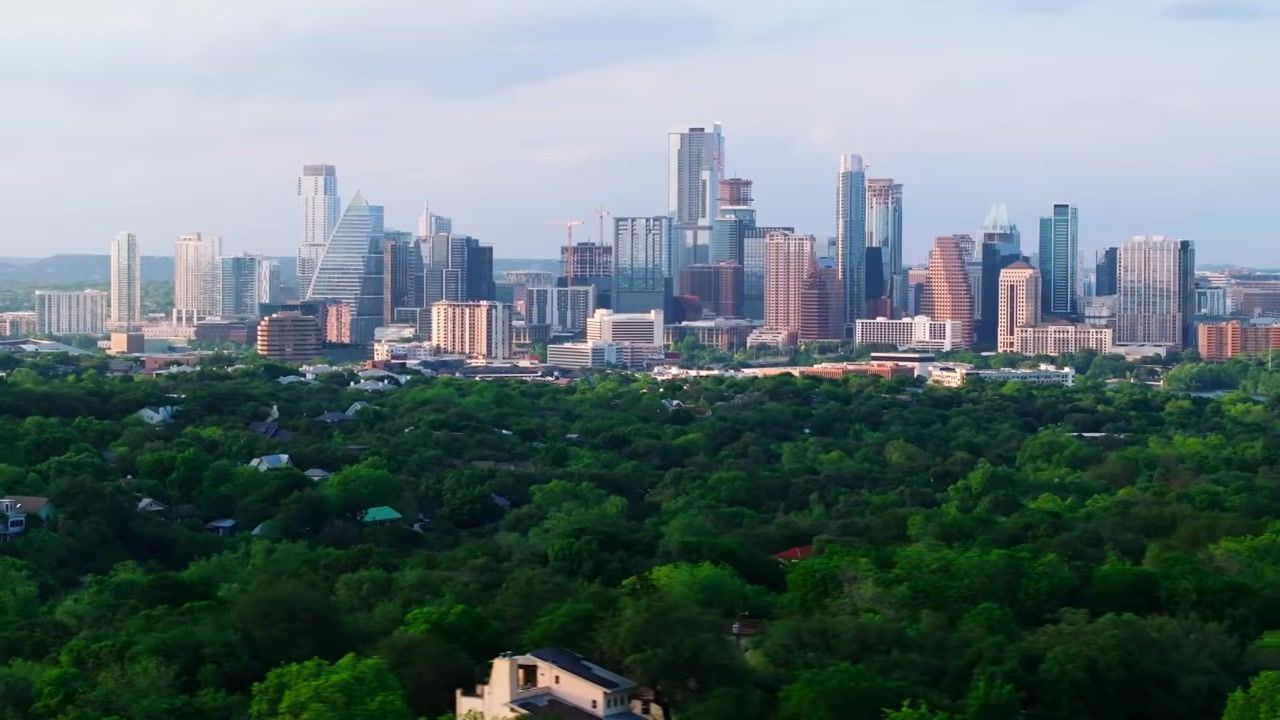
For those of you who don't know, the tagline for Austin is Keep Austin Weird . Historically, that meant supporting local businesses, local artists, local establishments. And for a lot of Austin's history, Keep Austin Weird really did mean keep Austin weird.
When I was a kid visiting my grandparents here, I remember going to the University of Texas campus for the first time, probably around six or seven years old, and seeing people on the Drag (the section of UT off Guadalupe Street between 19th and Dean Keaton). Punks with mohawks. Dudes walking around with G-strings and pink hair, purple hair, tons of piercings. I was like, whoa, what the heck? Then as a teenager, I came to Austin to see a concert and saw this guy named Leslie, a transvestite, as they called it back then, who wore a leather G-string and had really long hair. Leslie actually ran for mayor of Austin at one point, allegedly almost won.
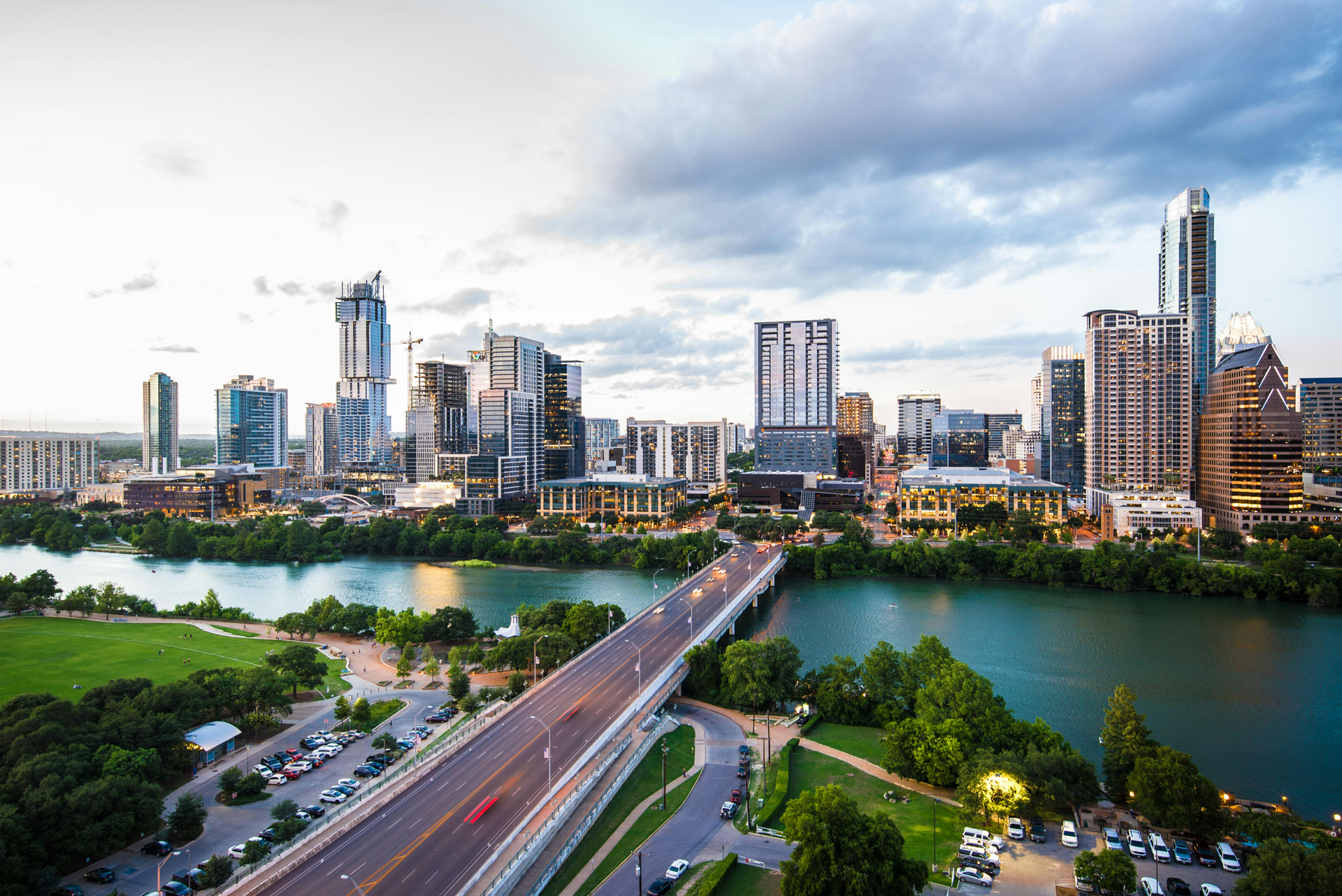
Historically, Austin has always been seen as this quirky college artist town. But over the last 26, 27 years, that culture has shifted pretty significantly. A lot of that started when tech companies moved in. When Dell moved to Austin in the late '90s, early 2000s, that came with a massive influx of tech workers and all the adjacent industries, lawyers, business people, medical infrastructure. Slowly over time, that super Keep Austin Weird edginess got edged out a little bit.
You know, there's Silicon Valley out in California. One of the nicknames Austin has earned over the last decade or two is Silicon Hills . We're in the Hill Country, so yeah, Silicon Hills is pretty appropriate. Especially since around 2010, tons of tech companies have moved to the Austin area, and now Austin is seen as the tech hub of the South.
A lot of people here think that's really sad. They're like, man, I remember when Austin was weird and now it's totally not weird. I disagree. I still think Austin is weird, especially when you go south of the river. That's where a lot of artists and creatives have gone, and it's totally still there if you know what to look for. But if you went into a coma in 1995 in Central Austin and woke up in 2026, 2027, it's going to be night and day. It's going to feel like a completely different city. A lot of people hate that. A lot of people love that.
Myth #2: Texas Is Flat and Full of Cowboys
This is more of a myth about Texas rather than Austin, but Austin is the state capital, so it's something you need to keep in mind. I hear this all the time from people moving here from out of state and out of the country. Someone literally asked me, I'm getting transferred to Austin, do I need to learn how to ride a horse?
Yo, check it out. I have ridden a horse one time in my entire life. I was 18 years old. I just wanted to ride a horse for fun. A friend of mine was horse sitting out in Conroe, in the rural areas around Houston. I rode a horse, and it was freaking awesome. But no, you do not need to ride a horse. Texas is not full of cowboys. I will say, kind of like Keep Austin Weird, if you know where to look, you will know where to find the cowboys. Don't get me wrong, I love country music, I love a bunch of hillbilly stuff just as much as the next guy, but no, you are not going to look around and just see a bunch of cowboys.
And then the flat thing, that's really interesting. I think a lot of people who move here or visit here are surprised about the climates in Texas. You've got almost tropical on the Texas Gulf Coast, the plains of Northeast Texas, the desert of West Texas, some mountains in West Texas around Big Bend National Park. And then you've got Central Texas, which is totally lush, beautiful Hill Country.
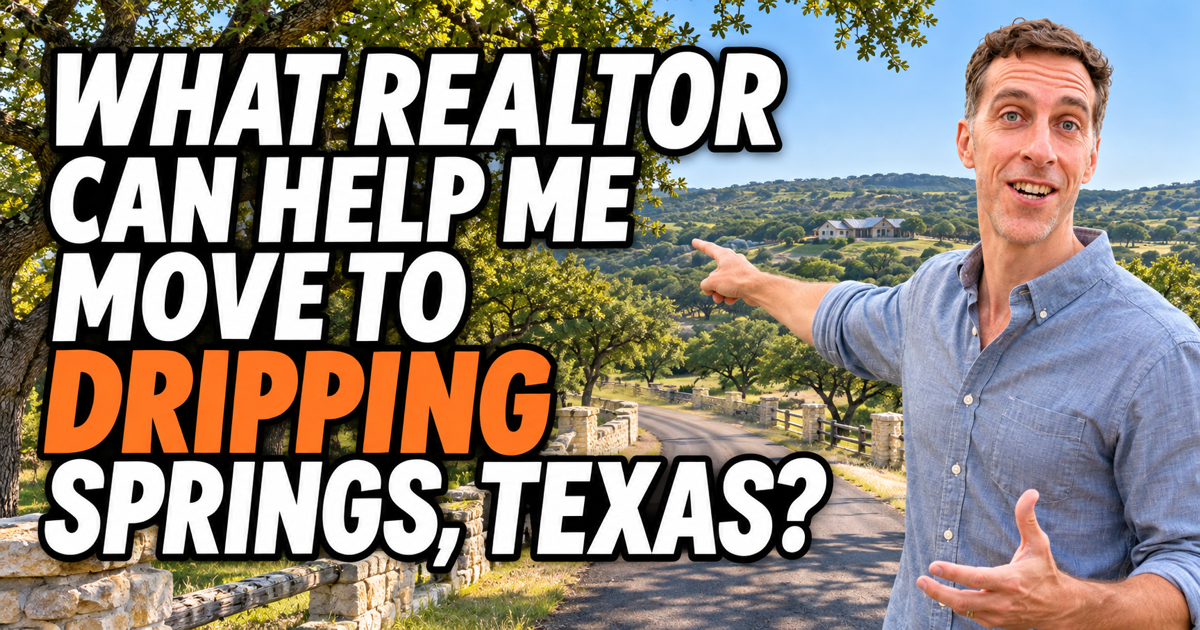
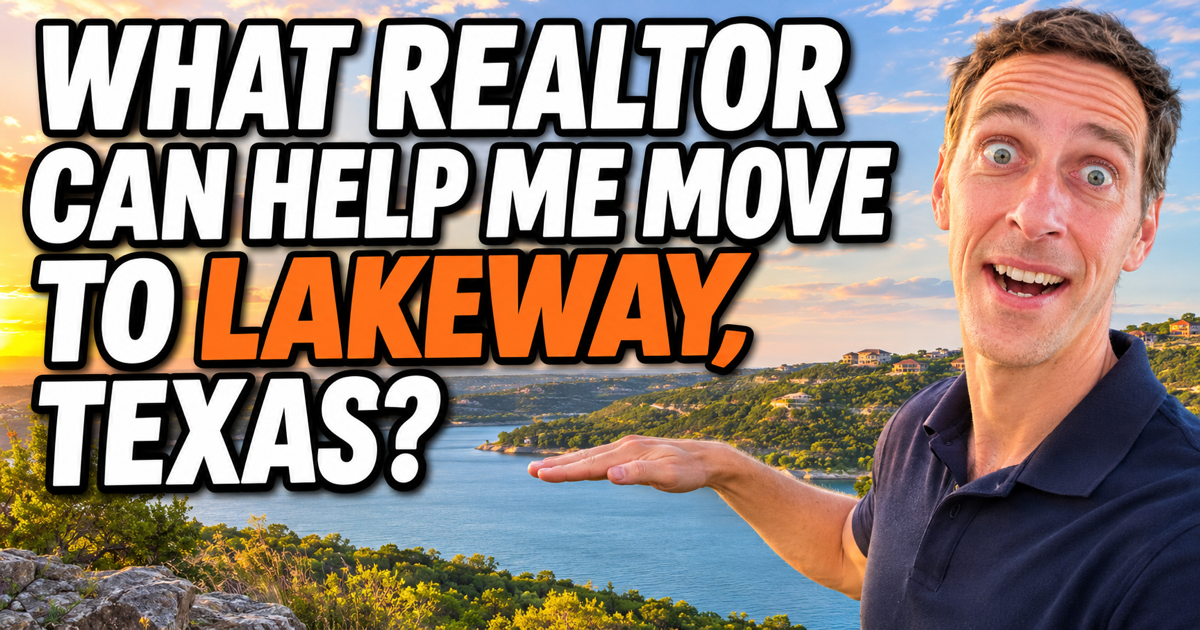
Austin is right at the foothills of the Hill Country. People here are always shocked when they visit and they're like, whoa, I was expecting it to be flat out here. Now granted, I said we're at the foothills, so if you go into East Austin, eastern suburbs, yes, it's going to be flatter. We've got some pine tree forest out in the Bastrop area. But when you go west, Dripping Springs , Lakeway , even parts of Leander and Georgetown , Driftwood , man, there's just some beautiful Hill Country. I think a lot of people are super shocked to see that.
We actually had a client who moved here from Boston recently. He's a cyclist, and he was just like, man, this is awesome because there's so many great rolling hills. He could do all his hill repeats and stuff like that. He was really psyched when he saw the level of hills he was going to be able to train on out here in the Austin area.
Myth #3: Austinites Hate Newcomers
This is one that breaks my heart a little bit. Just so you know, almost everyone in Austin is a newcomer. Every now and then you hear about someone who was born and raised in Austin. That is very, very rare. They're what I like to call a unicorn.
It really breaks my heart when I'll get on an intro call with a client just like you who sees us on YouTube and they reach out, and by the way, if you're loving what we're showing you, what we're telling you about Austin, and you're thinking about moving here or you're definitely moving here, definitely give me a call, shoot me a text, send me an email. We would love to hear about a few things you love, a few things you hate, and I guarantee you we can point you to the perfect area just for you.
Anyway, I'll be on an intro call with a new client, or I'll run into somebody at a grocery store and they're like, yeah, we just moved here from California. I get that a lot. Or like, oh, you don't want to know where I'm from. I'm like, no, where are you from? And they're like, oh, I'm from New York or Chicago. And I'm like, that's freaking awesome.
Like, yes, you will see toxic people on the internet no matter what city you're researching, no matter where you go. But when you talk to people who are not chronically online and you actually interact with them personally, they're going to be so psyched to have you here. Real good people in Austin love when other good people move here and contribute to community and contribute to culture here.
To be honest, most of the people on Reddit and things like that who are complaining about newcomers, they're not actually complaining about you because, again, chances are they are a newcomer. One of the things about Austin that's the most frustrating to me is the city and the area's lack of responsiveness to population influxes. Whatever road construction gets completed is what should have been completed at least 10 to 15 years ago. So people who are complaining are usually complaining about the infrastructure, the traffic, things like that, not about you as a person.
And also, because of what I mentioned earlier, a lot of people have relocated here probably just like you, for work. They're far away from family and their community and friends. So really, a lot of people here in Austin are yearning for and they're looking for community. If you are the type of person who can offer that, you are going to be so warmly welcomed.
The best way to be a newcomer in the Austin area, this is the gospel I preach on almost every video, if you want to be a great newcomer, get out of your house and get involved. Whatever you like to do, whether it's cycling, sewing, knitting, reading, playing video games, whatever, get out of your house and join a group. We've got gaming groups, cycling clubs, running clubs, book clubs, sewing groups. You can play literally any sport you can possibly think of. You can join an adult club team here in the Austin area. I am on a cycling team. I'm on a tennis team. I'm super involved in my church. I'm involved in our kids' schools. You've got to get out there and meet people. People in the Austin area love people who contribute to community. I cannot say that enough.
Myth #4: HOAs in Austin Work Like They Do Back Home
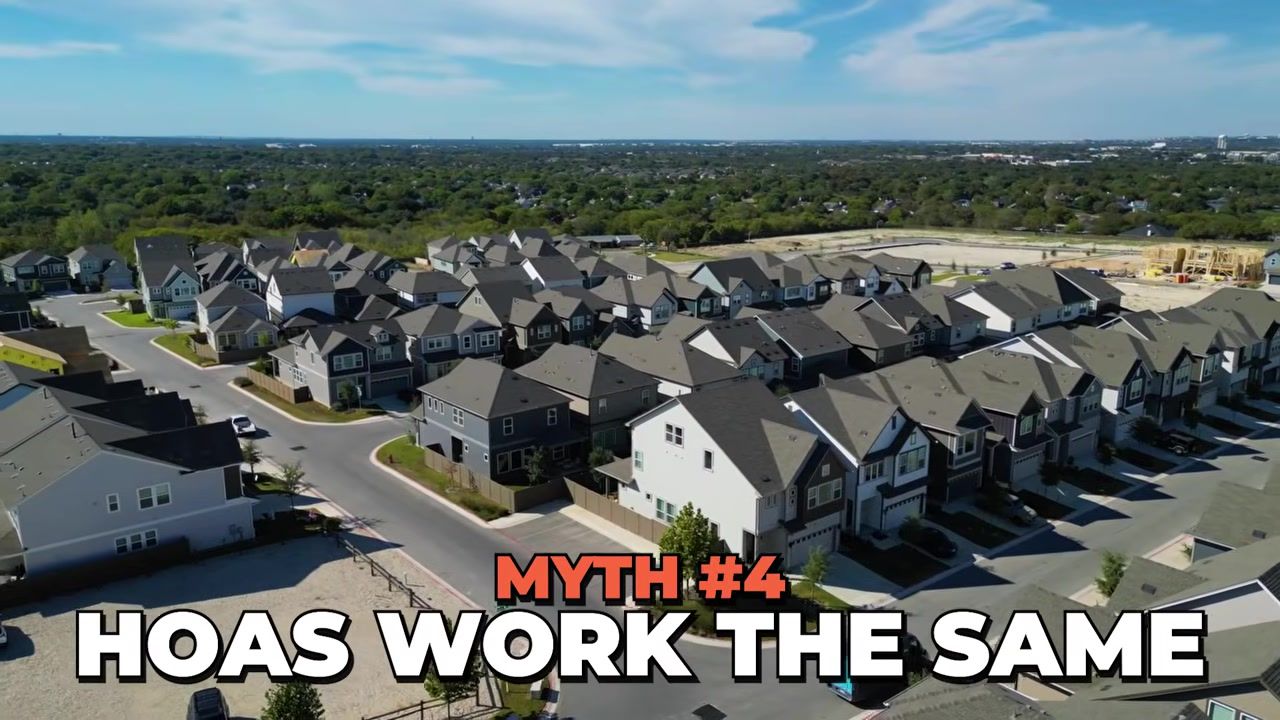
This is mainly for people moving here from out of state. This is something that I see over and over and over, I hear about over and over and over. Literally just a couple of hours ago, I was on a Zoom call with a client who reached out to us from YouTube just like you. At first she was like, I really don't want an HOA. She was like, I love the idea of getting a new house that doesn't need work, but I do not want an HOA.
I dug into it. I was like, you know what's funny? I hear about this a lot, especially from people who move here from Washington State and California, but really everywhere. I was like, tell me more about this. Tell me about your experience with HOAs. Like, why you seem to have a really strong reaction to the idea of an HOA. And she was just like, honestly, I just don't need psychotic Karens telling me exactly what I can and can't do with my own house or with my own property.
I was like, well, tell me what you mean. She was like, I've just heard horror stories. I'm like, like what? She said, you know, oh, I've heard how the HOA manager will leave a note on your door because you had too many pumpkins out decorating for Halloween, or your Christmas lights weren't up to neighborhood code or whatever, or my mother-in-law parked in front of our house for 45 minutes when the limit is 40 minutes.
I was like, okay, I see what's going on here, and I see this all the time. Here's something that you need to keep in mind if you have an allergy, a revulsion to HOAs. I always tell people, if you move here, you move into a master-planned community, you move into a new community, it is going to have an HOA. That's just something that you need to get by. Unless you're living in an old or a historic district, you're going to have an HOA.
But even if you live here in an HOA, you have to always remember you are in Texas. And people in Texas don't love being controlled. We don't love being told what to do with our own property. So there is an HOA culture difference from HOAs in Texas compared to HOAs in almost every other part of the country I've heard about.
When I told our client and I told hundreds of people before today, I'm like, HOAs here, the main reason for HOAs is to have a well-run and a well-managed neighborhood. They might organize events and things like that, but really they are trying to preserve your property's value. So they're just trying to make sure you're not letting your freaking grass grow three feet tall and that you're not parking cars out in your driveway and just living like absolute total hillbillies.
No one here is joining HOAs to be a super psychotic Karen and try to tell you that you need to wash your car or anything like that. Now that being said, there are a couple of HOAs I've heard about here that run a little bit more on the micromanaging side of things. If you want to know exactly what those communities are, reach out to us. We'd love to schedule a call with you and we can go over that. I almost never point people to those areas just because that's not what I am personally into.
In summary, HOAs in Texas are still in Texas, and apparently they operate very differently from the way HOAs in states like Washington, Arizona, California, New York, Illinois, and even Florida. They run very different than the HOAs in those states. So definitely something to keep in mind. If you're wanting a master-planned community, if you want a community with great pools, parks, trails, playgrounds, and amenities like that, you're gonna need to be okay with some level of HOA. That's just something that you probably should get comfortable with before you move here. But the idea that our HOAs are super psychotic like a lot of the ones you see on the internet, huge myth.
Bonus Myth: Austin Is Hot
Yeah, you heard me. If you look on the internet, you're gonna see tons of articles and tons of blog posts and tons of comments talking about how hot Austin is. Here's the deal, I actually don't think this one is much of a myth because it's true. I just think it's way overblown, and there's a side of this myth that I don't really hear people talking about very much.
Just to get it out of the way, yes, Austin is in Central Texas, and Texas is freaking hot most of the time. Yes, I will tell you, in the middle of the summer, you probably got three months where it could be 100 or more degrees Fahrenheit outside, and it can just feel absolutely brutal. We've had clients who've relocated here from all over the world, all over the country, and they underestimate how hot it can be here. They're like, oh yeah, we're from New York, but it gets hot in New York. And I'm like, but I don't know if it gets hot like this for as long as it gets hot like this. And they're like, no, no, it's cool. So they move here and then they spend three months in 104-degree weather and they're just like, bro, Barrett, I can't take this anymore. This is insane.
I always tell people, if you're coming here to visit, to consider moving here and you've never been here before for an extended period of time, I always recommend coming in July or August because those are usually the most brutally hot months. If you can take it, if you can have fun in Austin during those periods, great, you should totally move here. It doesn't bother me, the heat, at all because I'm a native Texan. I actually have learned to embrace the sweat, embrace the heat, and I actually love it.
What I don't love is the cold. And that brings me to the flip side of this myth. People do not appreciate how bitterly cold it can get in the Austin area in the wintertime. I will tell you, some of the coldest times I have ever been in my entire life are in December, January, February, and March, in Austin.
Seriously, a few years ago, it got down to like 9 degrees, I think, 9 to 12 degrees in the Austin area. There was a massive freeze. It felt like the entire city was shut down for like 10 days. It was crazy. A lot of our clients, a lot of our friends, we did not have power for like an entire week. It was totally freaking nuts. When it dips down below 33 degrees, people in the greater Austin area, people in Texas, just really do not know what to do. I don't know a single person who owns a snow shovel. There's no reason I want a snow shovel here. Our infrastructure, we do not know what to do when it gets bitterly cold, when it gets hazardously cold.
That's the flip side of this myth. Yes, it gets very hot here, but also it gets very, very cold in Austin. I know we've had a lot of clients who have moved here and I hear from them in February and it's 17 degrees and they're like, what the heck, dude? This is why I moved here from Minneapolis so I would never have to be this cold again. But now it's cold and humid, and it's just biting cold, and a lot of people are just not prepared for that. So keep that in mind before you move here.
Myth #5: Austin Is Just a Smaller (Cheaper) Seattle or Los Angeles
I hear that often goes like this: hey, you know, Austin is really just a smaller Seattle, or Austin is just a smaller Los Angeles, or Austin is just a smaller New York City or something like that, and that could not be further from the truth.
Now yes, in terms of the population of New York City, yes, Austin is a lot smaller in terms of population than New York City. Yes, Austin in terms of population is a lot smaller than the population of Los Angeles. However, I think sometimes before people visit here, before they really explore all of our great suburbs and the greater Austin area, they think of the greater Austin area as just this tiny little quaint small river town. And I'm here to tell you that could not be further from the truth.
First off, I think there's two reasons for that. One, Austin is very different from these areas. In New York City, depending on where you're living, you don't have to have a car. My wife lived in New York City for a year before we were married or before we were dating, before we knew each other. She didn't have a car. She sold her car before she went. She bought a new car when she moved back. I know people in the San Francisco area who don't have a car. They just use public transportation for everything because everything is just right there in their little community. In Austin, that is just not the case. You have to have a car. You don't have to, but you really do have to have a car if you're going to move here. We're in Texas. Everything here, even in the Austin area, is so spread out.
I think what a lot of people don't realize is if you just look at Austin on a map and you just zoom out, it looks like, oh cool, I'm getting a job at, I don't know, somewhere in Dripping Springs , and whoa, housing is way cheaper in Pflugerville , so what's the big deal? You know, Northeast Austin, Southwest Austin, all Austin, not that big of a deal, I can commute. No, please hear me right now, don't do that. Do not choose where to live blind. Do not choose where to live just looking at a Google Map. You have to call us. We want to hear, again, a few things you love, a few things you hate, but we want to hear what you want in terms of a commute. We want to hear where your office is going to be. We want to learn about the rhythms of your life because if getting your commute time down is really important to you and you want to buy cheap housing in Elgin but your job is at The Domain, you are going to absolutely hate your life. And most importantly, you're going to end up hating me and my team for letting you make that decision. We do not want you to do that.
I will tell you, even culturally, when I think about areas like Pflugerville and Lakeway , they feel like completely different universes. When I think about Liberty Hill in the Northwest versus Buda or Kyle in the Deep South, they feel like completely different universes. I think the myth is that people think of the greater Austin area as just one big area, and that's not the truth. Really, the truth is that Austin feels like when you're here like 16 different areas that are a reasonably short driving distance from each other, but they really do feel like 16 to 18 completely different towns kind of put together like a puzzle.
Myth #6: A Top-Rated School District Means Every School Is Great
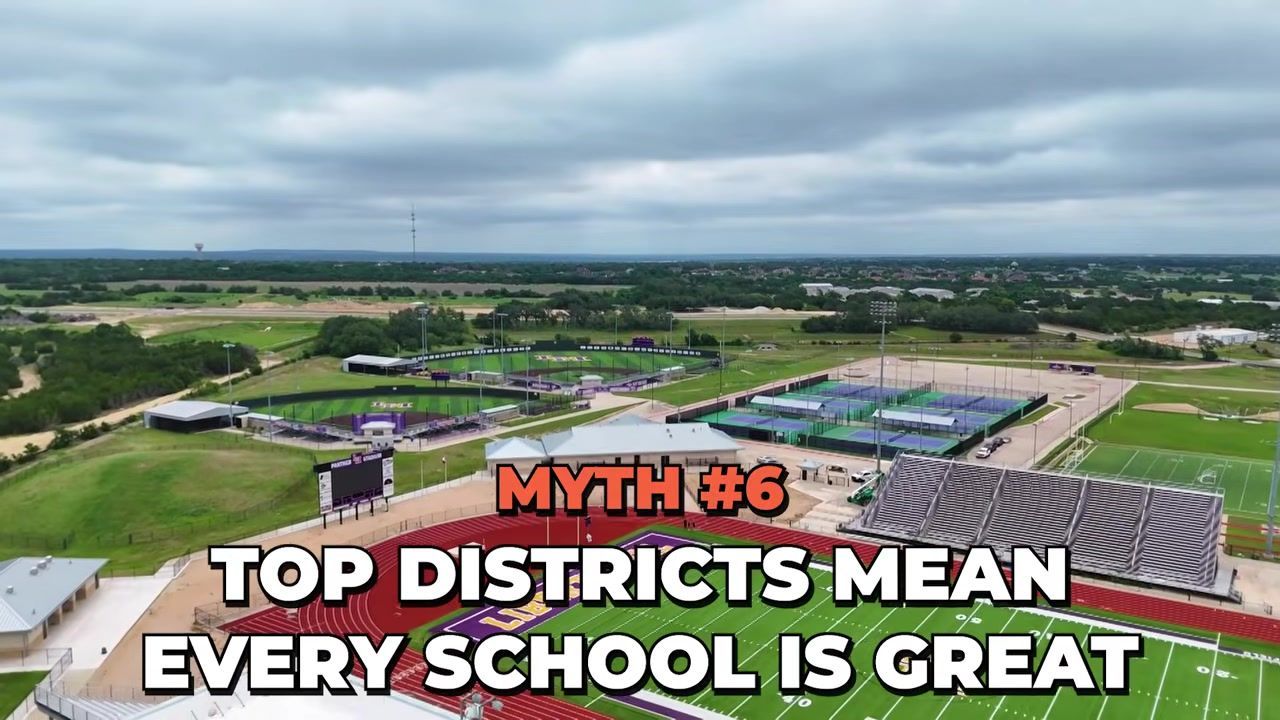
Guys, if you do not hear anything else in this video, listen to me. That is a myth. There are almost no school districts in the greater Austin area where every single school is super highly rated. There are a couple of exceptions, but look, I say this all the time on these YouTube videos, but I think Texas has some pretty local schools, and Central Texas has an absolute embarrassment of riches when it comes to local schools.
Every year when I look at the ratings in January, there are five school districts that make the top of the list every single year since I've been tracking this, and they're all directly adjacent to Austin. What's funny is Austin ISD, the City of Austin Independent School District, I would say is rated relatively mediocre. Now you got to remember, we've got tons of high schools and way more middle schools and way more elementary schools. There are hundreds of different school circuits that your kids could go to. I'm just talking about in the city of Austin. Yeah, I would say some of the schools in the city of Austin are really bad. Some of the schools in the city of Austin are okay. I send my kids to the city of Austin schools that are okay. And then some of the schools in the city of Austin are incredibly rated. There are a couple school circuits in Austin where I'm like, man, those are really good.
However, every year, top five rated school districts are, number one is always Eanes ISD . That's E-A-N-E-S ISD. That includes areas like Westlake . Probably the most expensive, most popular kind of suburb neighborhood area in the greater Austin area. The average price of a home in Eanes ISD right now is about $3 million. So that should tell you something.
The second highest rated school district is almost always Lake Travis ISD . The average price of a home in Lake Travis ISD is about $1.5 million. The number three school district in Central Texas is almost always Dripping Springs ISD . All of these are West Austin areas, by the way.
The fourth and fifth highest rated school districts are usually Leander ISD and Round Rock ISD . Those kind of switch places sometimes. And then usually number six and number seven are Georgetown ISD , Liberty Hill ISD . Again, all of these are right around city of Austin, which is totally crazy. We have so many great school districts.
In Leander and Round Rock ISD, the average price of a home is somewhere around $500,000. So Leander, Round Rock, Georgetown, Liberty Hill, if you're looking for a great school district but you're also price sensitive, which most of humanity is, then that can be a really great bang for your buck.
Now the mistake is hearing something like that. The myth is that you hear something like that and you're like, oh cool, Round Rock ISD, one of the top five school districts. Yep, let's just find the cheapest house in Round Rock and our kids are going to go to local schools. No, that is not the case. Especially, I mean, I'll be honest, in Eanes ISD, Lake Travis ISD, Dripping Springs ISD, you almost can't go wrong. I'll be honest. But where it gets interesting is Leander, Round Rock, Georgetown, Liberty Hill ISD, and even some other ones. Man, they've got some incredible school circuits. But there are some elementary, middle, high schools where it'd be like, I probably would not want my own family to go to those schools.
Again, if you want to know exactly what those schools are, there's only so much I can say on a public YouTube video. Reach out to us, and we want to hear that this is important to you. We can show you a map, and we can point you to the best-rated schools for your kids.
I will tell you, every now and then someone like you who found us on YouTube will reach out to us, and they moved here without our help. Maybe they rented something for a while or whatever, and they moved here. We didn't even know who they were. They moved here without our help. Then they reached out to us because they were like, oh hey, I've been following you on YouTube for a while. Turns out this has literally happened three times this year, and they're like, I've been following you, we moved here, we made a huge mistake, we bought a new construction without a realtor. And it turns out the schools where our kids are going absolutely suck. It's been a terrible experience. And so Barrett, we should have reached out to you earlier. You know, can you help us out? Where are local schools? Just tell us where to go. And so we do not want that to happen to you. You do not need to go through that pain. Just reach out to us.
Myth #7: Traffic in Austin Is Bad and There's Nothing You Can Do About It
I say this is a myth because, look, I told you earlier I'm a native Texan. I was born in Beaumont, Texas, in Southeast Texas. That's where I lived the first 10 years of my life. The next 10 years of my life, I lived in Conroe, Texas, the northernmost suburb of Houston. And then for the last 20-plus years of my life, I've lived in Austin.
You got to remember, I come from areas like Beaumont and Conroe, where really the traffic is non-existent. It's not bad at all. And then I moved to Austin over 20 years ago, and it was just like, oh my gosh. I mean, the two main thoroughfares, north-south thoroughfares in Austin, are I-35 to the east, which was created by Satan himself, and then MoPac. It was created by some demon prince, I don't know, not Satan himself, but a demon prince, I think. During rush hour, it is so frustrating to sit going zero miles an hour on one of those roads, especially I-35.
But here's the deal. Relatively speaking, Austin traffic is not really that bad. You got to remember our team, we help people relocate here all the time from areas like Washington, D.C. Seattle, Los Angeles, San Francisco, even Miami. Where I have just heard absolute horror stories. Literally last Friday, I met with a family who both the husband and the wife commute two hours one way. Two hours one way. So that means both of them combined commute for eight hours a day. Eight hours a freaking day. Now, that is bad traffic and that is not a myth.
For people to say Austin has bad traffic when it's like, yeah, you know, you can buy a great house in Leander and commute into The Domain. It's going to take you about 35 minutes. I've literally had people sit on our intro video calls here. I'm like, ooh, you might not want this neighborhood because you're going to have, your commute's pretty bad. And they're like, well, how bad, Barrett? I'm like, oh, it's like 30 minutes. And they literally involuntarily laugh out loud in my face. And they're like, Barrett, you don't know what bad traffic is.
So in reality, Austin traffic is not that bad. It's just something that you need to know about. But I will say, during rush hour, MoPac and I-35 and even Highway 183, you're probably going to want to avoid them at all costs.
But we do in Central Texas, in the Austin area, we really have done a great job of developing a pretty robust system of toll roads. There's a toll road in East Austin called Toll Road 130. I mean, for people who live in Georgetown , Round Rock , Pflugerville , Hutto , Elgin, Manor, 130 has absolutely changed their lives. So now they don't just have to go straight into town and get on I-35 and just sit there like a thing that sits for a long time waiting to get into downtown or the Domain. They can hop on 130 and circumvent the worst of the worst traffic, and 130 essentially could drop you off at the airport or it could drop you off kind of just east of downtown. For a lot of people who, you know, commute is really important to them, living in Georgetown has cut your commute from one hour potentially down to 30-35 minutes, which is totally crazy.
So outside of rush hour, traffic in Austin is really not bad at all. It's just in those peak hours, again mainly on I-35, but sometimes on MoPac, it can be pretty brutal. But that's another reason that we always tell our clients, you know, when they're moving here and they're doing their scouting trip, which we're very involved in planning that trip for them. So if you're moving here, definitely reach out to us before your scouting trip so that we can help give you a tailored itinerary for your trip. It's something that we really, really love doing. We always tell our clients, we work in there, we're like, hey, go ahead, your top two or three neighborhoods, make sure to do those commutes during rush hour to where your office is going to be so that it can give you a really realistic idea of what your commute is actually going to be like.
I'm telling you, I've done this research eight ways till Tuesday. Google Maps directions, traffic directions, is not accurate. You have to drive it yourself, or you have to rely on the advice and the experience of someone like me who has driven all these during rush hour, because I've been showing homes all over God's green earth all day, every day for the last 13 years. I know a thing or two about Austin traffic, but even better than that is just getting here and experiencing it yourself.
Myth #8: Austin Is Just a Cheaper Version of New York or LA
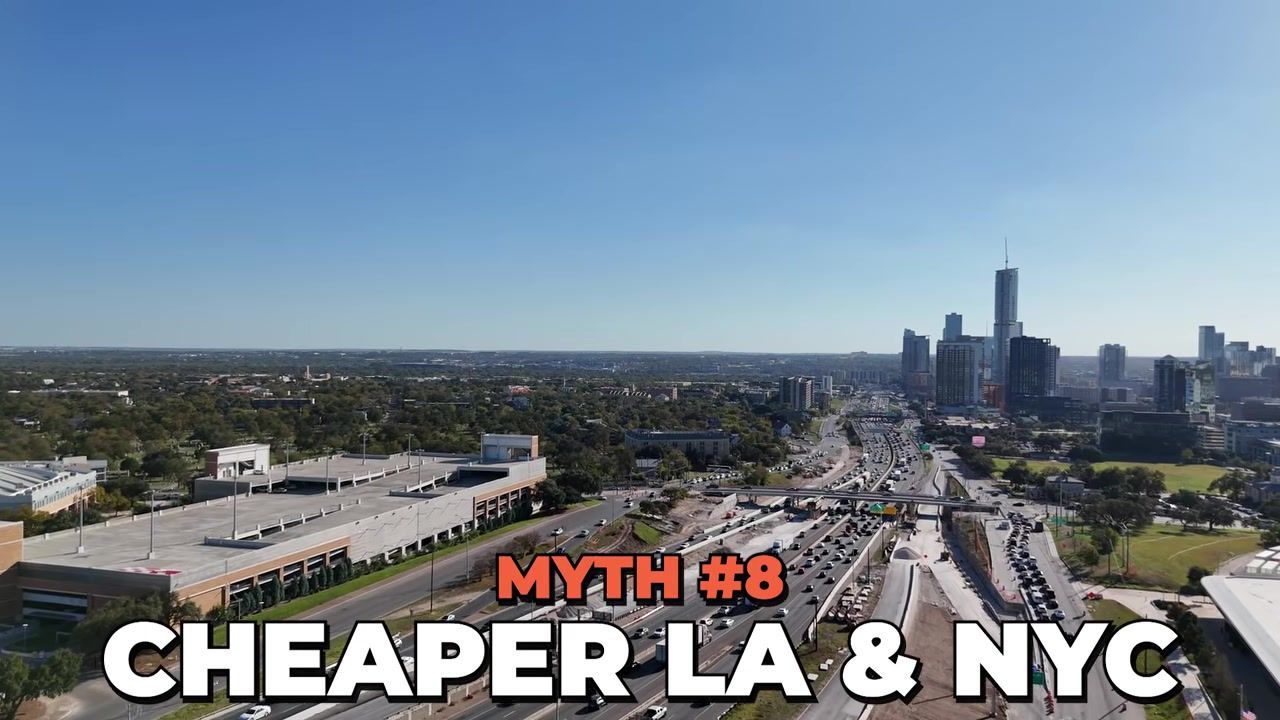
I'm not going to spend a ton of time on this one, but it's related to myth number five where I said Austin is a smaller Los Angeles. This myth is that Austin is just a cheaper Los Angeles or Austin is just a cheaper New York City. And again, I've said a lot about this and around this earlier in this video, but that's just not true.
If you live in New York City and you absolutely love it, you live in Chicago, you absolutely love it, you live in Seattle, you freaking love it, you live in Los Angeles, you love it, you live in Miami, you love it, and you're like, hold on, I'm just gonna move to Austin and I'm gonna get everything that I have here but it's just gonna be cheaper, don't do it. Just don't do it. You are going to be severely disappointed, and again, you're just going to end up resenting me for letting you do it.
Now, there are some significant advantages that you have, mainly financially, I would say financially and culturally, in Austin relative to those areas that I was talking about. Man, you always hear about Southern hospitality. Texas takes it to another level. It's not just Southern hospitality, it's Texas hospitality. And those are just things that we hear from our clients over and over and over and over again. People moving here from Los Angeles, Las Vegas, Washington, D.C. Baltimore, Philadelphia, every area you can think of, and they're like, oh my gosh, I didn't realize for 40 freaking years of my life I was living all around people who were not warm, who were not kind.
Not to say that there aren't kind and warm people in those areas, but here, that is just what you're gonna get. Our clients have just been overwhelmed with gratitude, overwhelmed with joy at how much they are warmly received. I talked about this recently on a video, but I got a text from a client who moved here from Las Vegas a few months ago. He and his family moved to an area called Driftwood that's just south of Dripping Springs. And he texted me that first weekend that they lived here, and he was just like, Barrett, this is incredible. Already so many of our neighbors have brought us barbecue, baked goods, offered to watch our kid if we ever want to go on date nights. We have never felt so warmly welcomed in a place in our entire lives. We are literally never leaving. Is what they said, and I quote, we are literally never leaving. Just stuff like that really warms my heart.
So anyway, back to the myth. Yes, you are going to get things in Texas, in the Austin area specifically, that you are not going to get in those areas. And yes, it is cheaper. It wouldn't be a myth to say Austin is cheaper than New York City. Austin is cheaper than Los Angeles for sure. The real estate, the gas, the stuff here is cheaper, but it is not just a cheaper version of that city. There are things about New York City, the art, the culture, the density, there are things about Los Angeles like the weather, just the overabundance of amazing cafes and restaurants. Yeah, you have great food, great cafes, great restaurants here, but it is not like Los Angeles. It is different.
Myth #9: No State Income Tax Means Austin Is Cheap
Hey, in Texas we don't have a state income tax. So it's cheap here. No, that is not the case. Again, huge caveat. Yes, it is correct to say we do not have a state income tax. And yes, it is true to say that it is cheaper to live here than areas like California, Washington State. I'm repeating myself a lot here. I would not say that it's true to say that it is just cheap, full stop.
Something that you're going to hear about a lot when you research on the internet is our property taxes. In Texas in general, and in Central Texas specifically, our property taxes are really alarming to a lot of people. There are definitely areas where you can pay in the low 2s to the low 3 percentage points every year. You are basically paying the government rent for the privilege of owning your own home.
Just to put that into perspective, if you buy a $900,000 house, you know, a 3% property tax rate, that's $27,000 a year that you have to pay in property taxes that you're never going to get back. Now some would say yes, those property taxes do go to infrastructure projects in the area, goes to the schools, it goes to the community college district, it goes to the city, the county, all that good stuff, and the roads and all that. Yeah, sure, totally. However, you do not have to pay that high property taxes in most other states in the United States. That's just something that a lot of people are shocked about.
Now not every property tax is 3%. Most are not. In fact, in Westlake , which, you know, your kids are going to be zoned to Eanes ISD, it's one of the nicest, safest, most expensive areas of the Austin area. I saw recently there was a property tax rate that was like 1.4%, 1.5%. So you could buy a $1 million house out there and your property taxes would be about $15,000 a month.
Definitely, if you're looking in the area and you're property tax sensitive, which you have every right to be, you totally should be, that's another reason you need to get ahold of us so that we can really help you understand what your property tax rates are gonna be. Because you could find a $900,000 new construction house in Georgetown and a $900,000 new construction house in Leander , and your property taxes could be significant. I mean, thousands and thousands of dollars of difference.
So definitively, Austin is not a smaller Los Angeles. It is not a cheaper Los Angeles. Austin is not a smaller and cheaper Seattle.
Myth #10: Austin Is Liberal
I hear this all the time from people. Sometimes people think that that's a positive thing, and sometimes people think that's a negative thing. I hear people say like, oh yeah, you know, I have a trans kid and we want to move to Austin because it's a more welcoming place than XYZ city in Nebraska or whatever. I'm just making that last part up. Or, ooh, my job got transferred here and we're gonna move because it's a great job opportunity, but I don't know, Austin seems pretty liberal and I really don't like that. We're super conservative Christian family and I really don't like that Austin's so liberal, but I'm just gonna bite the bullet because it's a great job opportunity.
I think there's some truth to both sides of that, but to say Austin is a liberal city, I think, is a myth. And here's what I mean by that. Yes, by and large, the city of Austin is pretty liberal. The central city core of Austin is pretty liberal Democrat. I see by the time you're watching this video, you might not even know what I'm talking about here, but I see a lot of, you know, Talarico signs, Gina Hinojosa signs, a lot of the liberal politicians that are, it's kind of big election season right now. Actually, Election Day is tomorrow as I'm recording this. So you're going to see a lot of signs like that.
But if you go just outside the central city core, it gets a lot more conservative than people think. And I'm talking just outside the city core. I'm not even talking about the suburbs. I'm still talking about the city of Austin. When you think about areas like great neighborhoods in Austin, like Circle C , Northwest Hills , Great Hills , Wells Branch, areas like that, it's definitely a lot more politically diverse than, to just say that it's liberal would be completely wrong. In fact, I would say those areas sometimes even lean a little bit more conservative.
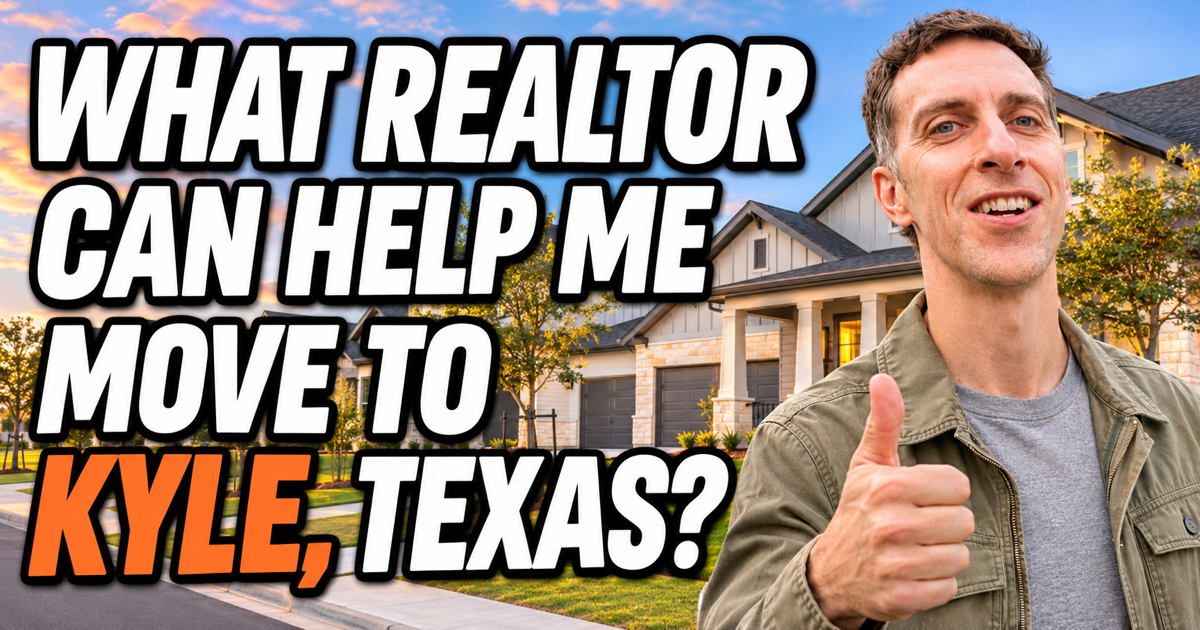
And then when you go into the suburbs, I would definitely say those areas like Lakeway , Dripping Springs , Georgetown , Leander , maybe even Round Rock a little bit, Buda , Kyle , those areas lean more conservative, but definitely plenty of liberals. So the greater Austin area, it's one of my favorite things about Austin, is kind of the push and pull of the politics. I like that it's not universally one way. There are areas of Texas, most of the areas of Texas, where it's gonna be almost universally conservative. Personally, I don't think I would like that. And then there are certain parts of the country that would lean definitely be universally liberal, and I don't think I would like that either.
I like that Austin is kind of weird. That's how we're keeping it weird here, people. It's like it sometimes Austin can be too conservative for the liberals and too liberal for the conservatives, and it's very attractive to people who are into that sort of thing. Not a lot of people in Austin like to just be pinned down when it comes to politics. For example, I have really close friends who are super liberal, but they're gun owners, and they're really into gun rights. And then I have friends who are super conservative, but they're really into supporting LGBTQ+ policies and ideology and things like that. And it's all over the place. As soon as I think I can nail someone down, I'm like wait, you are not like I thought you were, and I think that's really cool. You might hear that and be like, sounds like Austin sucks, but I like it and you're watching my video.
Myth #11: Austin Is Falling Apart and Everyone Is Leaving
The 11th and final myth that we are going to talk about with Austin is this: Austin is falling apart and everyone is leaving. God, this is something that's honestly a bunch of clickbait BS. This is something that I see a lot on YouTube. I really try not to be on YouTube, strangely, that much. I have a few things I like to watch on YouTube. I love watching tennis and cycling videos on YouTube. I like watching church history videos on YouTube, but that's pretty much it. My algorithm has me pinned.
But every now and then, I think because YouTube knows that I do Austin relocation content, the algorithm will throw other people's Austin videos at me. And I just keep seeing things like, you know, people freaking out like Austin is done forever, or everyone's leaving, or every Californian regrets living in Austin or moving to Austin. And guys, I cannot emphasize enough, that is absolute clickbait BS.
I will tell you, not everyone is leaving Austin. Not everyone is losing their minds and losing their jobs in the Austin area. I actually wrote a social media post about this recently, which feel free to follow me on Instagram, Barrett Raven. But last week I was in line at a, no, this is the week before last actually. I was in line at a coffee shop and I heard a couple people in front of me talking. One of them was a realtor and she just goes, nobody's moving to Austin anymore. And I was like, uh, I have evidence to the contrary.
I'm just talking about our YouTube channel, y'all. Literally every single day, I can't say this enough, every single day, literally people just like you are reaching out to us from YouTube for all sorts of reasons. It's a spectrum. Say on this end of the spectrum, people are just like, my job relocated me here. I will tell you in our experience, we get to see things from our end. How many companies are moving here, how many companies are expanding, how many companies are hiring. And there's all sorts of tech, AI, hardware, software, robotics companies. It's absolutely nuts how many companies are moving here. And I'm going to get into this in another video, but guys, I am predicting, and I think I'm pretty right on this, in the next few years there are certain segments and sections of Austin that I think are going to explode. We're talking nuclear growth. Again, I'll do videos on that another time, but it's totally crazy how many companies are moving here and are gearing up to move here. It's absolutely crazy.
But then on this end of the spectrum, oh no, you know what, in the middle of that spectrum are people who are just like, you know, my office, my company has an office in Austin, so we're thinking about moving there because we think it could be pretty cool. And then on this end of the spectrum, we got people who are just like, you know what, I work remotely, or I'm retired, or I can live wherever the heck I want, and I just like Austin. Maybe I went there for ACL, I went there for South by, I went there for a wedding. We had this recently. Someone came, was like, I went to a wedding there recently and I had the best weekend of my entire life, and it made me want to move there. And I'm like, freaking A, that's awesome.
I am telling you from my mouth to God's ears, every single day people are reaching out to us about relocating here. And the people who have relocated here, who we have helped, by and large, they freaking love it because there's so much to love about Austin.
Which Austin Myth Matters Most to You?
When you're choosing where to live in the greater Austin area, the myth that matters most depends on what you value. If you're moving here for work and commute is everything, the traffic myth and the "Austin is one big area" myth are the ones you need to debunk first. If you have kids and schools are non-negotiable, the school district myth is the one that will save you from a costly mistake. If you're price-sensitive and trying to understand the true cost of living here, the property tax myth is the one that will shape your budget.
Here's a quick comparison of what to prioritize based on your situation:
Choose Leander, Round Rock, or Georgetown if you want a top-rated school district at a more accessible price point (around $500,000 average), but you need to verify the specific school circuit for your home because not every school in those districts is highly rated.
Choose Westlake or the Lake Travis area if school quality is non-negotiable and you're willing to pay a premium ($1.5 million to $3 million average) for access to the most consistently local schools in Central Texas.
Choose Driftwood, Dripping Springs, or Lakeway if you want Hill Country beauty, a more conservative-leaning suburb, and you're okay with a longer commute into the city core or The Domain.
Choose Pflugerville or Hutto if you want newer construction, access to Toll Road 130 to cut your commute, and a more diverse political mix, but you need to research school circuits carefully.
Choose Circle C, Northwest Hills, or Great Hills if you want to stay inside the city of Austin, avoid a long commute, and live in a politically diverse neighborhood that leans slightly more conservative than the central core.
Every one of these areas has trade-offs. The myth is that you can have it all in one place. The reality is that you need to know what you're willing to compromise on, and what you're not.
Conclusion: The Real Austin
Austin is not the city people think it is before they visit. It's not universally weird anymore, but it's still weird if you know where to look. It's not flat, and you don't need to ride a horse. It's not a smaller, cheaper version of Seattle or Los Angeles, it's its own place with its own culture, its own trade-offs, and its own advantages. It's not universally liberal or universally conservative. It's not falling apart, and people are not fleeing. Companies are moving here. Families are relocating here. People are reaching out to us every single day.
But it is hot in the summer, and it gets colder in the winter than people expect. Traffic is real during rush hour, but it's not as bad as Washington, D.C. or Los Angeles. HOAs exist, but they're not as psychotic as the ones you've heard about in other states. Property taxes are high, but there's no state income tax. Schools are incredible in some circuits and mediocre in others, even within the same district.
If you're thinking about moving to Austin, the best thing you can do is reach out to us before you make a decision. We want to hear a few things you love, a few things you hate, and where your office is going to be. We can point you to the perfect area just for you. We can help you plan your scouting trip, show you the school circuits that matter, and make sure you don't end up in a neighborhood that's a 90-minute commute from your job.
Give me a call, shoot me a text, send me an email. We would love to help you make this move the right way.
FAQ
Is Austin still a weird city?
Austin is still weird, especially south of the river, but the culture has shifted significantly over the last 26 years as tech companies moved in. The central core is more corporate and tech-focused now, but the quirky artist vibe is still there if you know where to look.
Do I need to worry about HOAs if I move to Austin?
If you move into a master-planned community or new construction, you will have an HOA. But HOAs in Texas operate very differently from HOAs in states like California, Washington, or Florida. They're focused on preserving property value and managing amenities, not micromanaging your Halloween decorations or parking.
Are the winters in Austin really that cold?
Yes. A few years ago, it got down to 9 to 12 degrees and the city shut down for about 10 days. Many people lost power for a week. When it dips below 33 degrees, the infrastructure here does not know what to do. If you're moving here to escape cold weather, know that it can get bitterly cold in December, January, February, and March.
Can I rely on a top-rated school district to guarantee my kids go to a great school?
No. Even in top-rated districts like Leander ISD, Round Rock ISD, Georgetown ISD, and Liberty Hill ISD, there are some school circuits that are incredible and some that are not. You need to verify the specific elementary, middle, and high school your home is zoned to before you buy.
Is Austin traffic as bad as people say?
Relatively speaking, no. If you're coming from Washington, D.C. Seattle, Los Angeles, or San Francisco, Austin traffic will feel manageable. During rush hour, I-35 and MoPac can be brutal, but outside of peak hours, traffic is not bad at all. Toll roads like 130 have also made a huge difference for people commuting from Georgetown, Round Rock, Pflugerville, and Hutto.
Is Austin a liberal city?
The central city core of Austin is pretty liberal, but just outside the core, areas like Circle C, Northwest Hills, and Great Hills, it gets a lot more politically diverse and sometimes even leans conservative. The suburbs like Lakeway, Dripping Springs, Georgetown, Leander, Round Rock, Buda, and Kyle tend to lean more conservative, but there are plenty of liberals. Austin is politically mixed, and a lot of people here don't fit neatly into one camp.

Barrett Raven’s approach blends deep Austin knowledge with a focus on customer service. Whether you're buying, selling, or relocating, Barrett and his team are here to ensure your real estate journey is smooth, informed, and successful.
Recent Posts