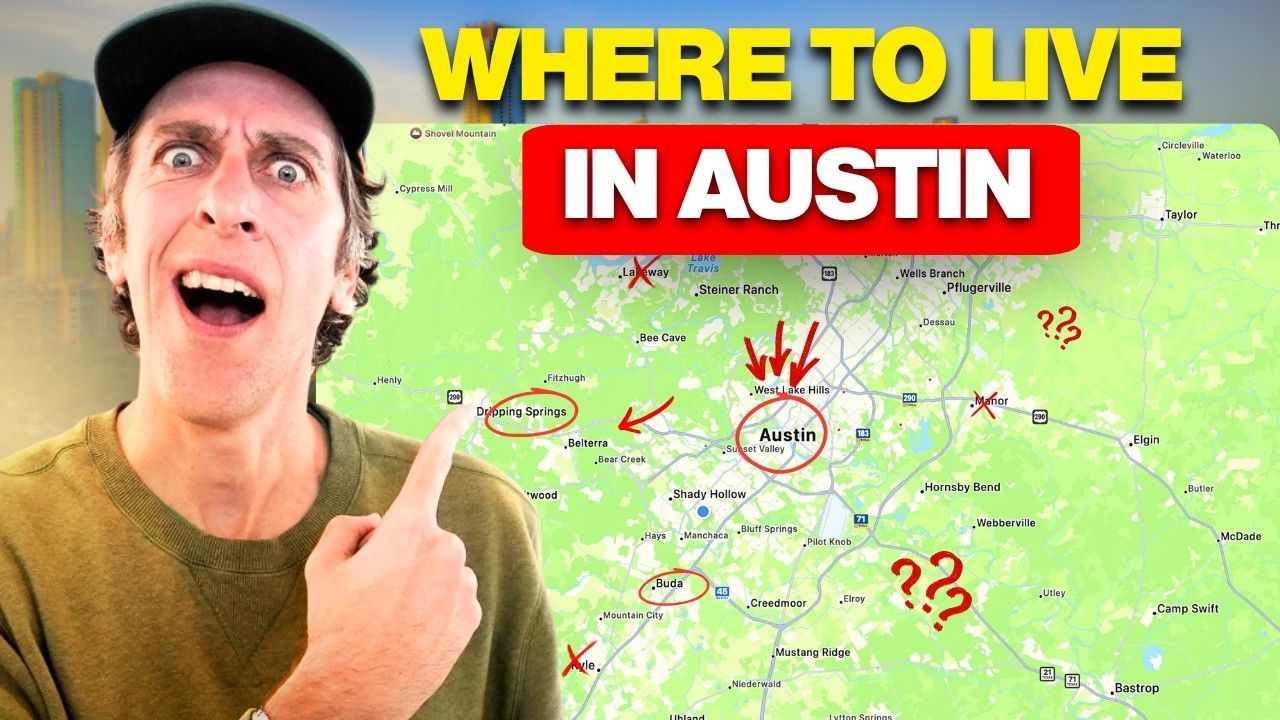
If you are trying to figure out the best suburbs in Austin Texas to live in, here is the truth: picking the wrong suburb can absolutely wreck your experience.
Not because the suburb is bad. Austin has an embarrassment of riches when it comes to good suburbs. The problem is mismatch. People move expecting one thing, then land somewhere that feels too suburban, too far, too expensive, too underbuilt, too chaotic, or just not like the version of Austin they had in their head.
That is why we do not like surface-level rankings. We care about the stuff that actually affects daily life: commute pain, school quality, construction noise, community identity, affordability, scenery, and whether a place feels like a stepping stone or a place you genuinely want to invest in long-term.
This ranking is our personal top five list of the best suburbs in Austin Texas to live in, moving from really good to truly great. None of these are bad picks. We just think some of them deliver a better blend of value, lifestyle, and long-term satisfaction than others.
Table of Contents
- How We Think About Austin Suburbs
- 5 Buda
- 4 Round Rock
- 3 Lakeway
- 2 Dripping Springs
- 1 Georgetown
- Honorable Mentions
- Final Thoughts
- FAQ
How We Think About Austin Suburbs
Before getting into the ranking, it helps to understand one of the biggest divides in the metro: north Austin and south Austin do not feel the same.
Historically, north Austin has leaned more white-collar, more corporate, more tech-driven. South Austin has felt more laid-back, more blue-collar, more artsy, more eclectic, and a little more down-to-earth. Those lines have blurred over the years, but if you spend enough time here, the difference is still real.
That matters because when people search for the best suburbs in Austin Texas to live in, they often compare places that are not trying to be the same thing. Buda is not trying to be Round Rock. Lakeway is not trying to be Dripping Springs. Georgetown is not trying to be north Austin with a different ZIP code.
So our ranking is not just about price or school ratings. It is about fit.
5. Buda
Buda is the only south Austin suburb on this list, and that alone makes it stand out.
It feels more laid-back than many of the big-name north side suburbs. It is a little more rural. You are going to see more open land, more cows, and generally more people who feel grounded and local rather than hyper-corporate. We love that about Buda.
Why Buda makes the list
The first big win is downtown Buda. It is not huge, but it has that old Texas small-town square energy. Main Street has cafes, bars, coffee shops, restaurants, and enough charm to make the town feel like a real place instead of just a collection of subdivisions.
The second win is affordability. If you want a genuinely good house in Buda, not the kind of stripped-down product that looks good on a spreadsheet but disappoints in person, we would usually tell people to budget closer to $450,000 to $550,000 for a strong four-bedroom, three-bath option from a good builder. Compared to Austin proper, that is still a major value play.
The third win is the school trajectory. Kids in Buda are generally zoned to Hays Consolidated ISD. Historically, that district has not had the same reputation as places like Eanes, Lake Travis, Dripping Springs, Leander, or Round Rock ISD. But context matters. Those are some of the strongest districts in the state, so Hays is being compared to giants.
What catches our attention is momentum. With all the growth and new construction in and around Buda, the district has improved fast. That kind of upward movement matters, especially if you are trying to maximize home value, family-friendliness, and decent schools without blowing the budget.
Where Buda can disappoint people
The biggest issue is construction. There is a significant amount of new development, and that means noise, trucks, equipment, and a feeling that the area is still being built around you. Some people move there expecting peaceful south-side serenity and then realize they are living beside years of growth.
The other obvious issue is I-35. If you live in Buda and need to get into Austin regularly, you are going to be spending time on I-35, and that road has a special talent for ruining moods.
Retail is also still catching up. You will have access to major chains and the basics, but if you want a deep bench of local mom-and-pop options, Buda is not there yet in the way older, more established areas are.
Who Buda is best for
Buda works especially well for:
-
First-time homebuyers
-
Families trying to stay budget-conscious
-
People who like south Austin vibes but cannot justify south Austin prices
-
Buyers who are comfortable betting on future growth
If you want one of the best suburbs in Austin Texas to live in for affordability plus family value, Buda has a strong case.
4. Round Rock
Round Rock is the classic “drive till you qualify” suburb, but that label undersells it.
Yes, plenty of people land in Round Rock because Austin proper is too expensive. That is still true. But Round Rock has grown into a real city with its own identity, even if it still feels, in many places, like textbook suburban sprawl.
Price-wise, a very solid newer four-bedroom home may land around $500,000 to $550,000, which is still compelling for what you get.
Why Round Rock makes the list
First, the schools. Round Rock ISD is one of the heavy hitters in the Austin area. Not every school is a home run, so zoning matters a lot, but if you are in the right part of Round Rock, the home-price-to-school-quality ratio is outstanding.
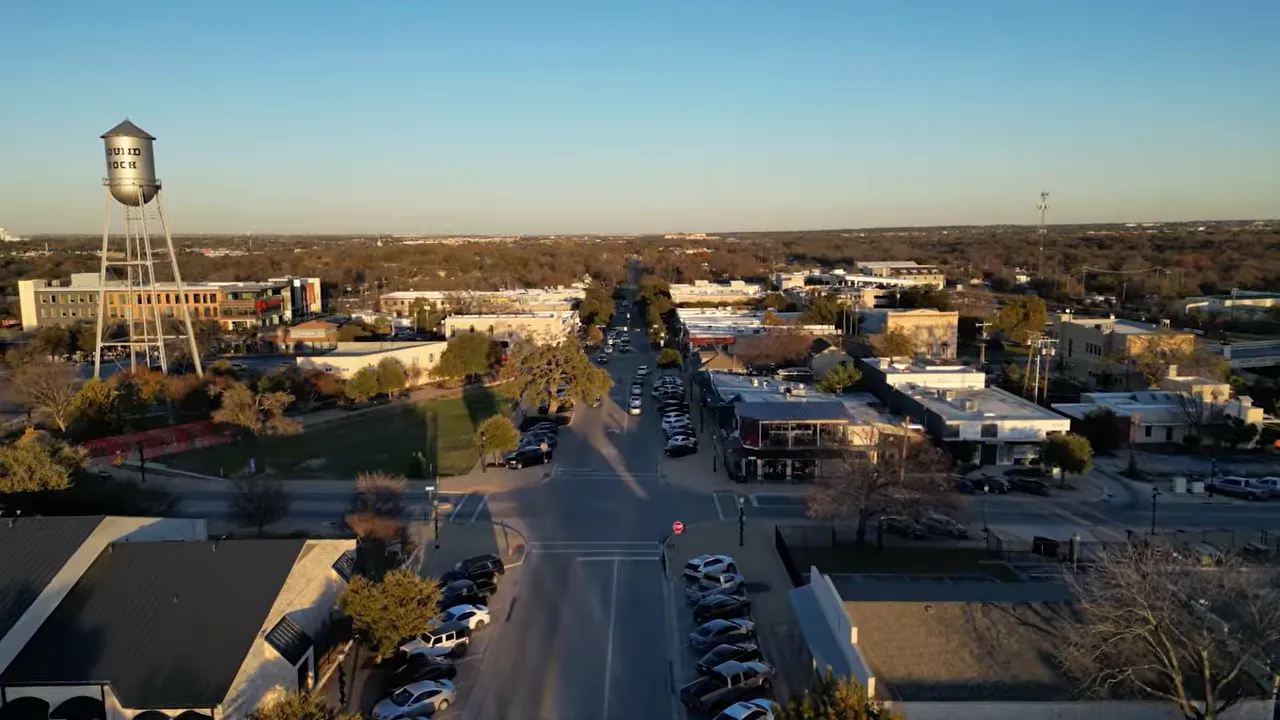
Second, employment access. Dell is based in Round Rock, which makes this suburb an obvious choice for anyone working there. It is also convenient to the Domain and many major employers in north Austin, including big-name tech companies. For people who want to be close to jobs without paying near-Domain housing prices, Round Rock often ends up being the sweet spot.
Third, it is mostly built out. That matters more than people think. In Buda, you may be buying into future potential plus years of nearby construction. In Round Rock, what you see is more or less what you get. There is comfort in that.
Where Round Rock can disappoint people
Again, I-35 is hard to avoid. Also, if you imagine Round Rock as basically north Austin, that is a mistake. On the map it can look close. In real life, especially at rush hour, it can feel very separate.
That separation shows up culturally too. Round Rock does not have Austin’s grit or cool factor. Downtown Round Rock has some charm, and we like it, but outside that pocket the city reads as suburban through and through.
Nightlife is also limited. For some people that is a con. For parents with kids and an early bedtime, it may sound like a feature.
Who Round Rock is best for
Round Rock is a great fit for:
-
Young families
-
Buyers who want excellent schools without luxury pricing
-
Tech workers near Dell or the Domain
-
People who want a fully-suburban lifestyle with solid amenities
3. Lakeway
Lakeway is one of the biggest glow-ups on this list.
Years ago, we thought of Lakeway as a retirement community. Then we spent real time out there and realized it is one of the most visually striking and lifestyle-driven areas in the metro.
It is gorgeous. The hills, the greenery, the terrain, the lake views, the neighborhoods. Lakeway feels elevated, and in many parts, genuinely upscale.
Why Lakeway makes the list
The obvious headline is Lake Travis access. There are marinas, access points, and plenty of ways to enjoy the water if boating and lake recreation matter to you.
Then there is the community feel. Neighborhoods like Rough Hollow have a strong lifestyle component. People are out walking, cycling, gathering, and living outside. There is an energy there that a lot of people find infectious.
And yes, the schools are elite. Lakeway is zoned to Lake Travis ISD, which is one of the best school districts not just around Austin but in Texas. Academics are strong. Athletics are on another level.
Where Lakeway can disappoint people
The first issue is price. If you want a truly good four-bedroom, three-and-a-half-bath home in Lakeway, you may need to think more in the $1.75 million to $1.8 million range. This is a huge jump from Buda and Round Rock.
The second issue is traffic and commute time. Ranch Road 620 is the main artery, and getting into Austin usually means connecting through 620, 71, or Southwest Parkway. Those routes can bottleneck badly. A stalled car can throw everything into chaos.
The third issue is one people really do not expect: lake culture is not as visible as they imagine. Lakeway is near the lake, but it does not feel like a classic lake town. It is not all flip-flops, boats, dock bars, and lake-life buzz. In fact, some people are surprised by how quiet the lake scene feels.
There is also the practical reality of fluctuating lake levels. Lake Travis water levels can drop dramatically, and that matters if your whole dream is built around easy water access.
Who Lakeway is best for
Lakeway is ideal for higher-budget buyers who care deeply about:
-
Scenery and natural beauty
-
Top-tier schools
-
An upscale, lifestyle-oriented environment
-
Access to the lake without needing a true lake-town vibe
2. Dripping Springs
If Lakeway is the polished lake-adjacent lifestyle suburb, Dripping Springs is the Hill Country heartthrob.
They call it the gateway to the Hill Country for a reason. Dripping Springs is one of those places that flips a switch for people. They may show up thinking the commute is too long, the area is too far, and they are only going to “check it out.” Then ten minutes in, they are texting that this is where they want to live.
Why Dripping Springs makes the list
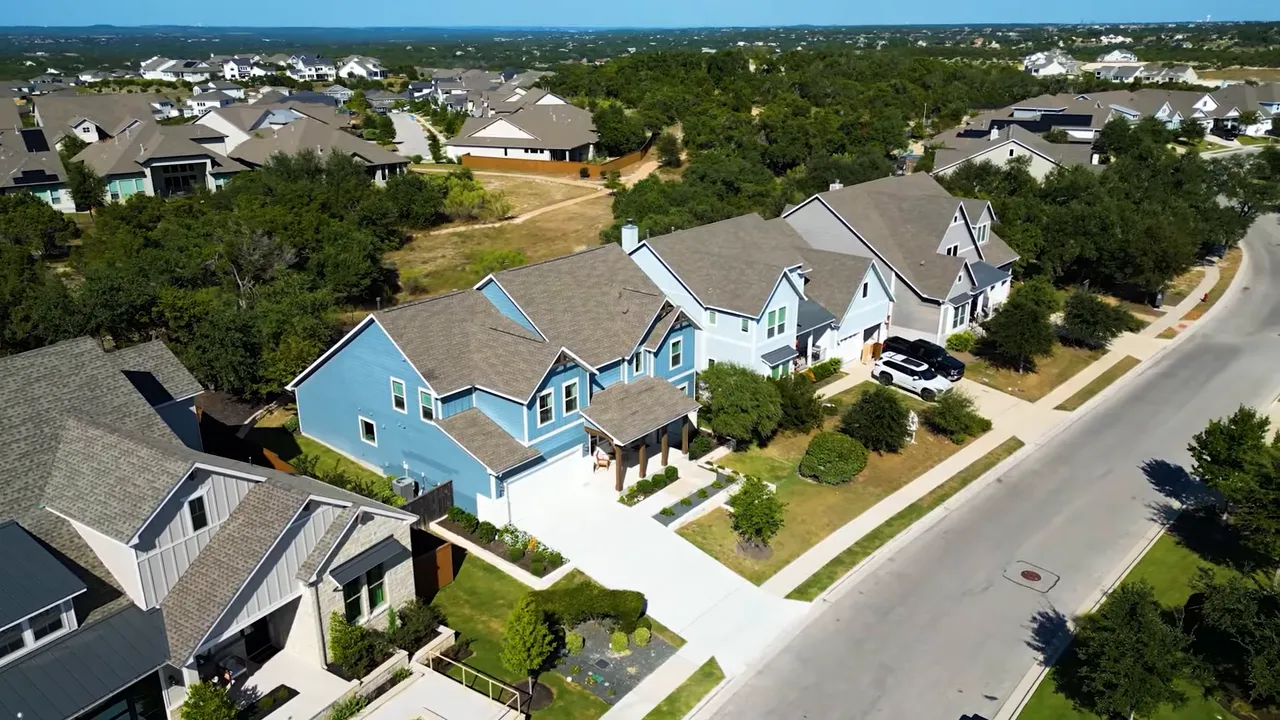
First, it is almost universally beautiful. Trees, hills, terrain, space, greenery, views. It feels slower, more grounded, and more distinctly Texan than a lot of the more polished suburban options.
Second, the schools are excellent. Dripping Springs ISD is typically right behind Eanes and Lake Travis in local school conversations. What makes Dripping Springs especially attractive is that the price-to-school-quality ratio can be incredibly compelling. A good home might land around $800,000 to $850,000, which is a lot, yes, but still significantly less than Lakeway while delivering a school district that many families see as very close in quality.
Third, Dripping Springs offers a rare middle ground. It feels more rural and more spacious, but it does not feel disconnected. You are not on some isolated ranch in the middle of nowhere. You still have access to breweries, wineries, distilleries, and daily conveniences.
Where Dripping Springs can disappoint people
Traffic is the biggest issue, especially via Highway 290. If convenience is your top priority, Dripping Springs is not the answer. This is a lifestyle pick, not a convenience pick.
Price is the other challenge. Compared with Buda, Kyle, and some other budget-conscious areas, Dripping Springs can produce serious sticker shock. And if you want acreage, things can escalate quickly into the multi-million-dollar range.
Who Dripping Springs is best for
Dripping Springs works best for people who want:
-
Space and privacy
-
Hill Country scenery
-
A more relaxed pace of life
-
Strong schools
-
A home chosen for lifestyle over pure convenience
Among the best suburbs in Austin Texas to live in, this is one of the strongest choices for buyers who care more about how life feels than how fast they can get to downtown.
1. Georgetown
If we had to choose just one suburb where we would personally put our money, it would be Georgetown .
That surprises a lot of people, especially anyone who still thinks Georgetown is just a retirement town. We used to think that too. Then we spent enough time there to realize Georgetown has something most suburbs do not: identity.
Georgetown does not feel like Austin spillover. It feels like its own town. Historically, it actually was its own thing, and that still shows up in the culture today.
Why Georgetown makes the list
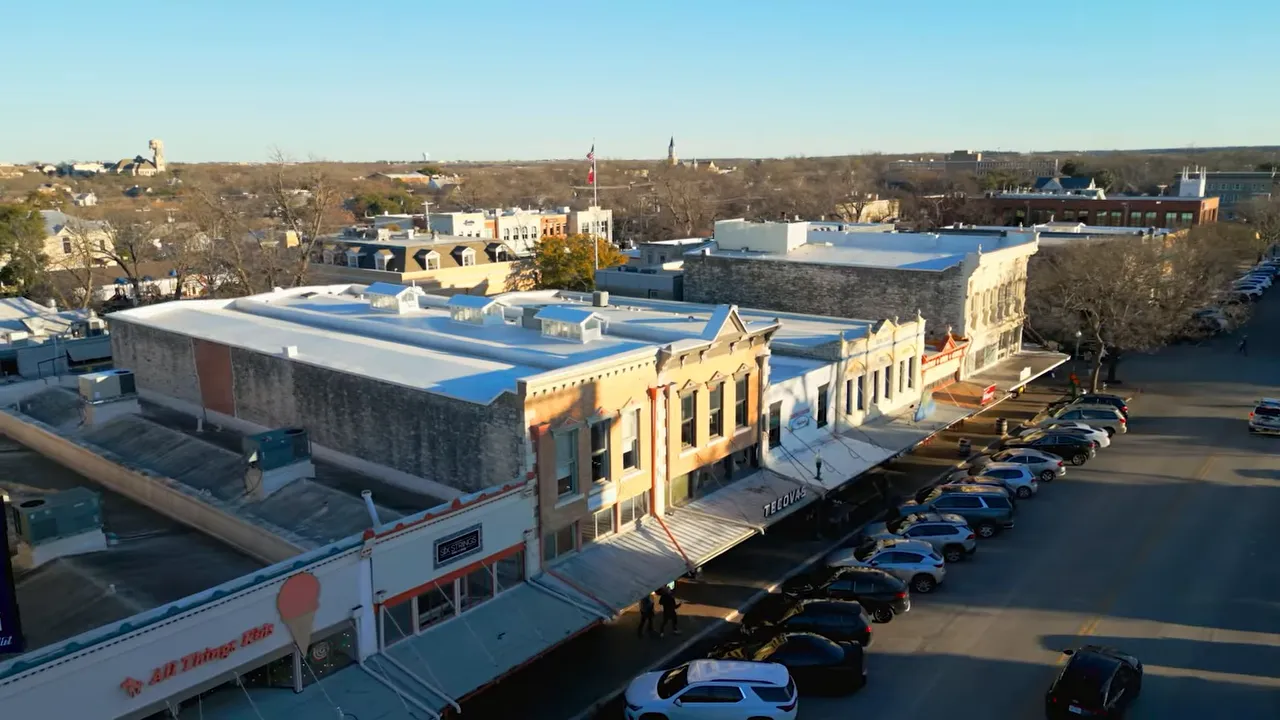
The downtown is one of the best in Central Texas. It is charming, active, walkable, and somehow manages to feel both social and family-friendly. There are local shops, restaurants, bars, music, kids running around, and a kind of small-town civic pride that is hard to fake.
Then there is Lake Georgetown, which is wildly underappreciated. It is peaceful, scenic, and feels much farther from the city than it really is. The hiking and camping access around the lake add another layer of lifestyle value that many suburbs simply do not have.
More than anything, Georgetown feels complete. It has charm. It has community. It has outdoor access. It has a true center of gravity. For a lot of people, that matters more than being close to Austin’s hottest zip codes.
Where Georgetown can disappoint people
The commute is the obvious drawback. If you need to go into Austin proper every day, Georgetown is probably not your move. That drive gets old fast, and we would rather tell you that upfront than let you hate your life a year later.
The second issue is growth. Georgetown has grown a lot, and the infrastructure has not fully kept pace. Even getting from one part of Georgetown to another can take longer than you would expect because of traffic and road limitations.
What people get wrong about Georgetown
A lot of people assume Georgetown is only for retirees because Sun City, one of Texas’s biggest 55-plus communities, is there.
But that does not define the whole town. You can live in Georgetown and barely interact with Sun City at all. In fact, the large retirement presence may quietly benefit the broader community because it contributes to the cleanliness, maintenance, and civic care that make Georgetown feel so polished.
Who Georgetown is best for
Georgetown is a great fit for people who:
-
Do not need a daily commute into Austin
-
Want charm and community, not just a subdivision
-
Value a slower, more invested way of living
-
Want to put down roots somewhere with a real sense of place
For us, that is what pushes Georgetown to number one on the list of the best suburbs in Austin Texas to live in.
Honorable Mentions
There are too many good suburbs around Austin to pretend this top five is the whole story.
Wimberley is fantastic, especially if river-town charm is your thing.
Leander deserves a lot of love, especially for northwest Austin access.
Cedar Park is beautiful, practical, and great for tech workers.
Bastrop has one of the coolest downtowns in the area, plus some really interesting acreage and Colorado River access.
But if we are talking about where we would personally put our money today, Georgetown still wins.
Final Thoughts
The search for the best suburbs in Austin Texas to live in is not about finding the suburb with the best marketing. It is about finding the suburb that matches your real life.
If you care about affordability and future upside, Buda is worth a look.
If you want suburban practicality, job access, and great schools, Round Rock is hard to ignore.
If budget is not your biggest limiter and you want scenery plus elite schools, Lakeway is a serious contender.
If you are chasing Hill Country lifestyle and do not mind paying for it in commute time, Dripping Springs is a stunner.
And if you want the suburb that feels most like a real town with real identity, Georgetown stands alone.
That is the key. The best suburbs in Austin Texas to live in are not the same for everyone. But if you know what tradeoffs you are willing to make and what kind of life you are actually trying to build, the right answer becomes a whole lot clearer.
Ready to find the right Austin-area suburb for your lifestyle and budget? Call or text our team at (512) 855-2713 and we’ll help you narrow down the best neighborhoods to tour.
FAQ
What is the best suburb in Austin Texas to live in overall?
Our top pick is Georgetown because it offers something rare among suburbs: a real sense of identity. It has a standout downtown, access to Lake Georgetown, strong community character, and a lifestyle that feels like more than just suburban overflow from Austin.
Which Austin suburb is best for affordability and families?
Buda stands out for buyers who want a family-friendly area, improving schools, and lower entry points than many other suburbs. Round Rock is also a strong value option, especially if school quality is a top priority.
Which suburb has the best schools near Austin?
Lakeway and Dripping Springs are both tied to some of the strongest school districts in the region. Lakeway feeds into Lake Travis ISD, while Dripping Springs feeds into Dripping Springs ISD. Round Rock ISD is also excellent in many parts of Round Rock.
Is Georgetown only for retirees?
No. Georgetown has a major retirement community in Sun City, but the city itself is much broader than that. Families, remote workers, and long-term homeowners are drawn to Georgetown for its charm, downtown, and slower-paced lifestyle.
Is Dripping Springs too far from Austin?
It depends on your tolerance for commuting. If convenience is your top priority and you need to be in Austin every day, Dripping Springs may feel far. But for many people, the scenery, space, and lifestyle more than make up for the commute.
What do people get wrong about Lakeway?
A lot of people assume Lakeway feels like a classic lake town. It really does not. It has lake access and beautiful surroundings, but the overall vibe is more upscale suburban lifestyle than laid-back dock-and-flip-flops lake culture.
READ MORE: Top Suburbs Around Austin TX: A Complete Guide to the Best Neighborhoods