There is a very good chance that, if we are moving to Austin and buying a home, North Austin or one of its suburbs will end up on our shortlist. In our experience, a huge percentage of people relocating to the Austin area ultimately choose North Austin, Round Rock, Cedar Park, Leander, Georgetown, Pflugerville, or Liberty Hill over the other sides of town.
There is a reason for that. North Austin has excellent school districts, a massive job base, great neighborhoods, newer homes, and a family friendly rhythm that is hard to beat. But it also has some real tradeoffs that can absolutely frustrate us if we move here expecting a walkable, central Austin lifestyle.
So, let us be real about it. North Austin can be an outstanding place to live, but it works best when we know exactly what we are signing up for.
Key Takeaways
- North Austin stands out for highly regarded school districts, safety, family activities, and proximity to major tech employers.
- Limited destination walkability, heavy traffic, suburban sprawl, and distance from central Austin are the biggest lifestyle tradeoffs.
- North Austin suburbs offer substantial new construction inventory and potentially far more house for the budget than many major metro areas.
- The Domain, strong food options, nearby trails, and Toll Road 130 add convenience, but daily life works best when we embrace the suburb itself.
Table of Contents
- What Areas Are Considered North Austin?
- North Austin Schools, Jobs, and Safety
- What Is It Like Living in North Austin?
- North Austin Homes, New Construction, and Home Values
- The Domain and North Austin’s Changing Culture
- Best Things to Do in North Austin: Food, Nature, and Community
- North Austin to the Airport: Commute and Location
What Areas Are Considered North Austin?
First, we need to clarify the map. The Colorado River, also called Town Lake or Lady Bird Lake, runs just south of downtown Austin and serves as the basic dividing line. Anything north of that water is generally considered North Austin, while anything south is South Austin.
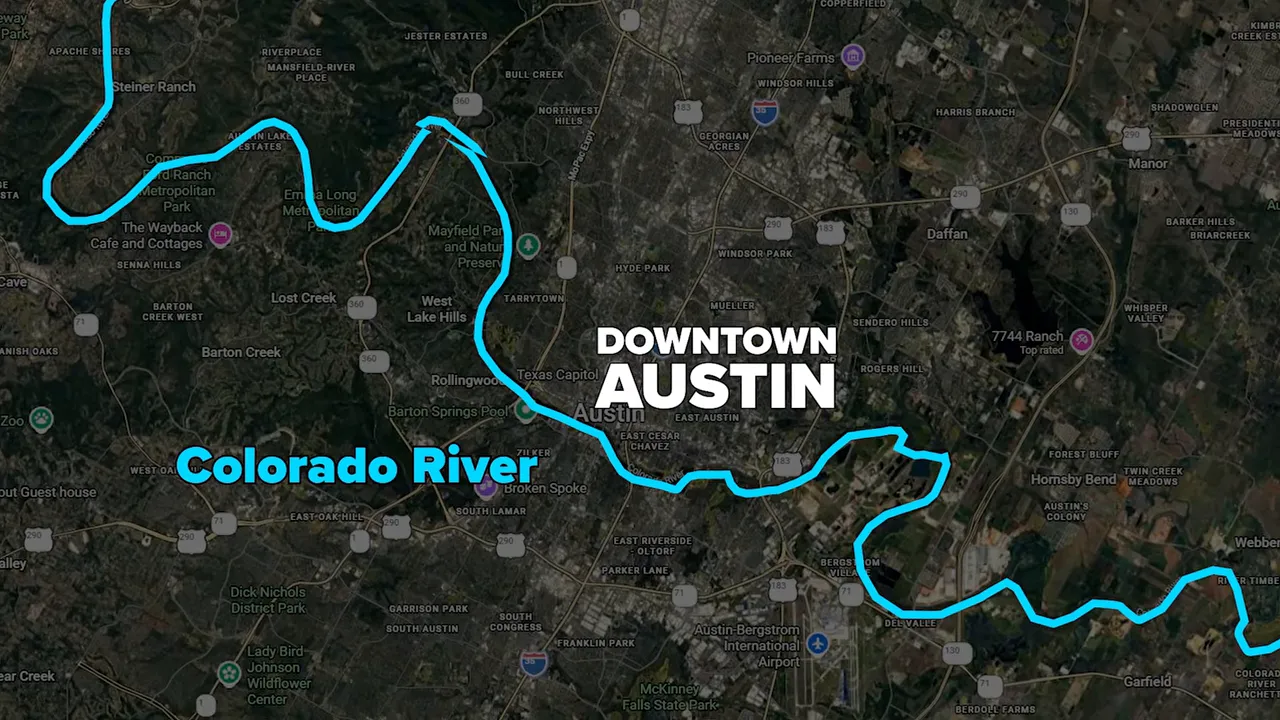
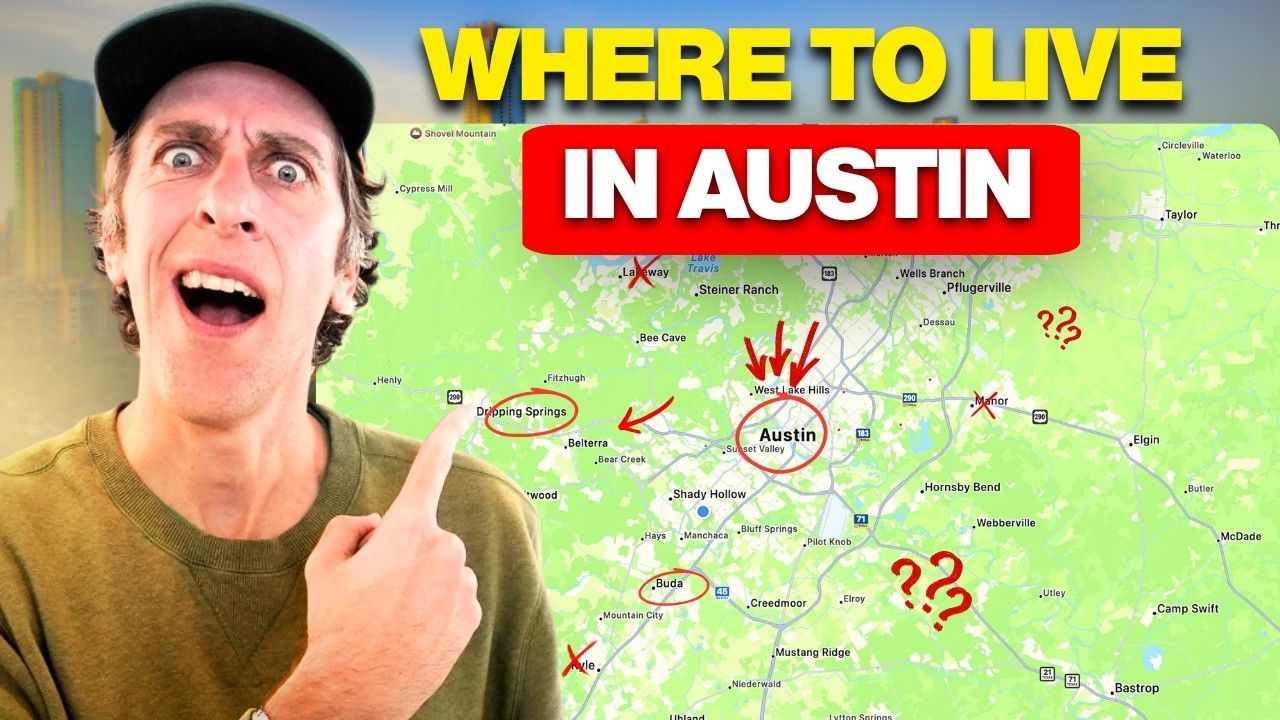
But when most people say North Austin in a relocation conversation, they often mean the larger northern metro area. That includes the established and fast growing suburbs north of the city, including:
- Round Rock
- Cedar Park
- Leander
- Georgetown
- Pflugerville
- Liberty Hill
Those communities are not interchangeable. They have different school boundaries, commute patterns, housing inventory, amenities, and personalities. Still, they share a general suburban North Austin experience: more room, more new construction, more family activity, and a little more distance from the core Austin lifestyle.
North Austin Schools, Jobs, and Safety
Excellent school district options
The school districts are one of the biggest reasons North Austin is such a no brainer for so many families. On average, the ratings and reputation of the major North Austin school districts are dramatically stronger than those found across much of South Austin.
Round Rock ISD and Leander ISD consistently show up among the most highly rated districts in Central Texas, which is honestly kind of wild because these are not exclusively ultra luxury communities. Georgetown ISD is another major draw, and there are also strong schools in parts of Pflugerville ISD and Liberty Hill ISD.
School zoning matters, of course. Round Rock residents generally attend Round Rock ISD. Georgetown is served by Georgetown ISD. Leander and Cedar Park are primarily associated with Leander ISD. Before we fall in love with a home, we need to verify its specific school assignment because city names and school district boundaries do not always line up neatly.
For families considering parent satisfaction, student outcomes, college readiness, acceptance rates, and test performance, North Austin gives us an embarrassment of riches in certain pockets.
A massive employment engine
North Austin also has tons of jobs, particularly in tech. Dell helped set the tone years ago, first in Austin and then in Round Rock, and plenty of companies followed. IBM has a significant North Austin presence, while companies including Amazon, Vrbo, eBay, Apple, Meta, and a whole bunch of tech startups have established operations in the northern part of the metro.
The Domain is a major center of that activity. It is not merely a place to shop and eat. It is part of the job ecosystem that makes North Austin especially attractive for people in technology, entrepreneurship, and business.
Here is the practical lesson: if our office or desired industry is in North Austin, choosing a South Austin home just because it feels more Austin can make daily life rough. A cross metro commute can become brutal fast. In many cases, living close to the job is the decision that protects our time and sanity.
Safety is a meaningful North Austin advantage
North Austin is, by and large, pretty darn safe. Great schools, newer communities, job growth, and a concentration of young and growing families tend to build on each other. Many people move to these neighborhoods because they want to be involved in their kids' schools, community activities, and everyday neighborhood life.
There can be small pockets in any city that deserve a closer look, and North Austin is no exception. But when we think about communities such as Brushy Creek, Cat Hollow, Crystal Falls, Travisso, Twin Creeks, Deer Creek Ranch, Wolf Ranch, Parkside on the River, Riverview, Blackhawk, and Falcon Point, safety concerns are usually not the dominant conversation.
That is a massive reason families keep landing north.
What Is It Like Living in North Austin?
The walkability tradeoff
North Austin has limited walkability, and we need to define what we mean by that. There are really two types.
- Type A walkability means we can walk to local cafes, restaurants, coffee shops, bars, and retail.
- Type B walkability means our neighborhood itself is pleasant, safe, and comfortable for walks, often with sidewalks, trails, and attractive streets.
North Austin suburbs can be very strong on Type B walkability. A master planned community may have sidewalks, parks, trails, and plenty of places to stroll. But Type A walkability is much harder to find. If we are used to stepping out of a bungalow in Seattle, Chicago, New York, San Francisco, or the Bay Area and walking to our favorite local restaurant, North Austin may feel like a major adjustment.
There are pockets with both kinds of walkability, but that overlap is narrow. Much of North Austin is built around driving. That is not automatically bad, but it is something we need to embrace rather than fight.
Traffic is real, even on small roads
The flip side of explosive growth is traffic. North Austin has grown at such a ridiculous pace that transportation infrastructure always seems to be playing catch up. Interstate 35, Highway 183, and MoPac have construction happening constantly, and even roads that used to feel minor can get jammed.
In growing suburbs, simply getting from one side of town to the other can take 15, 20, or 25 minutes. That is not the experience many longtime residents remember from 10 or 20 years ago.
We should not choose a home based solely on a map distance. We need to test the actual routes that matter: office, school, daycare, grocery store, gym, sports practice, and our favorite weekend hangouts. Two neighborhoods that appear close can live very differently during rush hour.
Character and strip mall sprawl
Another honest con is that many North Austin neighborhoods can feel like everyday suburbia. There are absolutely great communities with their own feel, but people relocating from major cities or international cultural hubs sometimes tell us that the area lacks the personality they expected from Austin.
In Leander, Cedar Park, Round Rock, and parts of Georgetown, we may close our eyes, open them, and feel like we could be in suburbia almost anywhere in America. Add in the apartment complexes, commercial corridors, and strip malls, and that feeling gets stronger.
Still, the story is not that North Austin has no local flavor. It is that we have to know where to look. There are favorite pubs, coffee shops, restaurants, and local spots throughout Georgetown, Leander, Round Rock, and Cedar Park. The Austin heart is still there, just not always sitting right outside our front door.
North Austin Homes, New Construction, and Home Values
Housing is where North Austin can get absolutely absurd in the best way. The northern suburbs have a huge supply of newer homes and master planned communities. A true master planned community is designed from the beginning with its streets, home sections, parks, pools, trails, sport courts, fitness facilities, and other amenities laid out as one bigger plan.
There are a lot of good options, and there is also plenty of inventory that deserves skepticism. Not every builder, floor plan, community layout, or development is created equal. We should never assume a home is great simply because it is new. Site selection, build quality, future development around the lot, and community design all matter.
But in the better North Austin communities, buyers can find quality construction and meaningful incentives. Builders may offer closing cost support, upgrades, or price reductions depending on the property and timing. That can create an opportunity that is hard to duplicate in more established central neighborhoods.
More house for the money
The amount of space we can often get in North Austin is shocking to people coming from expensive coastal markets. Consider a couple relocating from Seattle who were considering paying $1 million to $1.2 million for a two bedroom, two bathroom house needing work, 45 to 60 minutes from the office, in an area where they did not feel especially comfortable.
In Cedar Park, they found a relatively newer four bedroom, three bathroom home of roughly 2,800 to 2,900 square feet in an excellent neighborhood with strong schools, established trees, and nearby nature. Their office commute was about 25 minutes, and they paid well under $700,000.
That does not mean every North Austin home is inexpensive. It means the comparison can be eye opening for people coming from Seattle, Washington DC, New York, or similar high cost metros. North Austin frequently delivers more bedrooms, more square footage, newer construction, better neighborhood amenities, and a more manageable commute to northern job centers.
The Domain and North Austin’s Changing Culture
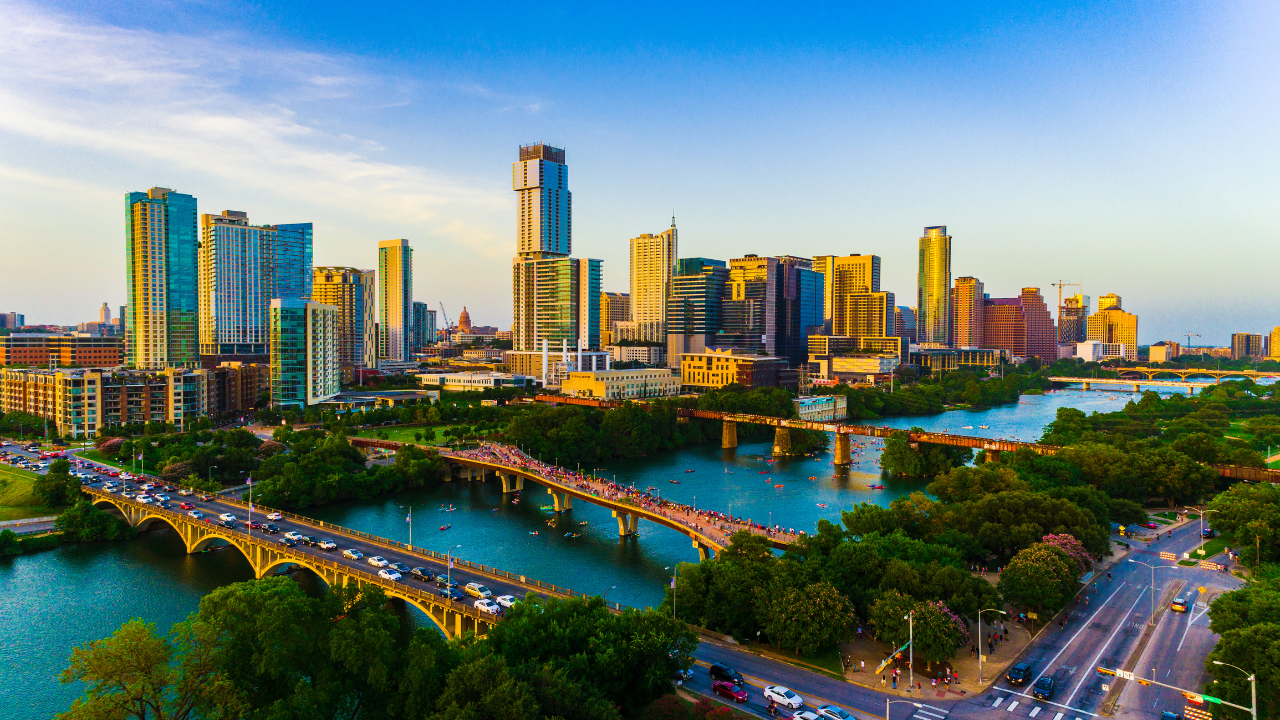
The Domain is one of North Austin's clearest advantages. Roughly 10 to 15 minutes northwest of downtown, it offers an outdoor retail and dining destination with stores such as Apple and Nordstrom, along with restaurants, cafes, and a broad range of shopping options.
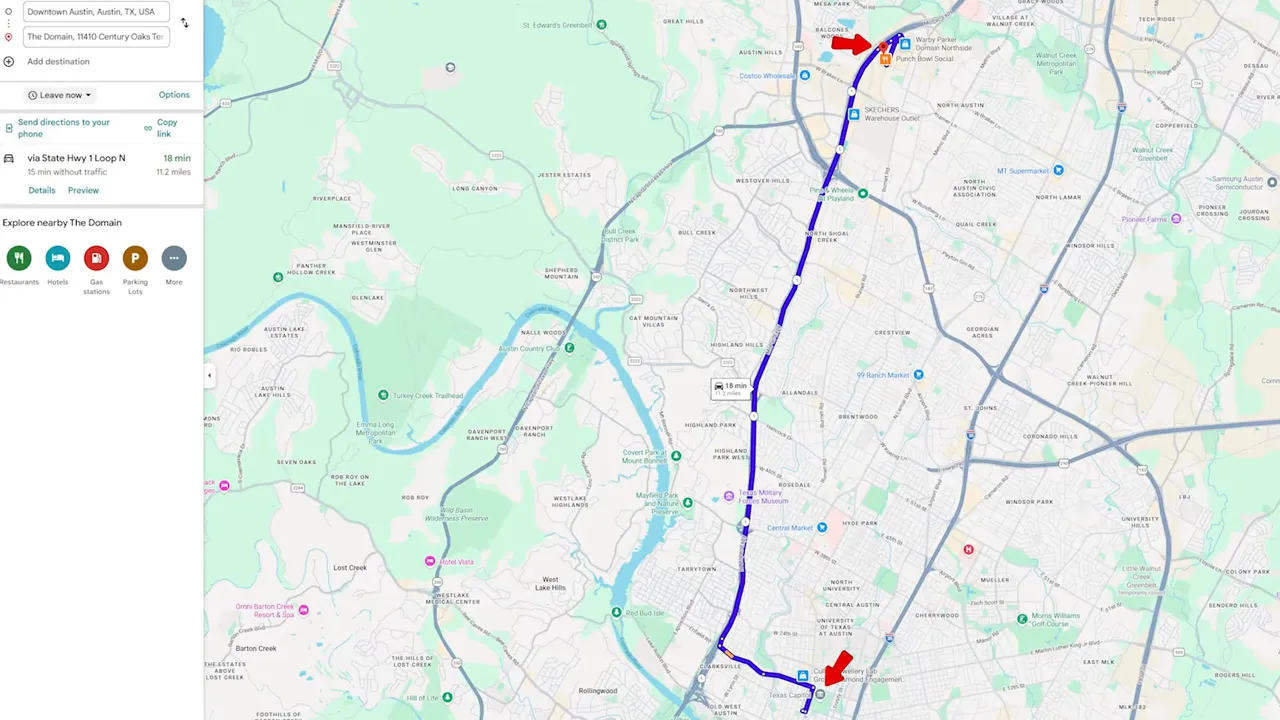
It has a polished, luxury outdoor mall feel, and it is very different from central Austin. Some people see that as too Dallas. We happen to think it is simply another useful option. For people who enjoy retail, dining, convenient services, and a lively commercial environment close to North Austin jobs, the Domain is a major asset. South Austin does not have a true equivalent right now.
But proximity to the Domain is not the same thing as proximity to Austin culture. This is the culture gap. South Austin has easier access to many of the things people picture when they fall in love with Austin: South Congress, Barton Springs, live music, creative hubs, and a vibrant food scene.
When we live in deep North Austin, those experiences are still available, but they can become inconvenient enough that we stop going. If we need regular access to Austin's most iconic cultural spaces, living farther north may make us feel disconnected from the city.
That also leads to an important mindset shift. Round Rock is Round Rock. Georgetown is Georgetown. Leander is Leander. We should choose those places because we want our daily rhythms to happen there, not because we expect to have one foot in the suburb and one foot in central Austin every day.
Best Things to Do in North Austin: Food, Nature, and Community
North and South Austin do share some amazing qualities. Great food is one of them. We can find fantastic restaurants across the greater Austin area, including the suburbs.
North Austin has also benefited from its technology growth by attracting Asian and Asian American communities. That has helped create standout Indian, Thai, Vietnamese, Chinese, Japanese, and other Asian food options. People moving from places known for exceptional Asian cuisine, including Seattle and New York, have found meals in North Austin and its suburbs that compete with what they were used to.
We also get access to nature. Even where suburban development is extensive, parks and trail systems are often close by. Brushy Creek is a great example. It runs through a heavily developed part of Round Rock but provides an enormous trail network stretching toward Cedar Park. We can hike, bike, walk, and get out into beautiful green space without leaving the northern metro.
Community is another huge selling point. North Austin often has an especially easy path into neighborhood connection. We hear stories of neighbors setting up lawn chairs in the street, cracking open beers after work, and building a regular midweek hangout without anybody forcing it.
For families, there are abundant ways for kids to plug in quickly. Basketball, volleyball, baseball, tennis, recreational leagues, competitive teams, and sports clubs are all a significant part of the culture. North Austin is not the only family friendly part of the metro, but it can make family life feel incredibly easy.
North Austin to the Airport: Commute and Location
The final drawback is airport distance. Austin Bergstrom International Airport is farther from North Austin than it is from most South Austin locations. If we fly constantly, that can be annoying.
There is a meaningful workaround for many northern suburbs: Toll Road 130. From Pflugerville, Round Rock, and Georgetown, this route can bypass much of the downtown area and get us to the airport far more efficiently.
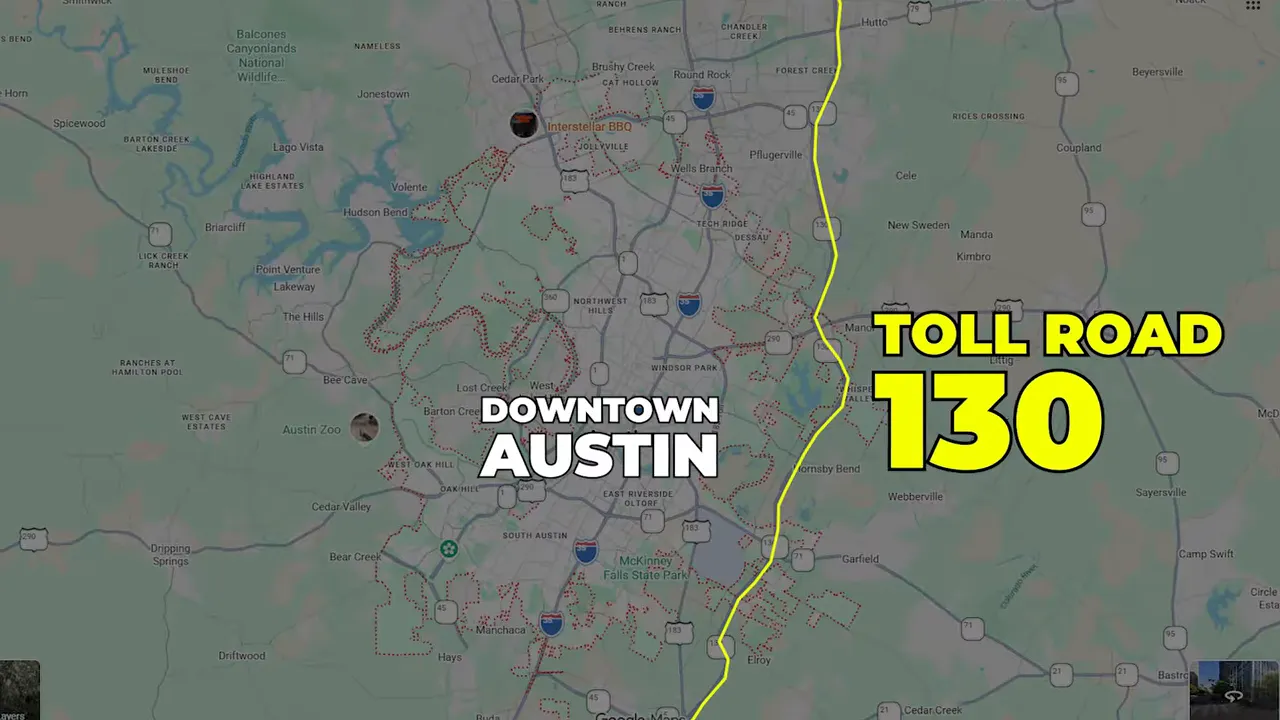
It does not change the basic fact that North Austin is farther from the airport. But for frequent travelers, it can make the airport commute much more manageable than we might expect.
So, is North Austin right for us? It probably is if we value good schools, safety, newer homes, community, kids' activities, access to northern employers, and more space for the money. It may not be right if we want to walk to restaurants every night, spend most weekends in South Congress, or feel embedded in central Austin's cultural core.
The best move is not to ask whether North Austin is better than South Austin. It is to ask where we want the rhythms of our actual life to happen. If that answer includes family friendly neighborhoods, tech employment, trails, great schools, and a whole lot more home for the budget, North Austin is going to make a very strong case.
Moving to North Austin is about more than finding a great house. The right community needs to fit your commute, schools, budget, lifestyle, and long-term goals. Whether you’re considering Round Rock, Cedar Park, Leander, Georgetown, Pflugerville, or Liberty Hill, we can help you compare your options and make a more confident relocation decision.
Call 512-855-2713 or book a FREE consultation today to start planning your move to the Greater Austin area.
Frequently Asked Questions About Living in North Austin
Is North Austin a good place for families?
North Austin is often an excellent fit for families because of its school district options, generally safe neighborhoods, master planned communities, parks, trails, and abundant youth sports and activities.
What are the best known North Austin suburbs?
Round Rock, Cedar Park, Leander, Georgetown, Pflugerville, and Liberty Hill are among the most commonly considered North Austin suburbs. Each has different housing, school, commute, and lifestyle considerations.
Is North Austin walkable?
Many North Austin neighborhoods are pleasant for walking, especially those with sidewalks, parks, and trails. However, walkability to cafes, restaurants, bars, and local retail is limited compared with central Austin and some South Austin areas.
How far is North Austin from Austin Bergstrom International Airport?
North Austin is farther from the airport than South Austin, but Toll Road 130 can provide a much more efficient route from Pflugerville, Round Rock, and Georgetown by avoiding much of the downtown area.
Read More: LIVING IN OR MOVING TO IN LEANDER TX: IS TRAVISSO THE RIGHT NEIGHBORHOOD FOR YOU?