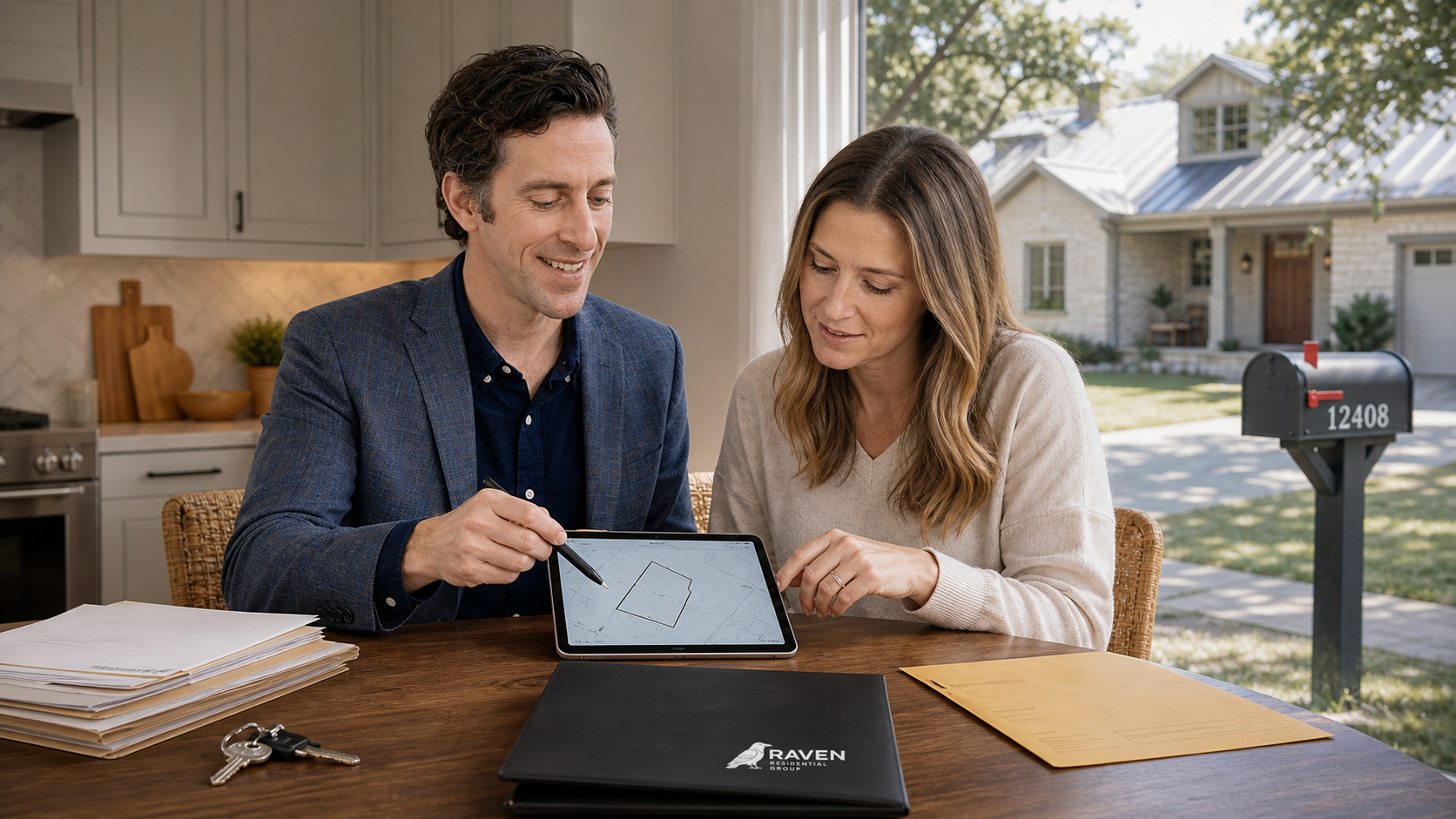

AUSTIN INVESTMENT PROPERTY
Federal 1031 exchange timing and Austin real estate roles, with professional boundaries stated first.
Rules reviewed: IRS guidance and 2025 forms available on August 18, 2026; TREC Form 60-0 effective January 3, 2025.
How Does a 1031 Exchange Work?
If you're considering selling Austin investment real estate and buying replacement property, Section 1031 may let you defer recognition of some gain when both properties and the transaction satisfy the federal requirements. The rule applies to qualifying real property held for investment or productive use in a trade or business. It does not automatically make every sale eligible, and it does not make the underlying tax questions disappear.
You need to start before the relinquished property closes. Your qualified tax counsel or CPA should evaluate your facts, and an independent qualified intermediary commonly establishes the exchange agreement and controls the proceeds under the applicable rules. You generally identify replacement property in a signed writing within 45 days after transferring the relinquished property, then receive replacement property by the earlier of 180 days after that transfer or the due date, including extensions, of your federal return for the transfer year (IRS Form 8824 Instructions, 2025).
Raven Residential Group can help market Austin-area real estate, search for replacement properties in our approved Greater Austin territory, coordinate contract timing, and communicate with title and your exchange team. Raven does not decide eligibility, calculate gain, hold exchange funds, or structure the exchange.
Professional checkpoint: consult qualified tax counsel, a CPA, and an independent qualified intermediary before the relinquished property closes. If that team confirms your real estate plan, give us a call at (512) 855-2713 to discuss the Austin property side.
Your next checkpoints
Which 1031 Checkpoint Comes First?
What Is Section 1031 and How Does It Apply in Austin?
The Internal Revenue Service describes a like-kind exchange as an exchange of qualifying business or investment real property for qualifying real property of a like kind. Since January 1, 2018, Section 1031 generally applies only to real property, not machinery, vehicles, artwork, patents, or other personal and intangible property (IRS Like-Kind Exchanges, reviewed May 1, 2026).
“Like kind” is broader for real property than it sounds in ordinary speech. The IRS says real properties can be like kind when they share the same nature or character even if they differ in grade or quality. Improved and unimproved real property may be like kind. United States real property and foreign real property are not like kind under these rules.
That does not mean any two Austin properties create a qualifying result. Both the property you give up and the property you receive must satisfy the use and transaction requirements. Money or other non-like-kind property received can cause some gain to be recognized. Your basis, debt, expenses, title, taxpayer identity, holding purpose, and related-party facts can all matter.
Here’s the thing: the real estate search is only one part of the file. Your tax advisers and qualified intermediary need to own the federal analysis. Raven helps you execute the approved sale and property-search instructions without giving you a tax conclusion.
Which Property Facts Matter Before You Plan the Exchange?
IRS Publication 544 says the nonrecognition rules apply only to exchanges of real property held for investment or productive use in a trade or business and not held primarily for sale. The same publication says real property used for personal purposes, such as your home, does not qualify under those exchange rules. A dwelling unit can sometimes qualify when the applicable investment or business-use requirements are met, but that conclusion depends on the facts (IRS Publication 544, 2025).
So, do not label a property eligible from a listing description. A long-term rental, short-term rental, second home, former residence, vacant parcel, development property, or renovation project can raise different questions about use and intent. A property held mainly for resale can fall outside Section 1031. Your adviser should review ownership records, leases, tax returns, personal-use history, business records, and your actual purpose.
| Fact branch | Question for your professional team | Raven's role |
|---|---|---|
| Current use | Was the real property held for qualifying investment or productive business use? | Provide listing, lease, occupancy, and property documents available through the transaction |
| Held for sale | Do acquisition, improvement, marketing, and sale facts indicate inventory or dealer treatment? | Describe the planned real estate transaction without deciding tax status |
| Personal use | How do residence or personal-use periods affect the analysis? | Do not promise that a home or second home qualifies |
| Ownership and title | Does the taxpayer and vesting structure satisfy the exchange plan? | Share title and contract information with the authorized team |
If your tax and exchange professionals confirm that an Austin-area sale belongs in the plan, you can start the real estate conversation through Raven's seller page. That conversation stays conditional on their advice.
What Must Happen Before the Relinquished Property Closes?
There’s no two ways about it: closing first and trying to create the exchange afterward can be a serious problem. IRS Publication 544 explains that actual or constructive receipt of money or non-like-kind property can cause a deferred transaction to be treated as a sale or a partially taxable exchange. Constructive receipt can occur when proceeds are credited to you, set apart for you, or otherwise made available for you to draw upon.
A qualified intermediary is one recognized safe-harbor arrangement when its requirements are met. Under Publication 544, the intermediary enters a written exchange agreement and performs defined acquisition and transfer functions. The agreement must limit your rights to receive, pledge, borrow, or otherwise obtain the benefit of exchange money or non-like-kind property during the restricted period.
That is why your qualified intermediary, tax adviser, title company, and real estate professionals need the plan before funds move. Do not ask your agent to select the intermediary or approve the agreement. Evaluate independence, safeguards, account controls, experience, insurance, fees, default provisions, and written procedures with your own legal and tax advisers.
- Tell qualified tax counsel or your CPA that you are considering an exchange.
- Have them analyze the taxpayer, property use, timing, and likely transaction branches.
- Select and engage an independent qualified intermediary through an appropriate diligence process.
- Give authorized written instructions to title, the intermediary, and the real estate team before closing.
- Confirm how contracts, assignments, notices, funds, and closing documents will be handled.
Once those professionals set the structure, send Raven Residential Group the approved real estate instructions. We can coordinate the property work without changing the exchange team's legal or tax plan.
How Do the 45-Day and 180-Day Deadlines Work?
The exchange timeline begins when you transfer the relinquished property. The IRS instructions require replacement property in a deferred exchange to be identified in a signed writing no later than 45 days after that transfer. The writing must clearly describe the replacement property and be delivered in the manner required by the rules (IRS Form 8824 Instructions, 2025).
The replacement property then must be received by the earlier of two dates: the 180th day after transfer of the relinquished property, or the due date, including extensions, of your federal tax return for the year in which the transfer occurred. The earlier-of language matters. Do not assume you always have a full 180 days without checking the return deadline with your tax adviser.
| Stage | Federal timing concept | What you should confirm |
|---|---|---|
| Before transfer | Exchange structure and receipt restrictions must be in place | Advisers, qualified intermediary, title instructions, contracts, and funds flow |
| Identification | Signed written identification generally due within 45 days after transfer | Permitted properties, description, delivery, property limits, and backups |
| Receipt | Earlier of 180 days after transfer or the applicable federal return due date including extensions | Contract feasibility, financing, inspections, title, closing, and adviser confirmation |
| Reporting | Exchange reported on Form 8824 with the federal return | Tax reporting, basis, recognized amounts, related-party items, and supporting records |
The calendar does not pause because a listing falls through, financing changes, an inspection raises an issue, or title needs more work. Your intermediary and advisers should explain the identification rules and any property-count or value tests before you sign the identification. Raven can help search and negotiate, but cannot certify that an identification complies.
If your professional team has established the exchange and you need Austin-area real estate support, shoot us a text at (512) 855-2713. Tell us the approved geography, property type, timing, and practical constraints.
How Should You Plan the Austin Replacement-Property Search?
A 45-day identification window can make a vague search expensive. Before the relinquished closing, write down the real estate criteria that your tax and investment advisers have approved. Include territory, property type, use, price range, financing requirements, minimum document package, inspection tolerance, lease needs, and closing feasibility.
Do not let a search portal decide the tax result. A property can look attractive and still create questions about tenant leases, zoning, permits, title, insurance, condition, environmental issues, financing, or closing timing. Your advisers also need to evaluate any cash, debt, expense, basis, taxpayer, or replacement-value issues. Raven will not convert a target price into a tax calculation.
Use the Raven buyer search to identify current Greater Austin properties within the approved territory. Save more than one plausible option when your professional team says that approach fits, then let the intermediary and tax advisers guide the formal identification.
Search boundary: a saved listing is not a formal identification, and Raven's portal is not a qualified-intermediary system. Follow your intermediary's exact written procedure.
How Does Texas Contract Coordination Fit an Austin 1031 Exchange?
For an Austin 1031 exchange, the Texas Real Estate Commission publishes the Addendum for Section 1031 Exchange, Form 60-0. TREC lists an effective date of January 3, 2025 and says the addendum is for a contract where either party intends to use the property to accomplish a Section 1031 exchange (TREC, accessed August 18, 2026).
The form addresses reasonable cooperation by the other party, provided that party does not incur additional expense or liability and the closing is not delayed as a result of the exchange. That language does not make the other party your tax adviser, guarantee cooperation beyond the signed contract, or extend an IRS deadline.
TREC also warns that its forms are intended for trained real estate license holders, that approval of the form does not establish legal validity or adequacy for a specific transaction, and that Form 60-0 is not intended for complex transactions. The broker and your legal and tax professionals need to determine which documents fit your facts.
Raven can coordinate dates, addenda selected through the proper process, access, inspections, title contacts, and written instructions. If your exchange team is already engaged, give us a call at (512) 855-2713 before you commit to a real estate schedule.
Who Handles Each Part of an Austin 1031 Transaction?
| Professional | Typical responsibility | What the role does not imply |
|---|---|---|
| Tax counsel or CPA | Eligibility, tax consequences, basis, recognized gain, reporting, and taxpayer-specific analysis | No promise that the real estate transaction will close |
| Independent qualified intermediary | Exchange agreement, proceeds restrictions, identification procedure, and exchange mechanics within its engagement | No substitution for independent tax or legal advice |
| Title and escrow professionals | Title, closing, authorized assignments, notices, settlement documents, and funds instructions | No automatic determination of Section 1031 eligibility |
| Lender and insurer | Property-specific financing and coverage decisions | No tax conclusion |
| Raven Residential Group | Greater Austin marketing, property search, negotiation, transaction coordination, and communication | No tax, legal, accounting, investment, title, or intermediary advice |
Keep the roles clear and share only authorized instructions. If two professionals give you conflicting direction, stop and have them resolve it in writing. Your real estate contract and closing schedule should follow the approved structure, not force the tax team to repair a decision afterward.
What Should an Austin Investor Complete Before Closing?
- Property and taxpayer review: give your advisers deeds, entity documents, leases, use history, prior acquisition records, improvements, depreciation records, and relevant tax returns.
- Written professional plan: confirm eligibility questions, ownership, funds flow, intermediary role, deadlines, and reporting responsibilities.
- Qualified-intermediary engagement: complete your diligence and sign the required exchange agreement before transfer.
- Relinquished-property strategy: align pricing, marketing, contract terms, title work, and closing timing with the professional plan.
- Replacement criteria: define geography, use, condition, financing, document needs, and closing feasibility before the clock starts.
- Identification method: obtain the intermediary's written instructions for content, delivery, deadlines, and permitted alternatives.
- Contingency discussion: ask the advisers what happens if a sale, identification, financing, inspection, title issue, or replacement closing changes.
- Reporting file: preserve contracts, assignments, notices, settlement statements, identification records, intermediary statements, and Form 8824 support.
If your tax counsel, CPA, and qualified intermediary have cleared the exchange path, visit Raven's seller page to discuss the relinquished Austin property. For replacement options, use the Greater Austin buyer search. Those are real estate services, not eligibility or tax determinations.
What Professional Boundaries Apply to an Austin 1031 Guide?
The Austin 1031 guide provides general real estate information, not tax, legal, financial, investment, accounting, title, or qualified-intermediary advice. Section 1031 eligibility, deadlines, identification, receipt of funds, title, related parties, basis, debt, expenses, and recognized gain depend on federal law and the taxpayer's facts. Consult qualified tax counsel, a CPA, and an independent qualified intermediary before the relinquished property closes.
Frequently Asked Questions
Does a 1031 exchange permanently erase recognized gain?
No. A qualifying exchange may defer recognition of some gain under federal law. Money or other non-like-kind property, later dispositions, basis rules, and other facts can produce recognized amounts or future consequences. Your tax counsel or CPA should calculate and explain the result for your transaction.
What property can qualify for a 1031 exchange?
The IRS limits Section 1031 to qualifying real property held for investment or productive use in a trade or business and not held primarily for sale. Both the relinquished and replacement properties must satisfy the rules. Personal use, holding purpose, taxpayer identity, title, and transaction structure require professional review.
When should I contact a qualified intermediary?
Before the relinquished property closes and before you receive or control sale proceeds. Your tax and legal advisers should help you evaluate the proposed structure and intermediary. A later attempt to move proceeds into an exchange account may not repair actual or constructive receipt.
What are the 45-day and 180-day deadlines?
Replacement property generally must be identified in a qualifying signed writing within 45 days after transfer of the relinquished property. Receipt must occur by the earlier of 180 days after that transfer or the due date, including extensions, of the federal return for the transfer year. Confirm the exact dates with your exchange and tax professionals.
Can I use a 1031 exchange for my Austin primary residence?
Do not assume so. IRS Publication 544 says real property used for personal purposes, such as your home, does not qualify under the like-kind exchange rules. Mixed-use, former-residence, or investment-use facts can be complicated. Ask qualified tax counsel or a CPA to analyze your actual records and use history.
What happens if I receive the sale proceeds?
Actual or constructive receipt can cause the transaction to be treated as a sale or partially taxable exchange under IRS rules. A compliant qualified-intermediary arrangement is one recognized safe-harbor approach, but its documents and restrictions matter. Set the structure before closing and follow the written instructions.
What does Raven do in an Austin 1031 transaction?
Raven Residential Group can market or help you purchase real estate in its approved Greater Austin territory, negotiate contracts, coordinate transaction dates, and communicate with title and your authorized exchange team. Raven does not determine Section 1031 eligibility, calculate gain, select tax treatment, or act as your qualified intermediary.
How Can Raven Coordinate Austin Real Estate After the Tax Plan Is Clear?
Start with qualified tax counsel, a CPA, and an independent qualified intermediary. Once they give you an approved property and transaction framework, Raven can help with the Austin sale, the replacement-property search, and the real estate calendar.
Give us a call at (512) 855-2713, shoot us a text at (512) 855-2713, or send us an email at barrett@ravengrouptx.com. Tell us a couple things you need from the relinquished sale and a couple things you need from the replacement property, along with the instructions your professional team has approved.

About Barrett Raven
Founder and Team Lead, Raven Residential Group at eXp Realty
Texas real estate salesperson, license 639278 · Full profile and credentials