The pros and cons of living in south austin are not just about which side of the river has better coffee, cooler restaurants, or more house for the money. It is honestly an identity decision. North Austin and South Austin can feel like two completely different cities, even though they share the same skyline, swimming holes, and legendary food scene.
South Austin is where the old “Keep Austin Weird” energy still feels the most alive. It is more laid-back, more eclectic, and in many cases more affordable than the northern suburbs. But there are real tradeoffs around northbound traffic, school consistency, access to major job hubs, and neighborhood-by-neighborhood safety.
If you are comparing the pros and cons of living in south austin, the right answer is going to depend on how you work, where you need to commute, what matters for your family, and whether you want a fast-paced environment or a chill place to put down roots.
Key Takeaways
- South Austin offers a more eclectic, laid-back lifestyle with strong access to Barton Springs, Zilker Park, the Greenbelt, and local restaurants.
- South Austin Texas real estate can provide more home for the money than several popular North Austin suburbs, especially in Buda and Kyle.
- Northbound commutes, variable school ratings, northern job access, and neighborhood-specific safety research are the biggest tradeoffs.
- The best fit depends on work location, school needs, budget, desired pace of life, and preferred community culture.
Table of Contents
- Pros And Cons Of Living In South Austin: The Local Personality
- Nature, Parks, And Swimming Spots
- Downtown Austin Access And Convenience
- Housing Costs And Overall Value
- Lifestyle, Restaurants, And Pace Of Life
- Traffic, Commutes, And Getting Around
- Schools, Jobs, And Everyday Opportunities
- Access, Safety, And Local Considerations
Pros And Cons Of Living In South Austin: The Local Personality
The first thing to understand is that South Austin is still one of the best places to experience the cultural side of Austin. The “Keep Austin Weird” motto is not just a bumper sticker. It means supporting local coffee shops, restaurants, bars, boutiques, artists, and small businesses instead of defaulting to the same chain-store experience everywhere.
Austin has grown up a lot over the past couple of decades. Tech companies such as Apple, Amazon, Meta, IBM, Oracle, Vrbo, Dell, and others have helped turn much of North Austin into a major employment center. That growth is exciting, but it can also give parts of North Austin a more corporate, buttoned-up feel.
South Austin still has more of that artistic, musician-heavy, yard-art, “you never quite know what you are going to see” feeling. It is not frozen in the 1980s or 1990s, obviously. But it is still the side of town where a lot of people feel the original Austin personality is easier to find.
For some people, that is one of the biggest pros of living in south austin. For others, it may not be their thing at all. And that is fine. There is no universally correct side of town. There is only the side that fits how you want to live.
Nature, Parks, And Swimming Spots
The access to nature is one of the strongest arguments for South Austin. Yes, North Austin has trails, parks, and green space all over the place. But the natural amenities in South Austin are bigger, more central to daily life, and they just hit differently.
Barton Springs is the obvious headliner. It is a natural cold-water pool where you can swim and look out toward the Austin skyline. That combination is hard to explain until you have experienced it. It is a very Austin thing.
Then you have Zilker Park, Barton Creek, and the Barton Creek Greenbelt. The Greenbelt runs about 13 miles through Southwest Austin and gives residents access to a major creekside trail system rather than a small neighborhood walking path. South Austin also places you close to the kind of outdoor days that can turn into an unplanned adventure.
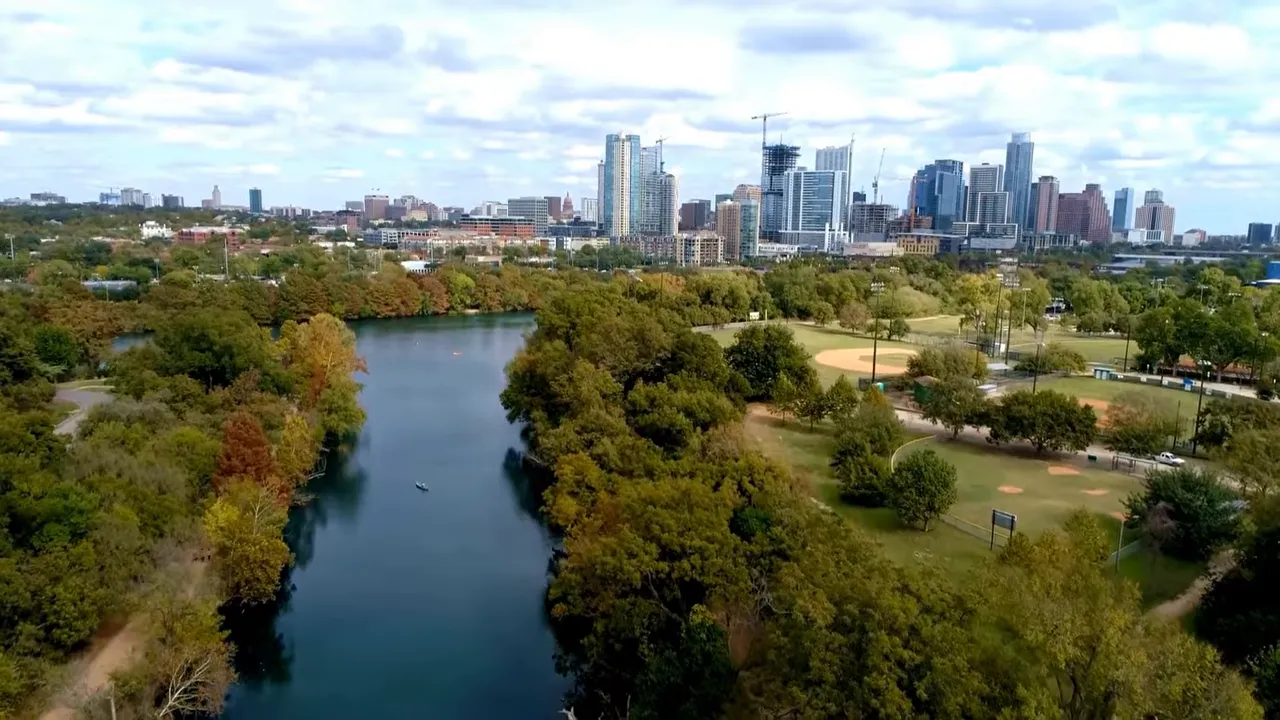
South Austin is also part of a metro area where swimming is genuinely built into the lifestyle. Barton Springs, Deep Eddy Pool, Bull Creek, Lost Creek, Hill of Life, Twin Falls, and Barton Creek are just some of the places people talk about when the weather gets hot. Around here, keeping a towel and swimsuit in the car is not a ridiculous idea.
When weighing the pros and cons of living in south austin, this is a major point for anyone who wants nature to be more than something they visit once in a while. The parks, greenbelts, water, and trails are part of the rhythm of life.
Downtown Austin Access And Convenience
Technically, downtown sits north of Lady Bird Lake, also known to plenty of longtime locals as Town Lake. So it sounds a little funny to say that South Austin offers easier access to downtown. But in practical, everyday terms, Central South Austin can make downtown feel much more reachable.
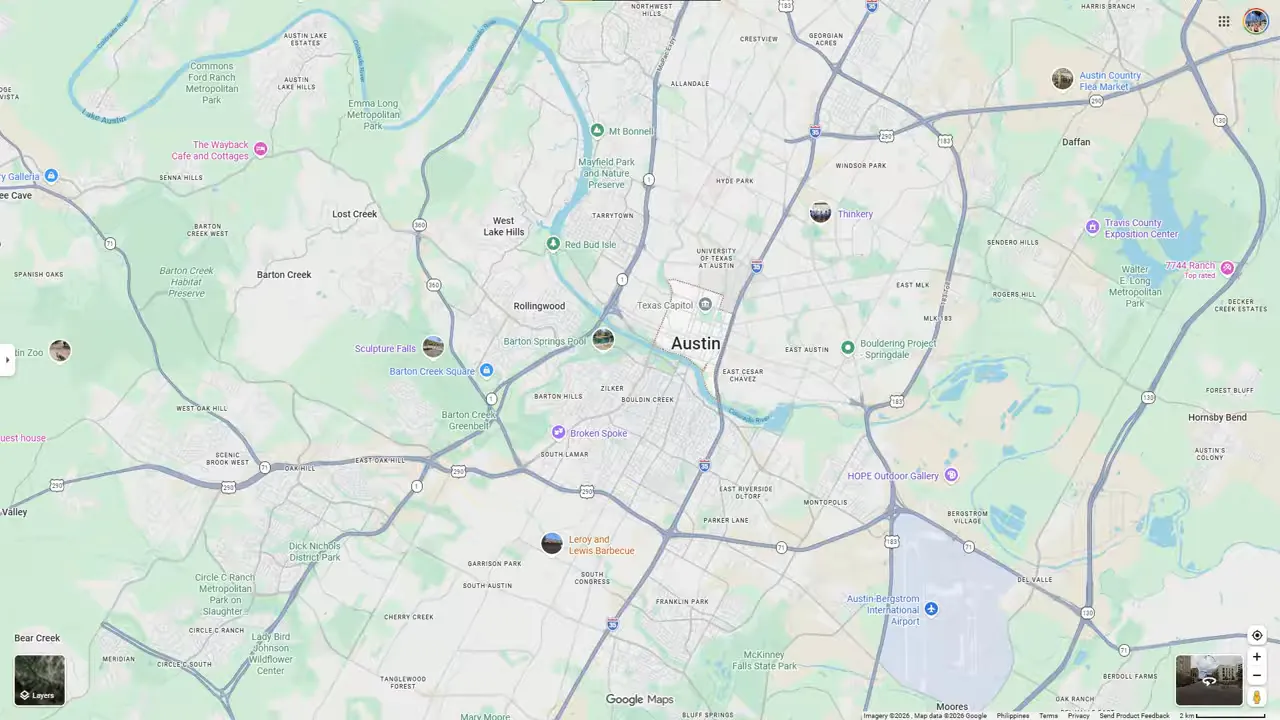
From Central South Austin, heading downtown for dinner, drinks, events, or a night out often feels like a quick pop across the river. From farther north, even though the map may not show a dramatic distance, downtown can feel like a whole production because of congestion and the number of competing routes.
That is one of the more underrated pros and cons of living in south austin. South Austin is not downtown, but it can give you a more relaxed home base while keeping downtown relatively close for the things you actually want to do there.
Housing Costs And Overall Value
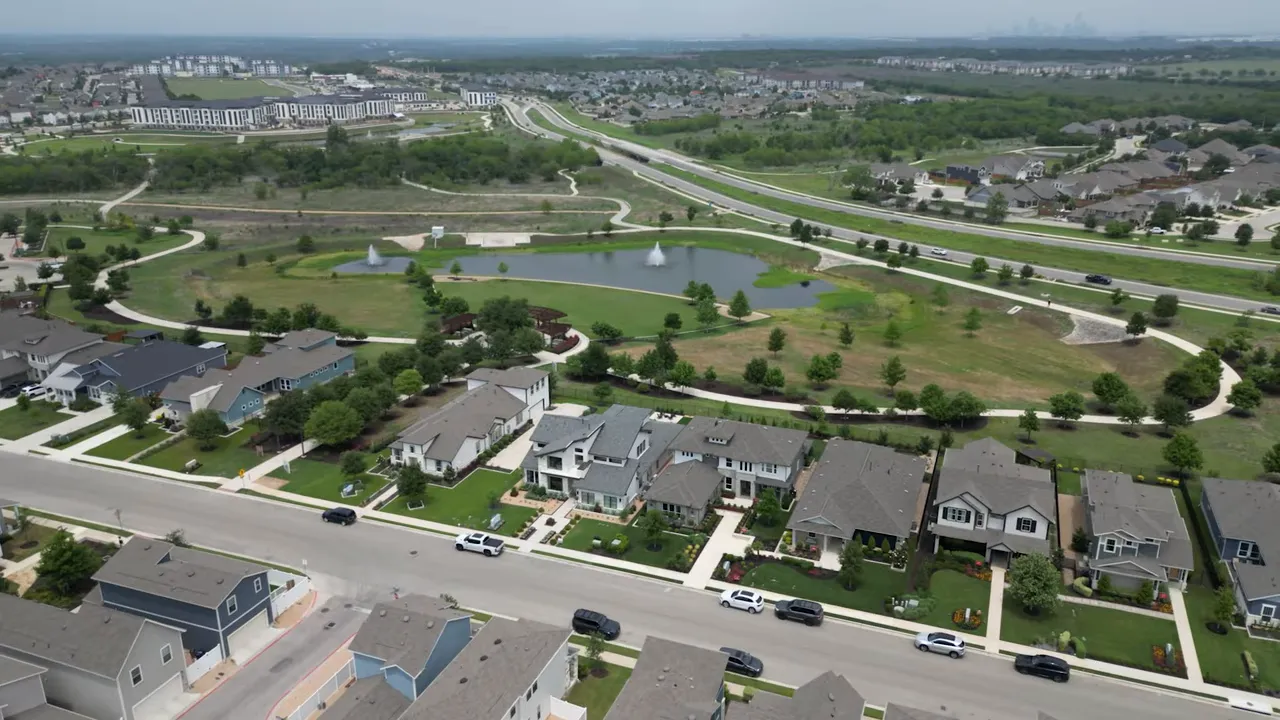
South Austin Texas real estate can deliver noticeably more house for the money, particularly once you compare the southern suburbs with the big-name northern suburbs. Buda and Kyle are often where this difference gets really obvious.
As one example, a newer four-bedroom, three-bath home around 2,800 to 2,900 square feet in Cedar Park might land around $750,000, depending on the neighborhood. A similarly sized newer home by a strong builder in Buda or Kyle could be closer to $475,000. That is a substantial gap.
There are reasons for that gap. A lot of explosive job growth has concentrated north of the river, and many highly regarded school districts are also in the northern part of the metro. Demand follows jobs and schools, and pricing follows demand.
Still, one of the most compelling pros of living in south austin is value. If you work remotely, have a flexible commute, use private school or homeschool, or simply do not need to be near the northern job corridors every day, South Austin Texas real estate deserves a serious look. You may find a bigger home, a newer home, or simply a much better fit for the budget.
Lifestyle, Restaurants, And Pace Of Life
South Austin is not sleepy, but it generally feels slower and more down-to-earth than the northern side of town. Historically, north of the river was tied more closely to the Capitol, the University of Texas, hospitals, law, politics, and white-collar commerce. South of the river carried more of a working-class and manufacturing identity.
Those lines have changed a ton over time, but the feeling still hangs around. North Austin can feel energetic, entrepreneurial, active, and crowded. South Austin can feel more chill, more casual, and more comfortable with taking its time.
The food scene is another huge lifestyle benefit. To be fair, excellent food is an Austin-wide advantage, not a South Austin-only thing. But South Austin has some ridiculous places in its orbit, including Uchi on South Lamar, Home Slice Pizza, Loro, Odd Duck, Thai Fresh, and LeRoy and Lewis Barbecue.
LeRoy and Lewis has earned major recognition, and the broader point is that you can pick almost any food category and find an exceptional option somewhere in the Austin area. The pros and cons of living in south austin are therefore not about whether you will have good food. You absolutely will. The real advantage is living close to some of the city’s most celebrated local spots.
There is also a warmth to Austin that is easy to overlook until you live here. People tend to make eye contact, ask how you are doing, and actually expect an answer. New arrivals often find that neighbors bring barbecue or baked goods, offer help, and make an effort to connect. If that sounds uncomfortable at first, give it a minute. It can become one of the best parts of life here.
Traffic, Commutes, And Getting Around
All right, here is where the cons start getting real. The biggest downside is commuting from South Austin to North Austin. Going from South Austin to downtown is one thing. Going all the way north, northwest, or northeast for work is another animal entirely.
The two main north-south routes are Mopac on the west side and I-35 on the east side. Locally, call Loop 1 “Mopac.” Seriously. Nobody says Loop 1 unless they are reading a road sign.
Both Mopac and I-35 create major choke points around downtown. The issue is not always that the drive covers a massive distance. It is that a relatively short distance can take an aggravating amount of time. If your job is in North or Northeast Austin and you must commute regularly, do not hand-wave this away. Test the route at the actual hours you would drive.
This is probably the most important item on the pros and cons of living in south austin list for office-based workers. A beautiful home and a perfect vibe can lose their shine fast if the commute makes you nuts five days a week.
Schools, Jobs, And Everyday Opportunities
School ratings in South Austin can vary dramatically, and that is a major consideration for families. The northern side of the metro has several more affordable districts that are frequently well regarded, including Round Rock ISD, Leander ISD, and Georgetown ISD. Eanes ISD, Lake Travis ISD, and Dripping Springs ISD are also commonly cited among top-rated Central Texas districts, though housing costs in those areas can be much higher.
South Austin communities such as Buda and Kyle are generally zoned to Hays Consolidated ISD, where the experience and ratings can be much more neighborhood-specific. Austin ISD schools in South Austin can also be inconsistent, with some exceptions. Circle C in Southwest Austin is a notable example, with access to the Gorzycki Middle School and Bowie High School track, which is regarded as one of the stronger Austin ISD options.
The bottom line is not that every South Austin school is a bad fit. It is that the school research needs to happen at the neighborhood level, not through broad assumptions about a whole region.
Employment is the other side of the same coin. Many of the area’s major corporate job centers are north of the river. South Austin has hospitality, breweries, and some manufacturing, but the big concentration of technology and corporate employers is largely in North Austin and farther northeast.
For remote workers, that might be a feature rather than a bug. Less corporate concentration can mean less congestion and a more laid-back environment. For someone who needs to report to a northern office every day, it can be a deal breaker. The pros and cons of living in south austin really do come back to matching your home location with your actual life.
Access, Safety, And Local Considerations
Another tradeoff is access to major Austin destinations that sit north of the river. South Austin has its own character, restaurants, trails, and local hangouts. But if regular trips to University of Texas games, the Texas State Capitol, or Q2 Stadium are a major part of your lifestyle, getting there from farther south can be more of a haul than expected.
Safety is also worth discussing carefully. Crime exists everywhere, and neighborhood boundaries matter a lot. Still, based on local client experiences, South Austin generally has more reports of car break-ins, theft, and property crime than many of the northern suburban areas such as Cedar Park, Leander, Liberty Hill, Round Rock, Pflugerville, and Georgetown.
That does not mean South Austin is universally unsafe. It absolutely is not. It means that if safety is your single most important criterion, you should narrow the search carefully and investigate individual neighborhoods rather than relying on a broad South Austin label.
Finally, South Austin generally trends more liberal politically than North Austin. Depending on your values and the kind of community you want around you, that may feel like a con, a pro, or completely irrelevant. Again, that is why this cannot be reduced to a generic ranking.
The most useful way to approach the pros and cons of living in south austin is to get brutally honest about your priorities. Are you chasing greenbelt access, restaurants, local culture, and a more relaxed pace? South Austin could be exactly your kind of place. Do you need a consistent northbound commute, highly rated schools across a wide selection of neighborhoods, or quick access to northern job hubs? North Austin may make more sense.
South Austin is not better than North Austin. It is just different, and that difference is the whole point.
Thinking About Relocating To South Austin? If you’re considering a move to Austin, choosing the right area is about more than finding a house. From South Austin and Buda to Kyle and the surrounding communities, each area offers a different lifestyle, commute, school options, and housing value. If you’re relocating to the Austin area, we can help you understand which community best fits the way you want to live.
Call or text 512-855-2713 or book a FREE consultation today to talk through your relocation plans, neighborhood options, and next steps.
Frequently Asked Questions About Living In South Austin
Is South Austin More Affordable Than North Austin?
In general, South Austin can be more affordable, particularly in suburbs such as Buda and Kyle. Comparable newer homes can cost significantly less than similar homes in high-demand northern suburbs such as Cedar Park.
What Are The Biggest Pros Of Living In South Austin?
The biggest pros include the eclectic local culture, access to Barton Springs and the Barton Creek Greenbelt, a slower pace of life, easy access to downtown from central areas, strong restaurants, and potentially better housing value.
What Are The Biggest Cons Of Living In South Austin?
The most significant downsides are difficult commutes to North Austin, school ratings that can vary widely by neighborhood, less convenient access to northern job hubs and venues, and the need for more detailed neighborhood-level safety research.
Is South Austin A Good Choice For Remote Workers?
It can be an excellent fit for remote workers because they can enjoy the lifestyle, outdoor access, and relative housing value without taking on a daily commute to North Austin employment centers.
Read More: LIVING IN EASTON PARK AUSTIN TX: A MASTER PLANNED COMMUNITY WITH ALMOST EVERYTHING