Table of Contents
- Introduction: East Austin vs West Austin
- How to read the map: the practical boundaries that define East Austin vs West Austin
- East Austin: three different worlds under one umbrella
- West Austin: hills, lakes, and polished neighborhoods
- Head-to-head cheat sheet: East Austin vs West Austin
- How to pick between East Austin vs West Austin for your life
- FAQs about East Austin and West Austin
- Final thoughts on East Austin vs West Austin
Introduction: East Austin vs West Austin
Choosing between East Austin vs West Austin is one of the most consequential decisions you can make when relocating to Austin. These two halves of town feel like different cities. One side is young, gritty, and buzzing with nightlife and coffee shops. The other is polished, hilly, and dominated by big yards, lakes, and top-ranked schools.
If you picture Austin as a circle, Interstate 35 and Mopac (Loop 1) are the vertical dividing lines that most locals use. Understanding those boundaries and the character on each side will help you pick the neighborhood that matches your lifestyle, budget, and priorities.
The basic rule of thumb: anything east of I-35 is considered East Austin, and anything west of Mopac (Loop 1) is considered West Austin. The strip between those two highways—downtown, Zilker, Hyde Park, and Central neighborhoods—is central Austin. Town Lake (the Colorado River as it runs through the city) separates north from south.
Those few lines on the map translate into very different streetscapes, housing stock, and daily rhythms. In short: East Austin vs West Austin is more than geography. It’s lifestyle.
East Austin: three different worlds under one umbrella
East Austin is not a single vibe. It can be broken into three overlapping categories: dense urban hotspots (think East 6th and near-downtown), old historic residential pockets, and larger-scale residential enclaves like Mueller and Windsor Park.
The East 6th corridor is dense and walkable. Coffee shops, bars, restaurants, and retail are everywhere. This is the part of East Austin that feels like a permanent festival: lively, noisy, and intensely social.
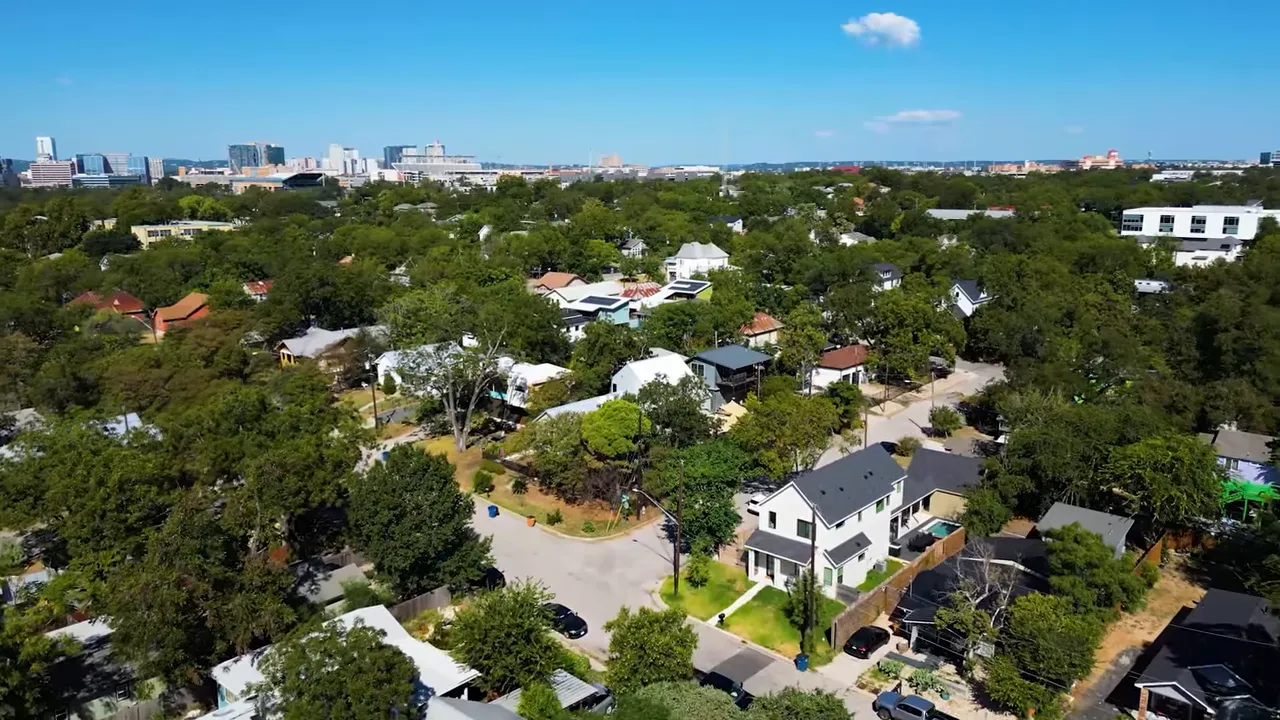
Old East Austin is more residential and a little gritty, but still historic and desirable for people who want that authentic Austin energy. The third face of East Austin—the super residential neighborhoods—are found in Mueller, Windsor Park, and University Hills. These areas have more traditional single-family homes and a family-friendly feel.
Walkability and food culture
East Austin is where walkability and the food scene converge. There are two useful walkability types to keep in mind.
- Type A walkable: step outside and you can reach coffee shops, bars, restaurants, and small retail on foot. This is common in the East 6th and Holly Street corridors.
- Type B walkable: sidewalks, parks, and neighborhood walkability exist, but you still drive to most errands. Mueller and parts of Windsor Park fit this mold.
If you want a handcrafted cortado and a late-night taco within walking distance, the East Austin vs West Austin split leans heavily toward East Austin.
Pros of East Austin
- Vibrant lifestyle: unsurpassed local restaurants, music venues, and coffee shops.
- Affordability relative to West: overall, East Austin offers more attainable entry points than West Austin.
- Variety: from dense urban living to family-friendly subdivisions, East has options for many household types.
Cons of East Austin
- Gentrification and displacement: long-standing tensions exist as development pushes up property values and taxes.
- Smaller lots on average: if backyard space matters, East will often feel tight.
- Inconsistent public schools: school quality varies; some families choose private schools or transfers.
- Patchy aesthetics: parts of East are gritty or industrial, so the visual charm isn't uniform.
East Austin price guide
For single-family homes (not condos): very entry-level single-family properties typically start around $550,000, but realistic buyers should plan for $600,000 to $650,000 for homes that need work. Move-in-ready three- or four-bedroom homes tend to run $750,000 to $800,000. Luxury new builds and high-end renovations can push into the $1 million to $1.5 million range, with occasional listings up to $2 million.
West Austin: hills, lakes, and polished neighborhoods
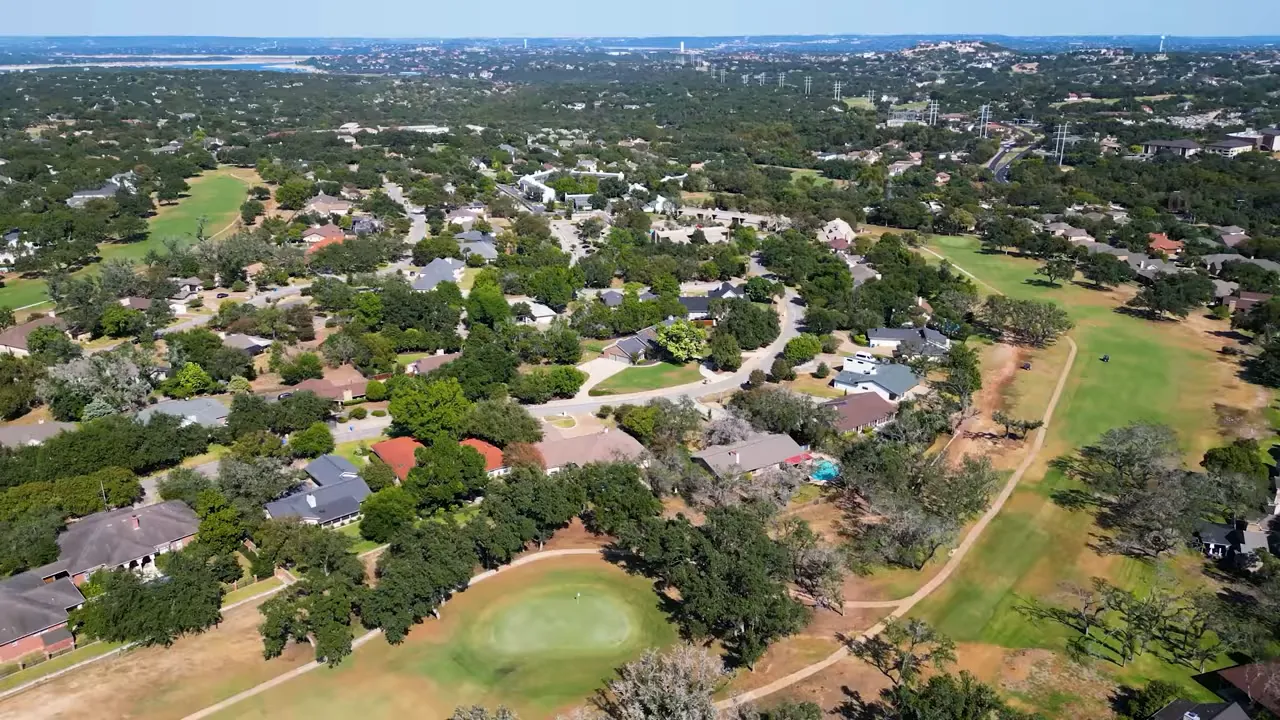
West Austin immediately communicates a different ambition. Tarrytown, West Lake Hills, Rollingwood, and neighborhoods farther west like Steiner Ranch and Lakeway emphasize large lots, hilly terrain, lake access, and higher-end finishes.

West Austin is the gateway to the Texas Hill Country. Expect more varied terrain, more trees, rolling streets, and architecture that skews toward estate homes and higher-end design. If your mental picture of Austin includes water views and golf courses, that image probably belongs in West Austin.
Neighborhood highlights
- Tarrytown: closer-in West Austin with polished homes and strong Austin ISD schools.
- West Lake Hills: one of the most expensive and sought-after areas with top-rated schools.
- Northwest Hills: larger lots and family-focused neighborhoods near Loop 1 above 45th Street.
- Steiner Ranch: master-planned community with pools, trails, and a suburban-lake lifestyle.
- Lakeway: a separate suburb beloved by golfers and lake lovers who want a quieter, more suburban rhythm.
Schools and family life
One of the strongest selling points of West Austin is its school profile. Depending on where you land, children may attend Austin ISD schools with excellent reputations, or be zoned to Lake Travis ISD or Eanes ISD—both frequently ranked at or near the top in Texas. If schooling is a primary decision driver, the East Austin vs West Austin comparison typically tilts in favor of West Austin.
Pros of West Austin
- Stunning natural beauty: hills, trees, and close proximity to the lake offer stunning daily scenery.
- Top-tier schools: Eanes ISD, Lake Travis ISD, and many Austin ISD pockets are highly rated.
- Space and privacy: larger lots, sometimes even acreage, plus leisurely suburban amenities.
- Lake access and outdoor recreation: marinas, boating, trails, and golf courses are a short drive away.
Cons of West Austin
- Less of the "weird" Austin spirit: West Austin is polished and can feel like a luxury suburb rather than quirky Austin.
- Longer commutes: unless you live in close-in neighborhoods like Tarrytown, trips to downtown can be longer.
- Higher price points: entry-level West Austin is often north of the million-dollar mark, and move-in ready homes frequently sit in the $1.5 million to $3+ million range.
West Austin price guide
West Austin requires a much higher budget. Expect to start thinking seriously about West Austin only if you can plan on spending at least $1 million. In many desirable pockets, $1.5 million to $2 million is a more realistic starting range for quality, move-in-ready homes. In elite neighborhoods, prices commonly range from $3 million into double-digit millions for expansive waterfront estates.
Head-to-head cheat sheet: East Austin vs West Austin
The core differences between East Austin vs West Austin can be summarized in quick categories.
- Lifestyle: East — young, trendy, urban. West — established, family friendly, outdoorsy, and upscale.
- Commute: East — easier access to downtown. West — often longer drives but scenic routes.
- Schools: East — mixed quality. West — consistently strong district options.
- Homes: East — a mix of bungalows and urban infill. West — more estate-style properties and larger lots.
- Vibe: East — gritty and eclectic. West — polished and curated.
- Affordability: East — more attainable. West — higher price points across the board.
Need help deciding? If you're torn between East Austin and West Austin, we can help you weigh the tradeoffs and find neighborhoods that match your priorities. Call or text us at (512) 855-2713
How to pick between East Austin vs West Austin for your life
Lifestyle is the true dividing line. Ask yourself a few concrete questions.
- Do you want instant access to nightlife, coffee shops, and locally owned restaurants? East Austin answers that call.
- Are schools and a large private yard nonnegotiable? West Austin is the better fit.
- Do you prefer short commutes and walkable errands, or do you value views, lake access, and outdoor pursuits even if the drive is longer?
Keep in mind there is overlap. Wealthy buyers choose East Austin for lifestyle, and artsy types find pockets of community in West Austin. Use the questions above to figure out which tradeoffs you can live with.
VIEW HOMES FOR SALE IN AUSTIN, TX
FAQs About East Austin and West Austin
Is East Austin hipper than West Austin?
East Austin generally feels hipper due to dense nightlife, music venues, galleries, and a thriving independent food scene. West Austin is more polished and less "weird," focused on outdoor amenities and upscale neighborhoods.
Which side has better schools: East Austin vs West Austin?
West Austin typically has more consistently high-performing public schools, with access to top districts like Eanes ISD and Lake Travis ISD. East Austin's school quality varies widely and some families opt for private schools or transfers.
How do prices compare when considering East Austin vs West Austin?
East Austin offers more entry-level options, with single-family homes often starting near $550,000 to $650,000 for fixer-uppers and $750,000+ for move-in-ready houses. West Austin generally starts around $1 million and often climbs to $1.5 million or higher for quality properties.
Which side is better for walkability: East Austin vs West Austin?
East Austin leads on walkability, especially in corridors like East 6th, Holly Street, and portions of Mueller. West Austin has walkable pockets, but many neighborhoods emphasize car travel and larger lots.
Can I find luxury homes in East Austin as well as West Austin?
Yes. Luxury new builds and renovated estates exist on both sides. However, West Austin has a larger concentration of traditional estate properties and lakefront mansions, while East Austin's luxury market often features modern infill and contemporary urban design.
Does living in East Austin vs West Austin affect commute times?
Yes. East Austin residents are usually closer to downtown and experience shorter commutes to central Austin. West Austin residents—especially those farther west—face longer drives but often enjoy more scenic routes.
Final thoughts on East Austin vs West Austin
Choosing between East Austin vs West Austin comes down to which tradeoffs you prefer. If music, handcrafted coffee, and walking to nearly everything make your day, East Austin will likely feel like home. If excellent schools, large yards, proximity to water, and hill country views are priorities, West Austin will check more boxes.
Both sides are distinct and desirable in different ways. Spend time in neighborhoods that match what you want, walk the streets, try meals at local spots, and imagine the routines you want to keep. The right side for your life will become clear.
Read More: Top 5 SECRET Austin Texas Neighborhoods You’ve Never Heard Of!