Table of Contents
- Introduction
- Central Austin TX Landmarks to Know
- Central Austin TX Roads and Commute Basics
- North Central Austin TX Neighborhoods and Prices
- North Austin TX Landmarks and Local Quirks
- West Central Austin TX Neighborhoods to Know
- South Central Austin TX Lifestyle and Home Prices
- East Central Austin TX Neighborhoods and Access
- FAQs About Moving to Central Austin TX
- Final Thoughts on Moving to Central Austin TX
Introduction
If you are moving to Central Austin TX, the biggest favor you can do for yourself is simple. Learn the geography before you fall in love with a listing.
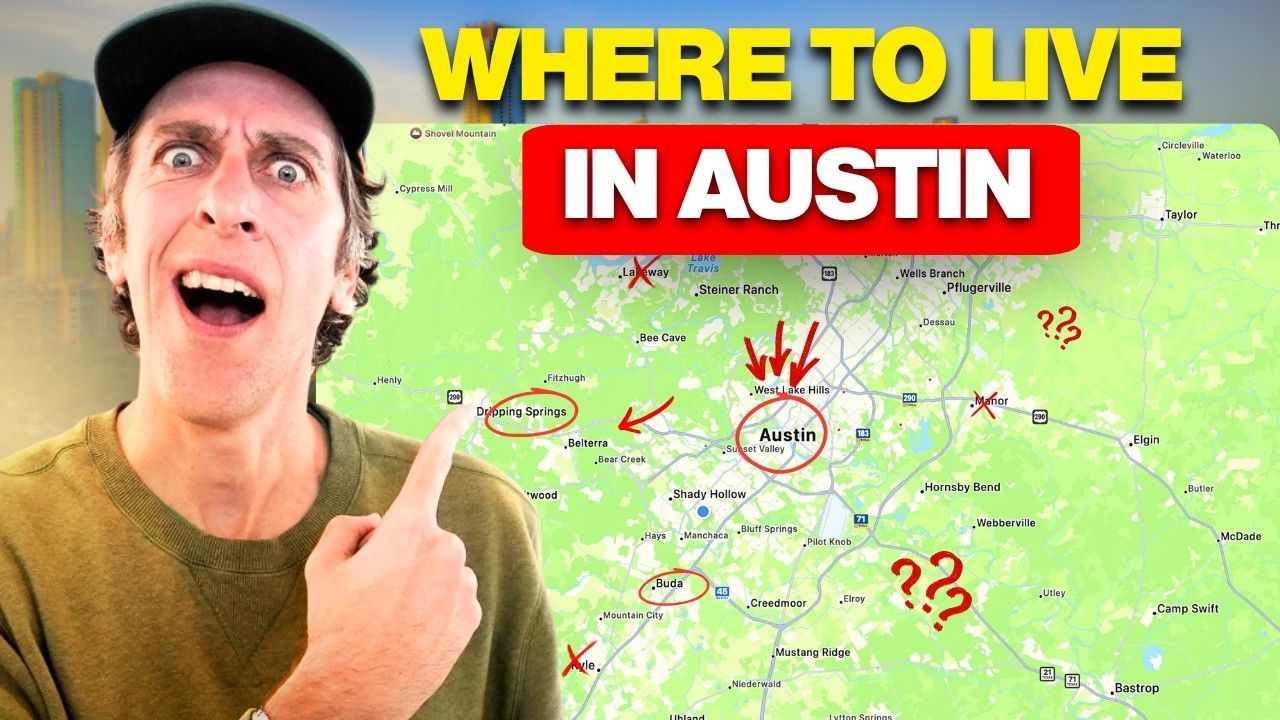
Austin is not one neat box. It is more like a jigsaw puzzle. The river divides North and South Austin, major highways slice through everything, and the same road can feel completely different depending on which side of town you are on.
Here is a practical, map focused guide to help you understand Central Austin TX like a local. You will learn the landmarks that matter, the main roads to navigate, the most important neighborhoods by area, and the rough pricing ranges you will run into while house hunting.
VIEW HOMES FOR SALE IN AUSTIN TEXAS
Central Austin TX Landmarks to Know
Before neighborhood names, get the landmarks down. Austin has a few “anchors” that define how people talk about the city and where you will drive every day.
Downtown and Town Lake (Lady Bird Lake)
Downtown sits above Town Lake, also called Lady Bird Lake. In the “map logic” Austin locals use, the area between I35 and Loop one is basically downtown.
Downtown is also where the Texas Capitol is. It is one of those places people from out of town love and locals sometimes ignore. It is a beautiful spot year round and it is a great “feel the city” destination even if you live here.
The Colorado River and the North South Divide
The other major feature is the Colorado River. Up in the Hill Country, you have Lake Travis. Then the river flows into Central Austin.
Here is the key mental model: anything north of the Colorado River is North Austin and anything south of it is South Austin. That split is not only geographic, it is cultural and practical.
In broad strokes, North Austin tends to feel more like professional, government, medical, and tech workers. South Austin tends to feel more like entrepreneurs, artists, creatives, musicians, and older manufacturing roots. Even though the lines have blurred over time, you can still feel the difference if you spend enough time around town.
Where the river changes names
There is also a weirdly Austin detail: as the river crosses different parts of the city, people effectively describe it differently.
- Right around Central Austin, it crosses MoPac and becomes Town Lake
- Right after crossing I35, it turns back into the Colorado River as it runs east toward Bastrop
Airport and Lake Travis
Two more anchors you will want in your brain when moving to Central Austin TX:
- Austin-Bergstrom International Airport sits in Southeast Austin. Your commute time to the airport matters more than you think.
- Lake Travis is a major attraction for West Austin. People drive out there for sunsets, boating, and gorgeous homes.
Central Austin TX Roads and Commute Basics
Here is the uncomfortable truth: you can live in Central Austin and still have a miserable daily commute if your chosen neighborhood forces you onto the wrong roads too often.
So learn these routes early. They are the difference between “Austin is doable” and “Austin is exhausting.”
I35: The Traffic Machine
I35 runs north south through Austin and it is notorious for bad traffic. It does not matter if it is weekend, weekday, morning, or evening. I35 is just consistently painful.
If you can, avoid living so close that you are constantly forced to use I35.
MoPac and Loop one (Same Idea, Different Name)
The next major road that runs parallel to I35 is Loop one, but locals rarely call it that. You will hear MoPac most often.
MoPac is short for Missouri Pacific and historically a Missouri Pacific railway ran along it. That is why the name sticks.
In practice: if your daily life requires frequent access to I35 or MoPac, you should assume your commute will be harder than it looks on a map.
Highway 183: A Key Divider for Central Austin
Highway 183 is a major north south east west feeling road. It runs from Northwest Austin through Southeast Austin down toward Lockhart and beyond.
But the big takeaway for moving to Central Austin TX is this:
- Anything south of 183 is often treated as Central Austin
- Anything north of 183 is still North Austin, but it may not feel like “Central Austin core” as Austin grows
Also note: 183 can get absolutely terrible during rush hour, especially around places like Leander and Cedar Park heading toward downtown.
Loop 360: The West Austin Boundary
Loop 360 cuts through West Austin, including the prestigious West Lake area. It is a “boundary line” in the way people talk about town.
If you go dramatically west of 360, you can still technically be in Austin. But the feel often shifts away from what many people consider Central Austin core.
Ben White Boulevard (Highway 71)
In South Austin, you will absolutely hear the name Ben White Boulevard. Highway 71 turns into it once you are in Austin.
This is a big north south corridor coming out of areas like Bastrop and it anchors many deep South and central South commutes.
290: Confusing Because It Breaks Into Two Worlds
290 comes straight out of Houston heading west into North Central Austin. But here is the frustrating part: 290 stops in one place and then “picks back up” elsewhere.
So if someone says “meet me on 290,” you have to clarify which section they mean.
- When 290 hits I35, it stops being 290 and becomes another road called 2222 also known as Koenig
And yes, Austin has a reputation for roads having many names. It is not a myth.
Highway 130: Toll Road Sanity Saver
For some commutes, toll road 130 can help you avoid heavy traffic. The speed limits are typically around 80 to 85 mph.
If you are planning a move and you know you will drive north or south often, run the routes through your preferred mapping app. Then compare 130 versus surface roads and freeways.
North Central Austin TX Neighborhoods and Prices
North Central Austin is where you start getting a real mix of residential neighborhoods, parks, and “walkable enough” pockets.
Downtown and immediately north of Town Lake lean toward UT campus and commercial retail rather than classic family neighborhoods. Once you get closer to around 29th Street, residential areas start showing up more consistently.
Lamar Boulevard: North Lamar Turns Into South Lamar
Lamar Boulevard is a key route and it also tells you when you have crossed a vibe line.
- North Lamar Boulevard is north of the river
- After you cross the river it becomes South Lamar
Clarksville: Beautiful Historic Homes, Premium Pricing
Just west of downtown, Clarksville is aspirational. It is some of the most expensive real estate in Austin relative to home size.
Think historic bungalows from older eras, many renovated, plus some 1910s and 1920s style homes.
Reality check: if you want Clarksville, expect high competition. Inventory often feels thin.
Pemberton Heights, Bryker Woods, and Rosedale: Affluent and Polished
North of Clarksville and in the surrounding area are neighborhoods that tend to feel more high end and prestige driven.
- Pemberton Heights: very affluent, like a Beverly Hills vibe
- Bryker Woods: similar vibe but more approachable
- Rosedale: more laid back, approachable, very walkable to cafés, restaurants, and grocery
There is also a quirky note. The Heritage area near West University is full of UT students and the “fit” depends on what stage you are in.
Hyde Park: Popular, Famous, and Slightly Misunderstood
Hyde Park is one of the most famous North Central neighborhoods. It is known for student energy, but not all students live there. You will find more grad students, PhD students, and professors than people assume.
It also carries a South Austin flavored artsy eclectic vibe.
Estimated Costs in North Central Austin
If you are targeting the North Central neighborhoods described above, rough budgeting looks like:
- $1.0 million to $1.5 million for many northern areas
- $2.0 million to $3.0 million sometimes up to $4.0 million for homes closer to downtown
Allendale, Brentwood, and Crestview: Strong Value With More Yard Space
If your goal is a “bang for your buck” North Central Austin move, these neighborhoods are often the sweet spot.
Plan on spending around $800,000 to $1.2 million. You tend to get:
- a more decent sized home
- and importantly, more yard space than closer to downtown
- family friendly blocks with sidewalks and lots of kids biking
- walkable access to restaurants, cafés, and coffee shops
North Austin TX Landmarks and Local Quirks
Austin is big and “Central Austin” is not a perfect official boundary. The bigger the city grows, the more the definition of Central Austin can stretch.
One useful guideline from this map logic is: anything north of 183 tends not to feel like Central Austin core anymore, even if it is still North Austin.
Georgian Acres: Quirky and Inconsistent Blocks
Georgian Acres is described as quirky and eclectic, but the safety story can vary depending on exactly where you land.
The big caution is that parts of it can be associated with serious issues over the years. The key lesson is that you can be a few blocks away and feel like you are in a totally different world.
The Domain: A Sought After North Landmark
The Domain is an outdoor mall and lifestyle scene with high end retail and lots of dining. It also includes entertainment like Topgolf.
Even with rougher pockets nearby, areas around The Domain are highly sought after. Budgeting often looks like $500,000 to $750,000 for a great home in that zone.
Eubank Acres Near Walnut Creek Metropolitan Park
Eubank Acres is described as one of Austin’s secret neighborhoods. It is near Walnut Creek Metropolitan Park and the vibe is time capsule mid century ranch style.
Estimated pricing ranges around $500,000 to $800,000, depending on the home.
Wells Branch: One of the Last “True Affordability” Options
Wells Branch has grown over the past 15 years because it is seen as one of the last bastions of affordability combined with family friendly vibes.
Plan on roughly $350,000 to $550,000 for a solid home.
West Central Austin TX Neighborhoods to Know
West Central Austin is where you start paying for views, prestige, and proximity to the lake.
The map logic here uses Loop one and MoPac as one spine and Loop 360 as a “West Austin” boundary. If you drift too far beyond 360, it may stop feeling like Central Austin core to many people.
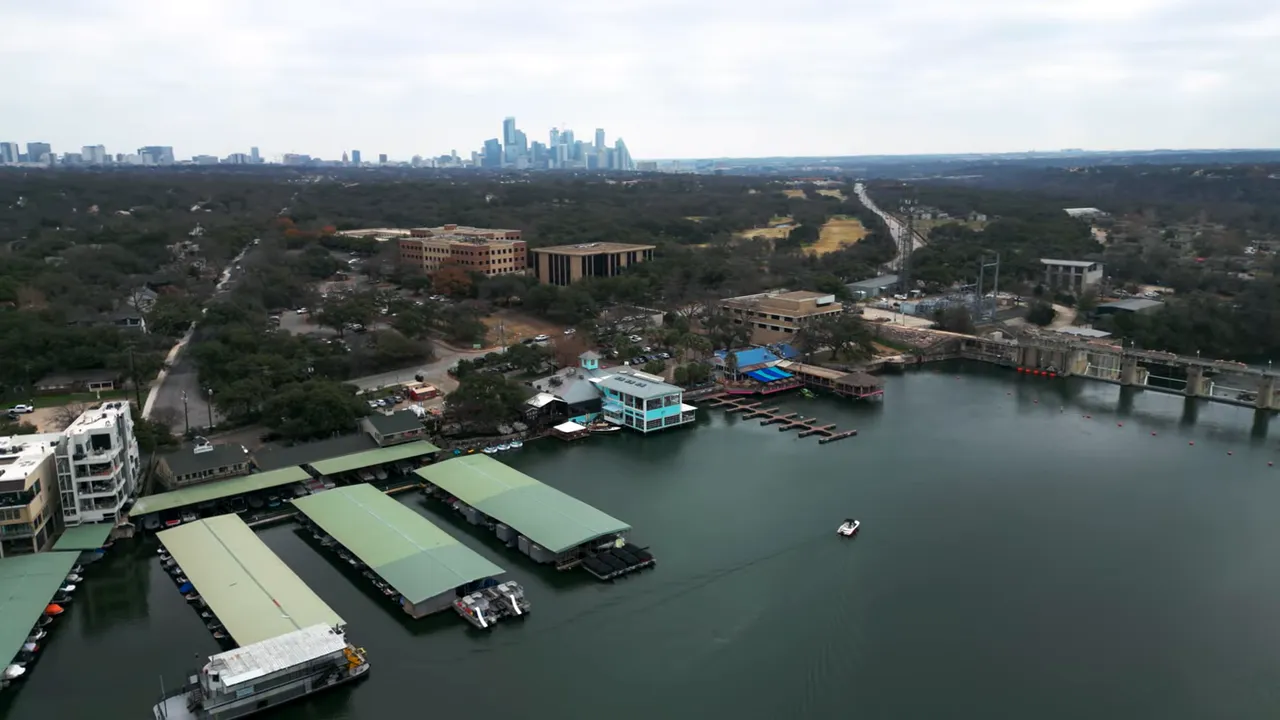
Tarrytown: Elite, Lake Austin Access, and Mostly Car Dependent
Tarrytown is described as one of the most elite Central Austin neighborhoods. It hugs the Colorado River and MoPac and it sits close to downtown.
The major amenity is Lake Austin access. Here is how people talk about it:
- On the river side, it is the Colorado River
- around 360, it becomes what locals call Lake Austin
Downside: it can feel like luxury suburbs. Even if portions are walkable, a lot of the neighborhood becomes car dependent. If you are buying a $2 million to $4 million home, many people want to walk to coffee and errands.
Budget note: expect serious pricing. This is not an “affordable by Central Austin standards” zone.
Northwest Hills: Loves Most Buyers, Has a Niche School Preference Issue
Northwest Hills is an umbrella term for multiple sub neighborhoods. It is a Great Northwest Austin option and many clients love it.
There was one described case where a family wanted more conservative family values and chose to move further out to an area like Falconhead because they felt their school environment was not a fit. That is not a common complaint, but it shows how personal “fit” can be.
Westlake and Rollingwood: The Most Expensive, and Why
For Austin purists, “ Westlake ” can have boundaries. But the map logic here is basically: anything that hugs Lake Austin and runs from 360 down includes places like Rollingwood.
Westlake is likely the most expensive neighborhood in Austin, and it makes sense if you care about:
- views and scenery
- incredible schools, associated with the EISD district
- academics plus sports and overall opportunity
If you do not need top tier schools, you may pay a premium that you do not actually want to spend.
Honorable Mentions: Lost Creek and Barton Creek
Lost Creek and Barton Creek are golf course communities compared as similar to Westlake, just a bit further west.
Expect worse commute times into downtown, but you gain amazing golf course lifestyles.
Great Hills and Balcones Woods: A Compromise for Families
There is a pattern many people experience: they want downtown energy, but once kids arrive, they do not want to pay Westlake premiums or deal with smaller homes.
Great Hills and Balcones Woods are described as family friendly suburban feeling without being fully out in distant suburbs like Round Rock or Dripping Springs.
South Central Austin TX Lifestyle and Home Prices
Now we get into the part of Austin that many people come for first: Zilker Park, Barton Springs, the South Lamar corridor, and the dense walkable neighborhoods.
This section is also loaded with different price bands. It can be hit or miss street by street, but when you land in the right pocket, Central South Austin is hard to beat.
Zilker Park and Barton Springs: The Austin Icon Zone
Zilker Park is where ACL happens. It is also nearby to Barton Springs Pool and the Barton Creek greenbelt area, which is a “green tunnel” following the creek.
It is perfect for people who like hiking, biking, running, and mountain biking.
Walkability and lifestyle: cafés, restaurants, and coffee shops are close. It is one of the defining South Austin experiences.
One food highlight mentioned is Matt's El Rancho, described as a top Tex Mex restaurant in the state.
South Lamar and Parallel Streets: Your Navigation Backbone
Central South Austin roads that matter include:
- South Lamar(the north south main thoroughfare once you cross Town Lake)
- South First Street(parallel)
- South Congress(parallel)
- Oltorf Street(east west)
- Riverside(almost parallel to Town Lake)
Key Neighborhoods: Zilker, Bouldin Creek, Galindo Heights, and Travis Heights
- Zilker: super popular, changed a lot over the years. Pricing commonly around $1 million to $2.5 million, depending on whether you want older bungalows or newer builds.
- Bouldin Creek: close to South Lamar and South First. Similar to Zilker but described as even more walkable in places.
- Galindo Heights(called that in the guide): eclectic, walkable, with a “last super Central South Austin neighborhood” feel.
- Travis Heights: popular, pretty affluent, with a vibe described as “rich artists” and “rich musicians.”
In this zone, you also have St Edwards University. The guide suggests avoiding it for many families looking to buy, since the area can be heavily student oriented.
Deep South Central Austin: Ben White to the More Affordable Rungs
As you move farther south, Central Austin can become more affordable. The guide uses a “ladder” concept where each rung is less expensive as you go south.
The key east west anchor is Ben White Boulevard(not 290, even though some maps label it differently).
Common “rungs” of pricing
- Stassney Lane: usually the first rung. Anything between Stassney and Ben White is often the most expensive within “deep Central South.”
- William Cannon Drive: next rung, from 35 to MoPac and beyond.
- Slaughter Lane: at the next rung down, the guide claims it stops feeling like Central Austin anymore.
South Austin street grid: Brodie Lane, Westgate Boulevard, Manchaca, South First, South Congress
North south thoroughfares include:
- Brodie Lane
- Westgate Boulevard
- Manchaca Road(pronounced like man shack)
- South First
- South Congress
Western Trails: A South Austin Classic
The guide calls Western Trails one of their top favorite neighborhoods. It is described as quintessential South Austin with smaller low slung ranch homes from the 1950s and 1960s.
Estimated pricing: around $600,000 to $800,000 in good condition. Many lots are quarter acre to third acre.
Also important: inventory is rare. The guide suggests “watch it like a hawk.”
Cherry Creek and Maple Run: More Approachable Midrange Options
- Cherry Creek: around $400,000 to $600,000 depending on condition and size.
- Maple Run: described as more affordable and approachable. Estimated range around $350,000 to $375,000, sometimes up to $500,000 to $600,000.
Important caution: Central South can be hit or miss block to block
The guide is honest here. Central South Austin can have a lot of “trash mixed in with gold.” There may be dangerous blocks next to safer ones.
If your budget is tight and you are shopping in this region, treat every listing like a deeper investigation. Look at the street behavior around the time you would actually be out. Check parking patterns, block consistency, and overall condition beyond the staging.
East Central Austin TX Neighborhoods and Access
East Austin is its own story, and it helps to understand the roads that people use as “east boundaries.”
I35 and 183: East vs Central Definitions
For the purpose of what is described as Central Austin, these road lines matter most:
- I35 divides East and West Austin
- 183 is treated as a divider where anything east of 183 is no longer considered Central Austin
- anything west of 183 is more “all right” for Central definitions
Extra key roads in Northeast and Southeast
- Cesar Chavez(just north of downtown)
- 19th Street also called MLK(Martin Luther King Boulevard)
- Mayor Road(looks like Manor, but it is Mayor) and transitions into Springdale
- 51st Street
- The tail end of 290
Windsor Park: Chill, Family Friendly, and a Top Pick
Windsor Park is called a top 10 favorite neighborhood. It is described as chill and approachable, with a family friendly feel that somehow still feels like you are close to the action near Austin.
Budget note: if you cannot spend at least around $550,000, Windsor Park might not fit your search.
University Hills: Slightly Worse Commute, Bigger More Affordable Homes
University Hills is described as Windsor Park’s slightly older and more affordable cousin. It has bigger, more affordable homes, but the commute into downtown can be a bit worse.
Mueller: A Master Planned Community With Land as the Main Premium
Mueller is described as Austin’s first truly master planned community. It has phases, parks, pools, sidewalks, and a very close together “Truman Show” layout.
Because yards are smaller, the guide suggests that much of what you pay for is the land and structure, not giant property size.
Central East Austin pockets around diversity and food scenes
South of Cesar Chavez, Holly Street is described as super walkable to downtown.
The pricing guide is broad, but the “feel” is:
- if you want something essentially walkable to downtown without paying downtown prices, $1 million to $2 million for the Holly Street neighborhood is the range to consider
Airport convenience in deep east zones
Farther east and southeast of the tighter Central boundary, the guide admits buying home may be less desirable in many places. The biggest advantage is convenience to the airport.
If airport proximity is your priority, this can become a reasonable tradeoff, even if the “best blocks” vary.
Franklin Park: “Cheap city of Austin” option with block level caution
Franklin Park is singled out as a neighborhood for people who want to be in the city as cheaply as possible.
Caution: depending on which block you are on, it can be safe or not safe. Expect lots of cars in yards and on streets. The guide suggests only considering it if you are willing to do block by block due diligence.
EXPLORE COMMUNITIES IN GREATER AUSTIN TEXAS
FAQs About Moving to Central Austin TX
What is the quickest way to understand Central Austin TX on a map?
Learn the river first. Use the Colorado River as a North vs South split, then use Town Lake and downtown as your center reference. After that, anchor your driving with I35, MoPac, 183, and Loop 360.
Should I avoid I35 and MoPac entirely if I want a better commute?
If you can avoid living where you need to use them constantly, your daily life will usually be better. I35 and MoPac are both notorious for traffic and congestion, even at “normal” hours.
What roads define the Central Austin boundaries?
Highway 183 is a common Central Austin divider. North of 183 tends to feel less like Central Austin core. Loop 360 is another boundary people use for West Austin feel. The Colorado River is a North vs South line.
Are Central South Austin neighborhoods consistent, or is it block by block?
Expect block by block variation. The guide describes Central South as having “trash mixed with gold,” with some streets feeling much safer than neighboring blocks.
What price range should I budget for North Central Austin?
A rough range mentioned is $1.0 million to $1.5 million for many northern areas, and about $2.0 million to $3.0 million sometimes up to $4.0 million for neighborhoods closer to downtown.
Where can I get more yard space in Central Austin?
Areas like Allendale, Brentwood, and Crestview are described as offering decent house sizes and more yard space compared to neighborhoods closer to downtown, where yards can be limited.
Final Thoughts on Moving to Central Austin TX
Moving to Central Austin TX can be amazing, but only if you choose based on how you will actually live and drive day to day. Use the river and major roads as your compass. Then pick neighborhoods based on what you want most: walkability, schools, lake proximity, or affordability with manageable risk.
And if your budget puts you in “hit or miss” territory, do not rely on listings alone. Spend time on the streets at the times you will truly be out. That is how you find the gold. Ready to narrow down the right Central Austin neighborhoods for your lifestyle? Call or text (512) 855-2713 and let our team help you map out the best areas to buy.
READ MORE: Affordable Homes in Buda TX: A Spacious Austin Suburb Home Tour